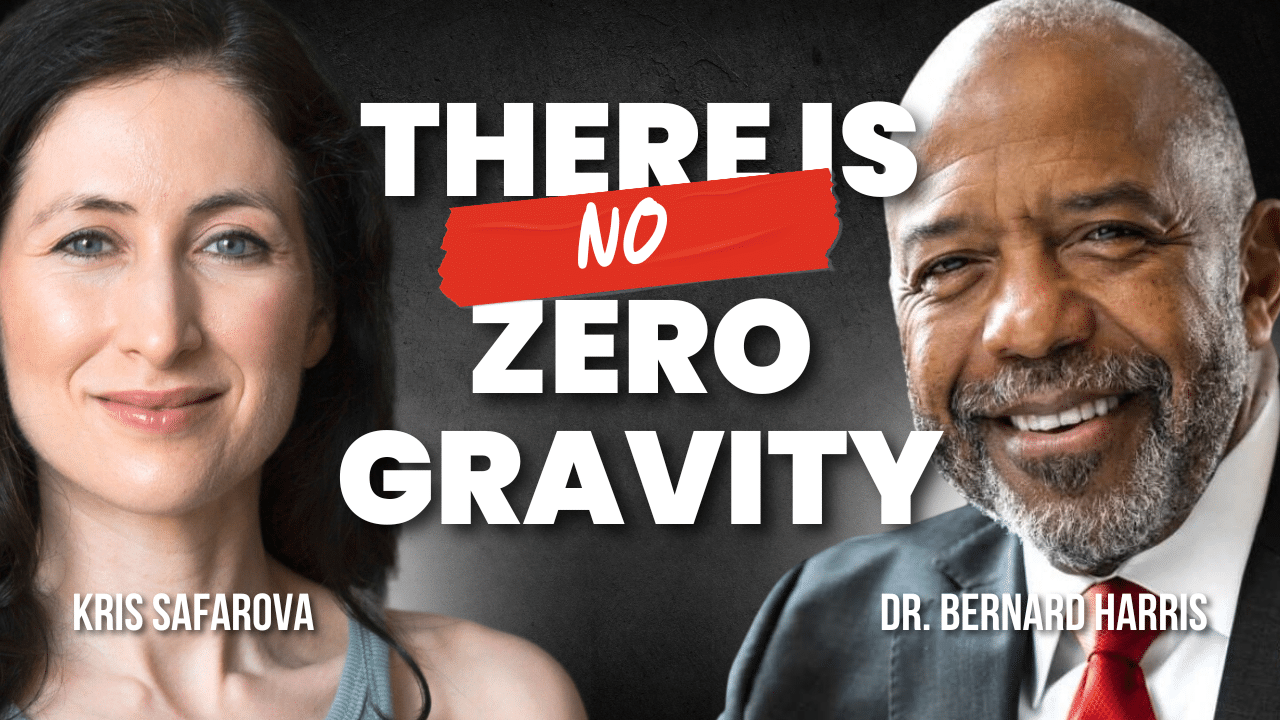
Welcome to Strategy Skills episode 547, an interview with Bernard Harris, an astronaut, physician, venture capitalist, philanthropist, and author of Embracing Infinite Possibilities: Letting Go of Fear to Find Your Highest Potential.
In this episode, Bernard Harris, the first African American astronaut to walk in space, shares his experiences and describes the thrill of launching into space as well as the physical challenges of microgravity. He discusses the significance of inner strength, resilience, and a growth mindset. His book, Embracing Infinite Possibilities, encourages self-discovery, overcoming obstacles, and opening your mind to life’s infinite possibilities, instilling hope in those who have yet to discover their own power.
I hope you will enjoy this episode.
Kris Safarova
Get Bernard Harris’ book here:
Embracing Infinite Possibilities: Letting Go of Fear to Find Your Highest Potential
Here are some free gifts for you:
Overall Approach Used in Well-Managed Strategy Studies
Enjoying this episode?
Get access to sample advanced training episodes
Episode Transcript:
Kris Safarova 00:45
Welcome to the Strategy Skills podcast. I’m your host, Kris Safarova. And our podcast sponsor today is StrategyTraining.com. If you want to strengthen your strategy skills, you can get one of our free downloads. It’s called the Overall Approach Used in Well-Managed Strategy Studies. It’s something to be prepared for you. You can get it completely free at firmsconsulting.com/overallapproach. You can also get McKinsey and BCG-winning resume, which is a resume that got offers from both of those firms. And you can get it at firmsconsulting.com/resumePDF. And today we have with us, Bernard Harris; astronaut, physician, venture capitalist, philanthropist and author of Embracing Infinite Possibilities. Welcome, Bernard.
Bernard Harris 01:35
Glad to be here.
Kris Safarova 01:37
So you were the first African American astronaut to walk in space. What an honor to have you on our podcast.
Bernard Harris 01:45
Well, it certainly was a privilege to do that walk for on behalf of my country, but it’s also a pleasure to be here with you. Thank you.
Kris Safarova 01:55
So I have so many questions. If you don’t mind, I would love to cover some of your experiences, because this is so unique and rare. And I’m sure our listeners would love to hear from you on this topic. Maybe we could start with what was your first thought when the shuttle launched?
Bernard Harris 02:11
Oh, boy. You know, I wanted to be an astronaut since I was 13 years old, 1969 that’s back in the old days, right? And I watch Neil Armstrong and Buzz Aldrin go up into space and go to them, you know, go to the moon. And I was enamored, like every kid. So it began where the just a dream of following the footsteps of, you know, great human beings. But I got my chance in night to my first chance in 1993 when I lifted off on board the space shuttle Columbia, and it was fantastic. So when I, when I describe this, if I, if I could, for your audience, that you’ve probably seen the shuttle lift off many times before, but you may not know that it weighs 5 million pounds, so that’s a whole thing all put together with all the fuel. And when the five engines light, that’s two on the solid rocket motors and the three main engines on the space shuttle itself, it produces thrusts of seven and a half million pounds. And I’m telling you today that when those engines light, you’re leaving the planet in a hurry, and why? I describe it in two stages. So the first stage gets us about two minutes into launch, and that’s where we’re riding the solid rocket motors. At that point, you got a lot of noise, a lot of force. We pull about three and a half G’s or so, we at two minutes, we reach an altitude of about 100,000 feet, and that now we’re above most of the atmosphere, so there’s nothing, no resistance on the vehicle. So we, when we get off of those were much lighter, of course, and then we just have the three main engines producing one and a half million pounds with rust, and then, since there’s no resistance, we actually speed up, and we reach this velocity around 17,000 miles an hour. And the total time for stage one and stage two is eight and a half minutes. So it’s a very exciting ride. You get pushed back your seats about three and a half times your weight, and you go at you go from that experience, that feeling, that force, to zero gravity in a split second, soon as the engines turn off, and now you’re in microgravity.
Kris Safarova 04:36
That is incredible. How did your body react to zero gravity?
Bernard Harris 04:40
It took a couple of days to get used to it. You know, one of the things that I am, in addition to many other things, is a physician. So my specialty, one of my specialties, is aerospace medicine. So as an aerospace medicine physician, we study how the body. Changes to microgravity. Back in the old days, when I was contemplating being an astronaut, we call the zero gravity. But we now know through science that there’s nowhere in the universe you can get away from gravity. So we see very minute parts of gravity. We call it microgravity, but we still float in that sense, not enough gravity to hold us down to the surface. So as a consequence, we are able to float and and as a consequence, your body, which is used to being in a one gravity environment, has to adjust to the zero gravity environment. So a lot of changes happen, and I don’t know if we have time on this podcast to talk about those changes, but I give you just, just a couple. We lose bone, 1% of bone per month. We lose muscle, about 15, 20% of our muscle mass, and our heart shrinks in size as our body adjusts to that microgravity.
Kris Safarova 05:59
We do have the time. So please feel free to bring up whatever you feel is important. It seems that it would be challenging with such meaningful changes to the body, yeah. How did you manage it? Did you feel at times that it was almost unbearable?
Bernard Harris 06:18
I would say not unbearable, but it does get a little uncomfortable. You know, for example, one of the things that gets disrupted is your neuro vestibular system. So when you go up there, you’re in this micro gravity environment. And as a consequence, your body doesn’t know which way is up or down. And so that that mixture of information, disinformation, your body can’t take it, and so you feel nauseated for the first couple of days. We call it space motion sickness. So it’s like a car sickness, or like being on a boat where you’re rocking all the time, except for the etiology or the cause. Is is different than those. And what the cause is, is that you you orient yourself visually. So if you could imagine being inside of the spaceship, and you’ve got the seats, and when you’re on the on the floor, relatively on the floor, you’ve got the windows that you’re looking out, and as long as you have that orientation, your body feels like you’re upright. Now, remember that window I mentioned just a second ago? Look out that window when, when you look out that window, you actually be upside down. The earth will be above you. And sometimes that mismatch of information, the body saying I’m right side up, but then you realize that you’re actually upside down to the earth, and that makes you sick. So that’s that’s part of it. So part of my job as a crew medical officer is to to give medicine to help people get past that couple of days until you get used to being disoriented. That’s probably an easy way to say it. You said we had times. Let me talk about one other thing, and that is that because our body is used to functioning in gravity, one of the things that impacted is our immune system, so we’re not able to fight off illnesses like we’re here. Fact, our white white blood cell count and white blood cell migration is different. So all of those things that we normally use to fight, you know, diseases and things like that are a little bit more difficult in space. So you probably heard that before astronauts go into space for longer race, we go into quarantine about a week before we lift off. And I Quarantine is to make sure that we’re not taking any things like the common cold or whatever on board, because once you if someone is sick, then everybody gets sick because it gets passed around.
Kris Safarova 08:58
Of course. Can you tell us how that Quarantine is conducted?
Bernard Harris 09:03
It’s just, very simply, we have a quarantine facility at Johnson Space Center in Houston, and then we have a similar facility at Kennedy Space Flight Center. So we’ll actually, we do most of our training at Johnson Space Center. So we’ll go into quarantine for about three or four days there, and then about two days or so before liftoff, we’ll fly to the Cape and we’ll continue our quarantine. And so what does quarantine means? It means that we cannot be interacting with anybody below the age of 16. So that sort of the cutoff. And if you if folks have kids, like, like, I do you know that kids can be germ magnets. So the idea is to keep you away from your kids. And when my first mission, my daughter was seven months old, so I had to stay, definitely stay away from her. Yeah.
Kris Safarova 10:00
So you can interact with adults, but adults also can have a flow.
Bernard Harris 10:04
They can and so what happens is that we have folks doctors on the ground. We call flight surgeons, and they tear take care of us and the families. And what they will do is they will, they will examine, they’ll do a history and physical with anybody who who comes in contact with us, and that includes our family members, usually our spouses at that point, or any of our trainers and things like that. They we really manage that, and then we will do like we have to do during COVID. Of course, wear masks, depending if we’re out and about, and we’re going to be exposed to to the general population.
Kris Safarova 10:39
So back in space, what did you feel when you looked out the window for the first time?
Bernard Harris 10:45
Wow, I love telling a story, so I’ll tell it in two pieces. So I’ve already taken you into space, but what I didn’t share with you is that when we arrived and we went from that transition of being pushed back in our seat to three and a half times our weight, right? Feeling very heavy to now zero gravity. In a split second, everything begin to rise in above me, and that’s what you know in front of me, and that’s when I knew that I was in in microgravity. And the first thing I wanted to do was to go to the window and look out. And so I went up, put my hands on the window sill to hold myself steady, and I looked out, looking down like I normally would right to look down at the Earth. And as I mentioned a few minutes ago, I had to look up. And what I saw was this beautiful blue planet was incredible. And as beautiful as it was on that first mission, it got even greater on my second mission. Because of my second mission, I actually went outside, so I donned this 350 pound suit. And if you’ve seen us, we’re in the big it’s got a Michelin Man white suit, you know, very bulky. It’s a full pressure suit, and we walked outside, or basically pull ourselves walking in space is sort of a misnomer, because we’re actually floating in space. So we went outside, and now imagine we use this robotic arm to move things around, deploy satellites and move ourselves around in the cargo bay. I got on the end of the robotic arm got lifted up above the payload bay, about 35 feet high, and now I can see my fellow crew members down in the vehicle. And then behind that was planet Earth, as we’re going around at 17,500 miles an hour. And behind that was a sea of stars called the Milky Way galaxy with nothing obstructing the view.
Kris Safarova 12:48
That is incredible. You should write a lot about this, because I’m sure a lot of people would want to know and experience it at least to some degree, through you, through your eyes, through your words.
Bernard Harris 12:59
Yep and I have, about 10 years ago, I wrote my first book, what was, which was a memoir called Dreamwalker. And then, as you know, and we’ll talk about later, I have a second book out that’s that’s embracing infinite possibilities.
Kris Safarova 13:14
Were you able to sleep in space?
Bernard Harris 13:17
That is a good question. And again, it’s your body has to get used to, right? I don’t know about you, but when I sleep here on Earth, that sounds kind of funny, does it? When I sleep here on Earth, we have mattresses that we sleep on to hold the body up against gravity so we won’t be on the floor, right? We have a pillow to hold our head up right and put it in position. I don’t know if you’re lefty or right or righty or sleep on your back or sleep on your stomach, but I like sleeping on my side, my left side, and sometimes on my stomach. So how do you do that when you have no mattress and you’re just kind of floating there? So we have a sleeping bag, and it’s in our sleep quarters, kind of connected to the wall. Remember you, I’m going to disorient you here. The orientation is different on the wall. And so I float, I get inside the bag, I zip myself up as almost like a sleeping bag. It has a little bit of thickness to it, almost like a sleeping bag, and it has arms, so you can bring your arms out, so your arms will actually be floating in front of you as you’re sleeping. And if you want to see something funny, you should go on NASA website and look, you know, just kind of type in sleep, astronaut sleeping, and other, some beautiful pictures. So you’re sitting there, so I remember the first time I’m floating there and I can’t go to sleep because I’m used to having a pillow. Well, NASA’s thought of everything. So we have a pillow that’s connected to the sleeping bag that you can detach, and the pillow has a big Velcro strap, so you put the pillow on your head. Right You strap your strap the pillow to your head. And so if I strap it here on the left side, it feels like, if I close my eyes, that I’m actually laying on my left side. If I want to go into my stomach, I just take the pillow and I just pull it around to the top of my head. And it feels like I have pressure on the top of my head, the same thing as sleeping on your back. And so, so a little, little funny tidbit about life in space.
Kris Safarova 15:26
I’m so glad that someone thought it through, and to be able to sleep on your stomach and you’re sad in a way.
Bernard Harris 15:32
Yeah, yeah. And part of that is, right, we we learn through experience. So we go up, we figure out, you know, we need a place to sleep, so we are to create sleep stations. Well, we you can’t just sleep floating. You know, originally, the astronauts did that. Then you said, well, we need something to hold us in place. Because if you fall asleep, so if you close your arms like this and just kind of fall asleep, what will happen? You will slowly be pushed by the wind, because you don’t weigh anything or by the air circulating in the vehicle. And so we created the sleeping bag, and then somebody complained that, you know, we needed something to to hold our head in place. And so then we added that. So it’s just been an iteration of innovation, you know, along the way.
Kris Safarova 16:20
What was the most unexpected challenge on that mission?
Bernard Harris 16:25
Oh, I would say, you know, one of the things that I remember and my first mission actually both missions after the mission and coming back to Earth, that I was exhausted, I was not expecting that I would be so tired. And in retrospect, it really makes sense we train for years. So we do as astronaut candidates. We spend about two years in basic training, and that’s learning how to fly the shuttle. We’re learning about different science aspects of being in space, and we learn how to fly jets, and we take courses in different things, and we do survival training all over the globe in preparation for going into space. Now that makes us qualified to be selected for mission. Once we are selected for mission, then we usually spend at least two to three years training for each mission, because the missions objectives, the experiments and things are all based on that mission. You know, like my first mission was the Space Lab mission. So we had different experiments. In fact, 91 different experiments. In it. My second mission was a Space Hab mission, where we had about half the experiments, but we did a space walk, deployed a satellite, so all of those things you have to learn about and not learn how to carry out those experiments normally, what we call nominally, but you have to to train on what happens if things don’t work out. So we have off nominal training that you do. So all of that training is part of the prep for going up in the space. So you’re really pretty prepared when you go up there for different things. But I gave you, you know, that picture, because once we get on orbit, from the moment in which we get on orbit, we’re on a timeline, and we have to do this experiment for an hour, or this experiment for two hours. You just go from experiment to experiment. We do take time off for breakfast and lunch and dinner and a couple of hours at the end of our orbital day, you know, 12 hour period, and then we sleep for eight hours, we get up and do it again. So we’re constantly moving. And so to your question, that constant movement for my first mission two weeks I was exhausted. That constant movement on my second mission, which was nine days, I was exhausted.
Kris Safarova 19:03
What surprised you about Earth from orbit?
Bernard Harris 19:07
Number one, that’s round. And I say that jokingly, because there there is a Flat Earth Society that’s still around. It really is round. I think most people know that by now, but that was one of the things that when I talk to different audiences, I show this picture of the curvature of the earth, and I say, well, first of all, the Earth is round just for you, you Flat Earth Society members who are out there. The clarity of the planet is incredible. The things that you can see we’re traveling at 17,500 miles an hour, which means we go around the world every 90 minutes. We get to see a sunset or sunrise every 45 minutes. So as we’re going around the planet, the planet is actually turning the. Ethos. So every time we go around, we’re seeing a different part of the earth. And that is remarkable. It’s just fantastic. So you’ll pass over Houston, Texas, and you’ll see thunderstorms, if it’s in the summer, and you go up north, and you’ll see the snow on the caps. You’ll see the rainforests in South America and the the Sahara desert in Africa, all of these things have just took to me, just amazing. And probably the last aspect of that view is what I described a few minutes ago, is that you see the Earth in total on this backdrop of the universe. And that, to me, was incredible. It put put things in perspective for me.
Kris Safarova 20:49
Bernard, do you feel that you understood something about life, how life works, universe, maybe even some spiritual aspects after your trips?
Bernard Harris 20:59
Yeah, I don’t think there isn’t. There’s an astronaut alive who has not had that experience, sort of awe, experience that you have in in that picture that I just described, that’s not impacted. And for me, I’ve always been a believer. I’m a spiritual person. I’m I don’t consider myself religious, but I do consider myself spiritual, and I remember, you know, just looking out and feeling that all of this was so ordered, including the fact that I was doing the thing that I was doing there, you know, an astronaut in Space, and all the things we accomplish as human beings, that this just didn’t happen, that there is a higher power. I call that power God. People, you know, Believe, believe or not, but I firmly believe that this order that we see around us, and all the things that we describe as scientists, or something describing an aspect of this higher power that that is responsible for the universe in which we reside.
Kris Safarova 22:13
If you feel comfortable sharing, was there any intuitive guidance, any spiritual experience that happened?
Bernard Harris 22:21
Well, then, yeah, I would say, No, you know, like, other than just the revelation that I just described right,
Kris Safarova 22:27
What did you miss most about life on Earth?
Bernard Harris 22:31
I miss my family, which was number one there. I miss some types of food. Because, you know, life in space means that there are some things that you can’t do, and for example, having a fresh salad. You know, I love salads, you know? Well, you can’t do that in space. There’s no way in which to prepare a salad that, you know, that lettuce and tomatoes and all that sort of thing stays fresh enough for you to do. So all of our food has to be prepared food. So that gets old. It’s good, but it gets old. And, you know, the, you know, being being able to get out into, you know, enjoy others, right? Of course, my crew, my first crew, was seven members and six members on my second second crew. So talking and hanging out with them, that was great. But, you know, you want to have interactions. I always describe space flight is, what if I asked you to, you know, collect a couple of your family members and your good friends, people that you know very well, that know you. And I put you in a fairly large Winnebago, and I locked the door so you can’t get out. So now you are confined in that space, and I’m going to keep you in there for two to three weeks. What do you think will happen over time your COVID. Get tired of that situation, right? Unless you get a chance, like I did on my second mission, and to get out and take a break and do do a space walk.
Kris Safarova 24:11
Yes, I can see how it can be challenging. It’s a great pointing experience, but it also can be very challenging. Was there certain lessons he learned about building relationships leadership, given that challenging situation?
Bernard Harris 24:25
Yeah, I think first of all, I mentioned the training. One of the things we do in our astronaut training is that we train as a group, as a crew, so we develop this sort of team dynamics, so we learn what each capable capable of doing. You know, your skill set, the earth talents, your personality. And you, you begin to in the training scenarios, begin to test some of those things that might stress you on orbit, and you learn how to work through. Those, you know, one of the biggest lessons that we learned, and I’ll put my doctor hat on, so my flight surgeon hat on, and say, one of the things we didn’t think a lot about early on in the space program was the psychosocial aspect of being in space and being confined, right? We thought about it, but we really didn’t work it into our training. So we do that now, because now the Young Astronauts are spending three, six months, nine months, as we just saw, sometimes, up to a year together, and in a confined spot. So it is really important that we number one, train like we’re going to do, but number two, maybe I should reverse that number one. When you’re selecting crew, to select them, not only based on their skill set, but their ability to interact with each other, then the second thing is training them, because we know that none of us are perfect, and there are going to be issues that we have to deal with. And there’s some analogies to, you know, building a business. When you decide that you’re going to create a company, you decide on what you’re going to be selling, what the products and services are going to be, and then you have to find the people who are going to execute on that, that you’re a technologist with as a technology company of some type of expertise, and then you’ve got to learn how to work together within a budget or within certain parameters. And all of those things are true when we’re in orbit and in the companies that do succeed and do the best, those that get all of that right, right, that that putting together, that the right team with the right skill sets and be able to learn how to work together and work through issues and problems. And more importantly, you know, no business as no mission is perfect. There are always going to be issues, and we’ve had a bunch of them. And in both of them on my I put my astronaut hat on and my business hat on, you have to learn to pivot right to adjust to the market. In this case, in space, you’re adjusting to the environment.
Kris Safarova 27:15
Definitely. So after your second mission, you’re back and back to normal life. Do you feel that certain things in how you view life, your principles, your value system, anything fundamentally changed because of those two missions?
Bernard Harris 27:31
I think that my values didn’t change, but I think they were enhanced my knowledge was expanded by what I saw, and it changed my perspective, my view of the world. I am, I am, I was, you know, I was a a World list, if I can put it that way, I believe that we are on this planet, and then we need to learn how to live together, no matter what country we are from, right or no matter what race we are, what sex we are, we have to learn how to live with each other. I think seeing the Earth from space just confirm my belief that if humanity is going to move forward, if we’re going to move forward as a people, we have to learn how to live together. And one of the things that I don’t want to happen as we begin to go into this new space economy, where we’ll be having orbiting platforms on the moon and possibly colonies on the moon and possibly going to Mars, that we don’t take this, the struggles that we have with each other, into space with us, because space can be a place that unifies us. It should be a place that unifies us, and that’s what my hope is. So I am more hopeful now that, you know, I’ve seen, I’ve had that view in humanity.
Kris Safarova 29:09
Did you ever feel afraid during one of those missions?
Bernard Harris 29:14
Oh, yeah, there were, there were a few times. So one of the, one of the, you know, the subtitles, of course, of the book. It talks about fear, and I’ll just describe one of those if I can for the audience. On my first mission I was selected for that that mission, we were supposed to lift off eight months after my selection for that mission. So it was going to be a short run. It ended up being about two years or more, almost three years. So two and a half years by the time I finished my basic, my basic training, and then mission specific training. And so we had all of these setbacks where we would go into quarantine, and then something would happen, then we have to come out of quarantine because I have to fix something on the shuttle and and so we did that about three times, and on. The third time we were we were all successful. Went through quarantine. We donned our suits, we went out to the launch pad, we got in our seats, they closed the hatch. We had the countdown as normal at T minus five seconds, the main engines lit the main engines or the engines on the shuttle itself, and we want to make sure that those engines are running up to speed before we light the solid rocket motors, because once you light the solid rocket motors, you can’t turn them off. And so we usually do those engines first. So about two and a half seconds into that five second burn, one of the engines failed and caught on fire because it’s hydrogen and oxygen, so it’s pretty, pretty volatile stuff. And I remember sitting in the seat and the flight deck and seeing the fire out the window, the back window and and the smoke and steam coming up the side. Now you could probably imagine that got my attention. That’s what we say when, as astronauts, if we are in a position where it’s a little fearful, it did. It got all of our attentions there. And so we were able, they were able, to put the fire out, because we have these huge water cannons. It sprayed down the vehicle. We had to sit there for about 40 minutes, and then we eventually got us out of the vehicle, and we had to stand down for a month. And then a month later, we lifted off, and people asked me, didn’t it, you know the fact that your engine failed, and you know, had some issues, and you still wanted to go in the space. I said, Well, you know, after that, I figured that things worked. The system worked. It caught it. And so I was actually much more comfortable, you know, going up that elevator to get into the vehicle than I was the first time, because I had been there and done that, and I knew that the system works.
Kris Safarova 32:04
And you recently wrote another book embracing infinite possibilities. What were some key messages you wanted to communicate to the world through that book?
Bernard Harris 32:15
Yeah. So as as you read the book, there are a couple of themes there. Number one is that I wrote the book. Let me back up for a second. I mentioned that I wrote Dreamwalker 10 years ago. There was a chapter in Dreamwalker where I where I talked about, you know, finding your inner strength or inner power. And I wanted to expand that chapter into an entire book, and that’s what embracing infinite possibilities, about it has to do. With number one, helping folks figure out what they might want to do in life, helping them realize that they’re infinite beings with infinite possibilities. So it’s it’s learning, you know the value that you bring to the table, and it’s important for you to do that. You know that exploring your skills and talents are all dependent on you. It’s your choice, and many of us get knocked down by our environment for whatever reason or told that they can’t do a thing. And so the book is saying that don’t believe that hype. Realize you the essence of who you are. So that’s one, and that essence sets the foundation for the direction that you will go, that your life will go, and meaning that if you know what those skills are, and you you know who you are, that’s the part. Let me say that you know who you are, then you will end up gravitating to a feel that you will have you will do well then right people talk. They see successful people all the time. They’re successful because they found the thing that fits them. So I talk a little bit about that. And then I also talk that, you know, we don’t live in a vacuum, and that vacuum means that we have people who will support us. We also have people who are naysayers. And so we have to have, again, that inner strength to not buy into, buy into that hype, and also realize that we’re going to have challenges. We’re going to have obstacles that get in our way, and they come in many different forms. So I talk a lot about how to overcome those things, and more importantly, in those obstacles, they can be internal or external, and sometimes those internal ones prevent us from doing the thing that we should do in life. So that’s where fear comes in, and overcoming fear and overcoming doubt and not feeling like you’re enough, and the whole message that you are enough just the way you are. And so I talk a lot about resilience. I talk about, you know, the growth mindset. I talk. About success. I talk about how to achieve, and I use stories from my life where I struggle with the very same things that I’m that I’m talking to my audience about. So it’s um, so it’s a pretty open and honest book. When you read it.
Kris Safarova 35:17
Bernard, so you mentioned realizing the essence of who you are. Tell us more.
Bernard Harris 35:23
Yeah, one of the things I did as a kid, and I write about this in the book, it was one of the first discoveries that I made. I grew up on the Navajo Nation. It’s a Native American nation, Native American land in New Mexico and Arizona. And I remember when I was probably mid 13, around the time that I decided I want to be an astronaut, I would sit out and I would just stare into the valley down below, and I would ask those soul questions, who am I? What’s, you know, what’s the meaning of life, right? And that sounds like crazy for a little kid to talk about, but that’s the way my mind is. Has already worked. What is my purpose? What is my objective in life? So asking those critical questions, and the most critical one is, who am I? Who am I? If you don’t know who you are, who you are, and what you are about, and what your values. We talked about values early, and what your values are. Those get developed when we’re young. And so if you don’t explore those things, then what happens is that you move forward and you’re relying on external support and external validation, you have to have that internal validation, I think, is so important, and you get that in knowing who you are.
Kris Safarova 36:52
Let’s say someone is 35 years old and their entire life, they just try to do what was aligned with external validation. So being at the top of your class and getting some kind of recognition, even beyond your grades in school, and then getting into great university, but then even in the US, if you are somewhere in another country, and then doing really well there, and working, working really hard, and then getting really great job progressing there, and then you’re 35 and you don’t know who you are, what would be your advice?
Bernard Harris 37:21
Yeah, that happens a lot. So first of all, you’re not alone, right? There are a lot of folks who are that position. You know, I had a good friend that I went to medical school with, and they were in medical school only because their parents expected them to go to medical school, right? Told them, you’re going to go to you’re going to be a doctor. So they went to medical school. And I remember when this person was in the second year of medical school, came to me and said, I really don’t want to be here. And I said, What do you mean? You don’t want to be here. You just, you know, you just went through undergraduate school. Did really well. You you’re in medical school, which means you’re at the top of your class, and you’re telling me now you don’t want to be here. And then I got the story about the parents and their expectations for this person, and I said, that was the problem, right? That’s it. And I asked the question, so what do you want to do? You know, the person said, I don’t know. I’ve never had the opportunity to think for my own, you know, my own self and and that’s why it’s so critical for you to spend time like I did when I was a kid. That’s why I told that story, I’m by myself. Nobody’s looking at me, right? They can’t comment on on me, because I’m there by myself. And that time allowed me to figure out who I was and what I was all about. And that became the foundation to, I believe, the foundation for for my success. And so my advice to her, to them, was to tell their parents that, you know, guess what, I don’t want to go to medical school. It was a difficult conversation, but this person went on left medical school, went on and got a PhD in the field that they wanted to go into, and is very successful because it was their choice, not the person, not their parents or the people around us.
Kris Safarova 39:28
Do you remember that moment when you decided that you want to be a physician and astronaut?
Bernard Harris 39:33
I saw something that I liked, and I thank you for thank you for bringing this out, because I think this is important to really respond. It’s a part answer to the question that you asked earlier. So one of the things I discovered early on is that I was attracted to science in science fiction, you know, I watched, you know, Star Trek and space, and so I was just. Drawn to space. When you spend time with yourself, you’ll realize the things that you are attracted to, and usually those things you’re attracted to are the things that are eventually is an area that you should go into, right, either directly or indirectly. So matching those in those things that call to your heart, right? So when I saw Star Trek and when I saw what NASA was doing, I felt good here in my heart, the first to seeing it and experience it was what I call the head decision, oh, they went into space, Neil and Buzz. I like what they did. I want to be an astronaut. But as I explored it, that head decision turned into a, what I call the heart decision, which means that I actually felt it inside. I knew that this is what I wanted to do. So that, again, requires time for one to, you know, spend time with themselves, to have those those those thoughtful, those deep discussions, which in that eventually will lead you to what you want to do. Now, let me go take this a little bit further, because the next question is, well, you’re you’re a physician, you’re an astronaut, you’re a venture capital high that all of this happened when I was 13 years old. I didn’t sit there and go, I want to be an astronaut, physician, venture capitalist, whatever, and the list of things that I’ve done right because I did. I made the first choice that led me to the next choice, which led me to the next choice. In every choice, I expanded my knowledge, and I expanded my experience for the next step. So let me just put that in perspective. When I decided to become an astronaut, when I got ready to go to college, I had to figure out I couldn’t major in being an astronaut. I had to major in something again, knowing who I was, a person who likes caring for people and taking care of people. I was naturally drawn to medicine, and I found out that there were doctors who worked in the space program, so it became a natural fit. So I put those two things together. Then the next few years of my life, the next eight years of my life was, you know, getting through college and medical school, and then deciding on what specialty in medicine that I would choose, and I chose internal medicine at the Mayo Clinic because the internal medicine provided me a broad education to then be able to apply what I was learning there into the space program, and also allowed me to fulfill The dream of helping people. You know, what better? You know, internal medicine is primary care. You know, it’s the basic care, but it also was the foundation for my sub specialty. Two of my sub specialties, which was aerospace Medicine and Endocrinology. Why endocrinology into chronology is the study of bone an aspect of it. So my special, my research specialty, was in studying bone loss, as occurs in space. Remember I said 1% of bone we lose per month? That’s because I was the expert in that area that gave me the credentials I needed to apply to to astronaut school and become an astronaut. And while I was an astronaut, I got a chance to develop medical equipment that we needed in space to do onboard diagnosis, remote medicine. And that became the foundation for my business, which is in venture capital, investing in telemedicine and remote medicine. So it all sort of ties together. And again, it’s because of being inquisitive. It is learning, you know, gaining knowledge, gaining experience, that then it brings me to a this level and into a higher level and more expansive. And so that’s how it all happened.
Kris Safarova 44:03
Bernard, and if you could just instill a belief in every listener currently listening to us, what belief would you want to instill in them?
Bernard Harris 44:13
Oh, that’s an easy one, belief in yourself, especially when others don’t right, because as we talk, there are going to be naysayers, and so that belief in yourself allows you to have the resilience that you need, the stick to itiveness that you need when those obstacles come. And we all will have obstacles, and realize that when you make the choice, those those choices, or you’re making a choice to believe in yourself, and you’re making a choice to be successful. And so, you know, I know, if you’ve heard of this edict before, the success is a choice, and it’s a choice. That you make again. It all comes down to developing that inner strength, that inner knowledge, that know how, in order to have that inner strength and resilience to grow and to be successful in this world.
Kris Safarova 45:19
With the world changing so fast now, what skill or two, three skills do you think our listeners should prioritize strengthening or developing?
Bernard Harris 45:29
Yeah, so I would say that the knowledge expanding knowledge, and not just knowledge for its name, for the sake of knowledge in this day and age when technology is driving everything that we do, having knowledge in and skills in STEM and what we some now say, steam science, technology, engineering and mathematics, because it’s going to drive all of The the businesses going forward. So you think about the internet and social media, all of those things are enabled, and then the new space economy that’s developing, all of that is technologically based. And so I used to say that nine of the 10 jobs require expertise in math and science, and now I say 100% of the jobs require some level of STEM education. So education, so knowledge, expanding your knowledge and education is one. The other is being able to develop grit and resilience and a mindset of success, right? So if you go into a thing and you don’t think that you’re going to be successful, you’re not going to be successful, right? And so you have to have that sort of growth success mindset you no matter what you decide to do, and I’m not here to convince you to be an astronaut or a venture capitalist or a doctor. I want you to be what you want to be. And that requires, again, spending time with yourself to figure out, what is that thing? What are those skills that are naturally you know those the listeners that have have children. Know that kids come into this world, they would be the same genetic makeup, but they’d be entirely different. And they come some liking, you know, music, and some physically talented, you know, and doing sports. Some are just have, like, I was just sad to just draw the science. Those are things that I was naturally born with, and I was able to use my brain in it through education to learn other things. And those things are so, so important. So those are, I would say those things are critical. But I want to say one other thing, and that’s about failure again, going back to challenges and obstacles. Sometimes we think that our life should be failure free. And I would say to you that sometimes the failure we learn more than fail, and then failing than we do in succeeding. And so again, it goes to that mindset. So if you know that I’ll try a thing and I may fail. Don’t let fear keep you from not trying that thing. In fact, when that thing, when that failure does happen, you say to yourself, What have I learned about this? What have I learned from this? Because you learn from if you have that mindset, learning mindset, you will, you will learn from that, and you will decide that, okay, maybe that doing it that way wasn’t the right way to do it. Maybe I need to do it differently. Or there may be an entire pivot. Maybe I don’t want to be a medical doctor. Maybe I want to go and do therapy or something, you know, different, different as the example that I that I used before.
Kris Safarova 49:03
Bernard, and coming back to expanding knowledge, let’s say someone listening to us, they’re 45 years old. They are a leader within the organization, and their job doesn’t have anything to do with science. Their education never had anything to do with science the large degree. And so are they specific resources that you would recommend that they still invest in kind of learning from given that kind of situation?
Bernard Harris 49:31
Again, I would say that if they’re at a crossroad where they’re trying to figure out what’s next, I would say again, to set aside some time to get out of the current situation that that you are in. And it may be a weekend, it may be a week, it may be taking a vacation to get out of the current environment that you’re in so that you can free yourself of the pool. Skills and the strains that that environment may have in you, right? And that may be, you know, any environment, what you need to do is you need to have that that quiet time so that you can figure out what’s next and then do a catalog of what you think your strengths are, so on a sheet of paper, put a line in the middle, and on one side, list all of your strengths, and the other side lists all of your challenges. The things are and this will again help you in that discovery of, you know, figuring out who who you are. There are plenty of books, and I used a lot of books when I was in medical school, self help, books that talk about, you know how to you know how to get yourself organized and decide on careers and things. The third piece I would say is, is there someone in your life or someone adjacent to your life that’s doing something that you might think about, doing that you might want to do, if so, explore. Go talk to that person if they’re if you can, if not, research that person. Go on the internet, learn what they do and see if anything about them, or about what they do, really hits your heart again. I go back to the head heart decision, and that will at least point you in the direction. And then the last piece is, don’t be afraid to pivot, right? So if you decide to go down this road, and you get down that road, and you decide, and you say, you know, I really don’t like what I’m doing here. Then you ask that question of self, is there any Should I continue to do this, or should I do something different? Chances are just going down that road. It’s like going up to the hill. It gives you a different perspective. You probably got exposed to something that maybe it’s not that thing, but it may be something that’s adjacent to that thing that might be more appealing to you. So it’s a process that all of us have to go through.
Kris Safarova 52:11
And the last question for today, my favorite question to ask over the last few years, were there any aha moments, realizations that really changed the way you look at life or the way you look at business?
Bernard Harris 52:26
That is a good one. One of the things that I realized when I was in college that in addition to being a doctor and going to space, that I wanted to do is that I wanted to get involved with with my community. I wanted to change my community, in my case, the black community in which I, which I am part of, and I wanted to do something that was going to impact that community. No, it’s no secret that our community and communities of color have struggled through the years, and so I created the Harris foundation and Institute to support three things, education, health and wealth, because I see those components as being critical to an individual and also to community. And so again, you know, I mentioned about how important education was that education piece against STEM education has been critical to me. The health is dealing with, you know, we deal as as a community with a whole host of health problems. So how do we increase the health our communities? And so that was that’s one of the reasons I became a doctor, and one of the reasons that I’m involved in the investments and things that I’m doing. But then the wealth is so important, because in this world, you have to have a certain amount of wealth. And I look at wealth as being not only money, but wealth and friendship, wealth and and community. Being able to give back, but certainly having fiscal dollars means a lot. It allows us to get what we want as individuals. It allows us to grow our community. It allows us to for our communities to be able to work more effectively together, right? And have some control of who we are and where our community goes. So building wealth is important.
Kris Safarova 54:40
Bernard, thank you so much for being here. Thank you for the person that you are. Thank you for writing your books. Thank you for everything you shared with us today.
Bernard Harris 54:47
Oh, thank you for having me. I really have enjoyed it.
Kris Safarova 54:52
Our guest today, again has been Bernard Harris. Check out Bernard Harris’s book, the latest book is Embraced in Infinite Possibilities. And our podcast sponsor today is StrategyTraining.com. If you want to strengthen your strategy skills, you can get the Overall Approach Used in Well-Managed Strategy Studies. It’s a free download we prepared for you, and you can get it at firmsconsulting.com/overallapproach. You can also get McKinsey and BCG-winning resume, which is a resume that got offers from both of those firms, and you can get it at firmsconsulting.com/resumePDF. Both of those are free gifts, and the last one also free gift for today is a book we co-authored with some amazing clients. It’s called Nine Leaders in Action, and you can get it at firmsconsulting.com/gift. Thank you everyone for tuning in, and I’m looking forward to connect with you all next time.
Leave a Reply