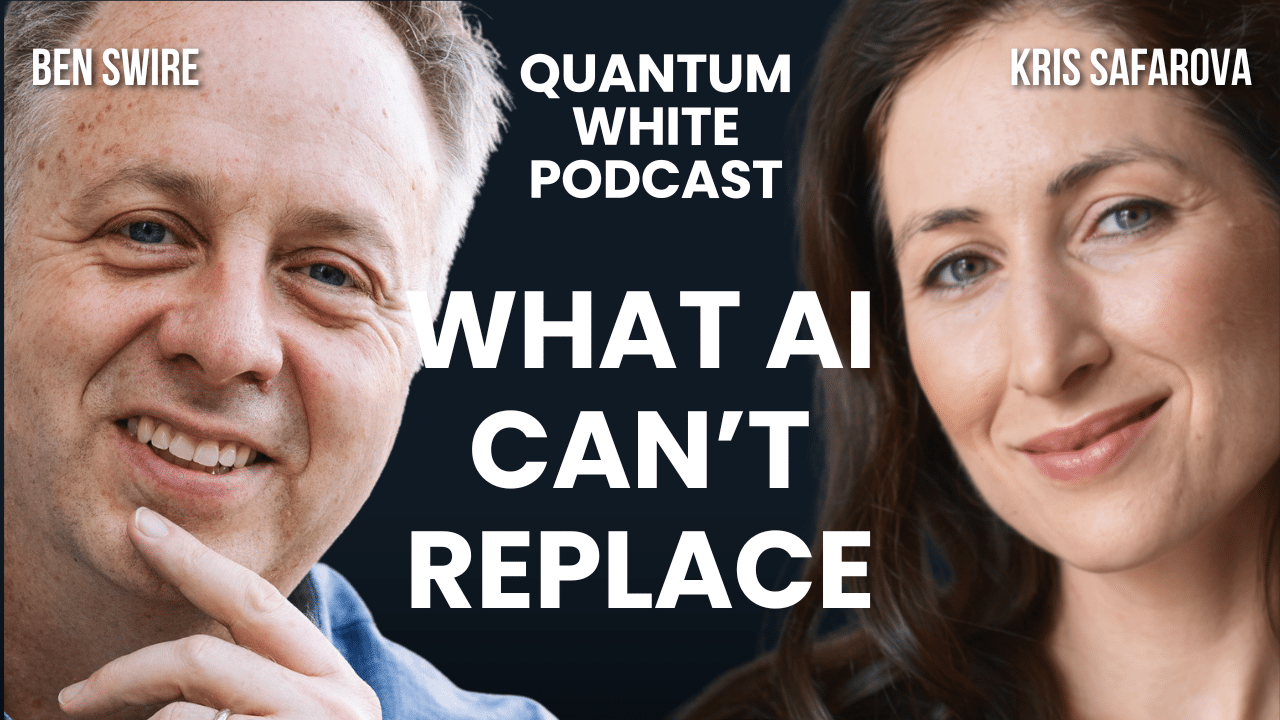
In this week’s Strategy Skills episode, we spoke with Ben Swire, author of Safe Danger and former leader at IDEO. His thesis is trust and psychological safety aren’t byproducts. They’re designable conditions. And when designed correctly, they create room for calculated risk, creativity, and deeper collaboration.
Below are a few insights that stood out:
- Experiential culture: Instructional culture “There’s a difference between handing someone bullet points on how to build trust and giving them a space to practice it.” Swire’s workshops deliberately use low-stakes emotional challenges to normalize openness and risk-taking. The result: teams that critique, challenge, and share more effectively.
- The right environment for growth is neither ‘safe’ nor ‘dangerous’, it’s both “Safe danger is the space where people feel secure enough to step outside their comfort zones.” This is about systematically building tolerance for uncertainty, while preserving respect and inclusion.
- AI makes human insight more, not less, valuable “AI converges. Humans diverge. That’s where value creation happens.” The strategic challenge for leaders is to identify which human capabilities (empathy, contradiction, surprise) will grow in relevance as AI adoption expands.
- Most resistance to AI is cultural, not technical About 15% of executives Ben sees reject AI outright. But those who fail to define the human contribution clearly are still at risk. “If you want to preserve jobs, don’t argue with AI. Focus on what people can do that AI can’t.”
- What actually builds durable teams “Teams that feel safe take more risks, make fewer mistakes, and outperform others. There’s strong data behind this.”
This conversation is relevant if you’re leading transformation, team design, or trying to calibrate your culture for the post-AI workplace.
📚 Get Ben’s book, Safe Danger, here:
Here are some free gifts for you:
Overall Approach Used in Well-Managed Strategy Studies
Enjoying this episode?
Get access to sample advanced training episodes
Episode Transcript:
Kris Safarova 01:09
Welcome to the strategy skills podcast. I’m your host, Kris Safarova, and this episode is sponsored by strategytraining.com and we have few gifts for you. Number one is access to the first episode of how to build a consulting practice level one, and you can get access to it at F, I R, M S, consulting.com forward slash build. You can also download the overall approach used in well managed strategy studies at firms consulting.com forward slash overall approach. And you can also get McKinsey and BCG winning resume, which is a resume that got offers from both of those firms. And we find that clients and people in our community, when they’re looking for another role, they need to update the resume, of course, and it’s a great example to take a look at at any level. You can be very senior, it’s still based to have a good resume. And you can take a look and see what you can adjust on your resume, and you can get [email protected] forward slash resume PDF. And today, we have with us Ben zweyer, who is an award winning designer and former design lead at IDEO. Ben is a founder of make believe, works a team building company that helps teams build trust, spark creativity and connect in meaningful ways. Ben, welcome.
Ben Swire 02:27
Thank you so much. I’m so excited to be here. So let’s
Kris Safarova 02:32
start with your time at idea, and that was a big switch for you from career and finance. What surprised you most when you moved from finance to idea.
Ben Swire 02:42
It was a big shift. It was like going from Kansas into oz. Just emotionally speaking, I think one of the first things I noticed that was different about the two places was the way that they treated asking for help. What I was used to in the corporate world was if you ask for help, it’s a little bit of a flag that you can’t do your job, that you’re putting burdens on other people, that you you’re not quite up to it. So when people did ask for help, it was always quietly. It was off to the side, and it was with apologies. When I went to IDEO, asking for help was a sign of respect for the person that you were asking it for. It was a it was an indication that you wanted to make your work as good as possible, and it completely shifted the entire culture in the way that people interacted with each other and the way they were able to leverage each other’s skills, because there was such openness and such clarity of purpose. So it was just, it was a lovely, lovely shift going there and seeing a place that could do world class work that was fueled by trust and communication and connection, rather than the old favorites of incentives or fear, that made a really big difference on the work and the community.
Kris Safarova 03:56
Definitely, what were some critical things you learned during your time with idea.
Ben Swire 04:01
Well, while I was idea, at idea, I, you know, I fell in love with this culture that was so nourishing and so supportive. And I I began designing what I thought of as creative play dates as a way to just sort of recharge the culture and contribute to it. But I very quickly saw the possibilities and impact of what this could do if it was done right, which is it gave people an opportunity to practice the sort of traits that they were looking for in this culture of trust and vulnerability. It allowed them to take risks in a in a safe and supportive dynamic, but genuine risks, and that allowed people to practice in a way that when they went back to work and they had to really deliver on these skills, it was it became second nature. And so one of the big things I took away was just the difference between intellectual learning. Learning and experiential learning. The distinction between handing somebody a sheet a bullet of bullet points of how to behave and how to have trust, as opposed to giving them an opportunity to practice it and really feel it. And that really shifted my entire thinking up until then, and became the foundation of our business make believe works, and the foundation of this book Safe danger.
Kris Safarova 05:23
So what does safe danger mean?
Ben Swire 05:28
Well, safe danger is sort of the shorthand for the principle that I use to design all of our workshops. And it’s about the emotional space where people feel safe enough to leave safety behind, but they’re still challenged enough to grow. I think most people tend to think of safety and danger as opposites, and that makes sense to a degree, but I found that it’s just more useful to think of them a bit more like dance partners, that safety gives us solid footing, but danger gives us movement, and so safe danger is that sort of emotional sweet spot between the two, where people have enough security to show up as their authentic selves instead of the people they think they’re expected to be. So you know, I use safe danger in our in our team building workshops as a way to help people cut through their expectations and assumptions and start to see each other a bit more clearly, to lower their guard, to get vulnerable without feeling threatened, and to feel seen without being judged. You know, it’s a great premise for anybody who’s sort of ready for something new, but afraid to rock the boat, because it gives people a space to practice taking those risks, so they can expand their comfort zones and then move in the direction they want to go. Can you give us an
Kris Safarova 06:47
example, something that really stood out in your mind, maybe from one of the workshops, obviously protecting everyone’s privacy? Sure.
Ben Swire 06:55
Yes. So one of the workshops that we do is based on the sort of the traits and the skills that we’ve developed because of our unique lives. So, you know, maybe you’re great at navigating difficult personalities because you grew up around them, or, you know, maybe you’re just really great at falling asleep wherever you go because you grew up near an airport, whatever it is, we all have these sort of emotional superpowers, and one of the activities we do is based on those. And what we do is we have people share them with each other, but not just the superpowers, but the origin stories of it. So not just I’m really well organized, but I’m really well organized because I’m the oldest of six kids, and I was the one that had to keep everybody clean and dressed and all that. But after they’ve shared these stories, what we do is we give them a playful twist, and we use play to lower people’s guard and help them sort of open up a bit. And what we’ll do is have them turn that emotional power into a comic book power. So you know, somebody who’s thick skinned and not easily offended. They can have, like bulletproof skin or something, and we have them combine their powers into a single superhero, an action figure with all sorts of, you know, accouterments and supplies. And the results are sort of hilarious and heartfelt. It sounds silly and it sounds playful, but what it delivers is an ability for people to really open up about their pasts, about their emotions. They think they’re talking about this thing that they’ve made, but what they really end up talking about are their values and their perspective on life and their their hopes. All of that comes spilling out because there’s this balance of feeling both safe enough, because they’re playing in this world, but it’s also stepping outside of their comfort zone. There’s these are not things that usually people speak about in their professional lives, and we’ve done we did a session with a group of executives from a from a tech company, and the entire conversation began to revolve around these, these leaders, experiences with their own parents, the impact that their parents divorce had had on them, or the impact that their parents not having. I mean, all of this came flooding out in a team building experience that would never have shown up otherwise, but it allowed them to really push their boundaries of connection, to understand each other a little bit more differently. And so it was really, it’s really a marvelous thing to see when you give people a little bit of safety, what they’re willing to do with it, and how they’re willing to push
Kris Safarova 09:34
what were some of the superpowers that really stayed with you the most
Ben Swire 09:39
a lot of people talk about empathy, usually because they didn’t have it growing up. So they they learned to sort of show up in ways where they’re they’re delivering into the world things that they wish they’d had as children. So they’re really good listeners, or they’re very, you know, thoughtful, um. We’ve we find a lot of peacemakers. Again, because of difficult family dynamics, a lot of people tend to know how to either fight well or help people make up. And so these conversations start coming out. And what’s interesting is, you know, I think there’s a, there are two threads that are pretty strong in our culture right now. There’s a there’s a desire to talk about what we have in common and what makes us all the same, and then there’s an equally strong current of what makes us unique and what makes us stand out. And the nice thing about these sort of activities is, when they’re done, right, it allows both of those to shine, so people can both listen and see that they’re not alone and say, Oh yeah, I connect with that, but at the same time, find their own distinct and unique contribution to the whole thing. You know, we all know what it feels like to have our hearts broken, and we all know what it feels like to have a hug when we really need it, but having people share the unique circumstances in which those happened allows them to really build a degree of trust and connection, that when they go back to their professional lives, has a market effect on the way that they deal with each other. Because what we see is that now people know how to disagree with each other without taking it personally. They see it as a conflict of priorities as opposed to personalities, we see people that know how to ask for help without being embarrassed, because they feel respected and they feel understood. So they’re not worried about downgrading their image in front of people. They feel comfortable critiquing each other because they know that people will assume good and not think that they’re taking it out, because they understand each other. So helping people open up in this really personal way, a lot of leaders often sort of tilt their heads when we talk about this, because they feel like it’s a distraction from work, or it’s a, you know, it’s taking time away from the stuff that really matters. But what we’ve seen again and again, and we just hear from our clients over and over, is that this is the stuff that really fuels effective work cultures. What
Kris Safarova 12:08
do you think exercise like that does for an individual? So it is clear how it is helpful in terms of group dynamic and so on. But what about individual? How individual is empowered by going through this,
Ben Swire 12:22
that’s, I think, one of the my favorite things to see, because what it allows them to do is to sort of test the waters and when they share a little bit of themselves that they didn’t expect to share when they woke up that morning, talking about either their past or their future, their hopes, and they see that it’s safe. You know, our brains, our nervous system, just automatically reconfigures itself and says, Oh, this place is safe to be a little braver. And so it begins to push their comfort zone of who they can be in this place broader and broader. And it really it allows people to bring their own unique voice into a situation, which too often. You know, the corporate world is renowned for building cookie cutter personalities, for trying to make people fit into a pigeonhole, and I think, to its detriment, because innovation and creativity and all of that comes from friction, from different personalities, from different insights, pushing each other and growing and learning. And what we’ve seen, you know, to answer your question about what it does for the individual is it allows people to grow some confidence that their voice, their unique perspective, their unique history, is welcome here and important and going to be listened to. And so what we hear from our clients is that after these activities and workshops, even the day of people are much more frank. They’re much less guarded. They share, they challenge leadership in friendly but genuine ways that normally they’d stay quiet. They push each other, but in a way that there is meant to make the work better and not just make themselves look better. And so it gives people the power to step into their own unique voice that many of us have kept quiet for years. Anybody that’s gone through junior high school has learned how to fit in and learned how to dial back the things that make them stand out. And I think one of the interesting things about this is that there aren’t a lot of opportunities in life where you’re encouraged to re excavate those parts of you that you gave up when you were young because you needed to fit in and you needed to be loved and you needed to be liked and you needed to get a job and you needed to look like everybody else. But what we’ve seen is especially with leaders after they’ve established themselves and they’ve. They’ve got some autonomy now, they’re ready to really assert themselves and finding ways to really be unique and to unearth who they are beneath all of the practices that they’ve learned. It’s just marvelous to see, because that’s when really interesting ideas start coming out.
Kris Safarova 15:19
What are some of the most exciting ideas that came up through those workshops that you could share.
Ben Swire 15:25
Well, as I said, I mean, our workshops are distinctly the work we do is with is aside from the business themselves. So we don’t put people together to solve the business’s problems or the problems that are there. What we do is very much have them set that aside and take a break and work on their interpersonal dynamics so that when they go back, they can make big changes. So I don’t I’m not privy to a lot of the specifics and to how what the teams have actually deployed, but what I hear again and again and again, from our from our clients, coming back, is saying that the before and after is is noticeable and remarkable, that people are able, as I said before, to feel comfortable. I think there are two key things that they’re able to do. They’re able to ask bad questions, and they’re able to offer bad answers. And I think those are two key things that make work much more interesting if you’re able to ask, you know, they say there’s no such thing as a bad question, blah, blah, blah, but all everybody knows that there are, and everybody rolls their eyes when people ask obvious questions. But the ability to question the obvious and to really dig a little deeper. That’s the opportunity to really find something new, and the opportunity to offer a bad idea that you are confident that your colleagues are going to take and make better, as opposed to judge you about that’s another piece I actually, I do know one, I do have one that I can offer up. There was a a team that we worked with. It was, it was a credit card company, something you probably have in your wallet. And they, one of the things that we’d heard ahead of time was that they were really stressed, because there was this, you know, everybody’s constantly giving out credit card points, trying to win people over. And it was a race to the bottom, essentially. And I knew one of the things they’d been working on was was trying to get somewhere new. And their team, up until then, had just come up with the same old answers that had been over and over and over again. And what, what we heard was that after some of these workshops, and people were a bit more comfortable, some of the what came out was somebody brought out the point that there was a difference between loyalty and bribery. This had never been said before in this group, but they said, Look, we’re trying to bribe these people. What is loyalty really about? And it shifted the income the entire conversation. And they began talking about, well, what is, what does build loyalty? Is it? You know, it’s kindness, it’s generosity, it’s concern, it’s care, all right? Well, if that’s the key, what if we stop trying to buy people’s loyalty and we start trying to show up in a different way for them? And it completely changed the course of the work that they were doing and where they were taking it, and it changed the entire dynamic of things. I know that they developed a series of offers that they were incredibly proud of, for better or for worse. What happened was that it got them so noticed that they were all promoted, that the leaders were promoted into different groups, and then the new people came in, and unfortunately, this is the other hallmark of corporate life. They didn’t want to promote somebody else’s work, so all of those things got shelved and they went back to the old standbys. But it was really interesting to see how differently thought can change when you give people permission to challenge the accepted wisdom, the conventional thinking, to question the obvious and really see where it can take you
Kris Safarova 19:11
definitely and how often AI comes up during this workshop, AI
Ben Swire 19:19
is coming up more and more and more, both pros and cons. You know, I think one of the the tricky things about AI is it can be phenomenally useful and insightful and helpful at the same time it’s unreliable. There’s all sorts of questions about it, and people’s jobs are increasingly at stake. So the two when people come to us and they want to talk about AI, it’s either, how do we get more comfortable with this, how do we use it in a productive and interesting way, or it’s, how do we think about the next five years? What are the traits that we really want to. Hire for and cultivate as we think about where this world is going. And, you know, AI is great at a lot of things. It’s not particularly good at empathy, which is a uniquely human experience. There was an interesting study, I guess, that was done where there was an online an AI therapist that helped a group of people. And after the first round, I think, some remarkable number of 97% were very pleased with their AI therapist. However, they didn’t know it was an AI therapist, and as soon as they were told that number plummeted to like 20% because they realized that they had been just given lines that didn’t mean anything, and what they wanted was the was the meaning behind it, the knowledge that these words were coming from someone that had lived the same experience. And so I think as another piece of this, which is that what’s unique to us is often the stuff that we try to hide, the dings and the dents and the damage and the pain that we’ve gone through in our lives. But as AI becomes more and more prevalent, I think that connection with what we’ve been through is going to become increasingly important, because it’s one of the few things that can’t be duplicated and takes personal insight to really excavate and find what you can do with it. You know, it’s, it’s not uncommon to hear, you know, people making movies or starting businesses, and they say something like, you know, well, I wish I’d had this as a kid, or, you know, this was missing when I was growing up, and what they’ve done is essentially gone through, taken stock of their own, for lack of a better word, pain, what was missing, and they filled the world with it because of that insight, because of what they’ve been through. And so I think building empathy and self reflection and these sort of qualities in people, and hiring for people that know how to do that, as opposed to just executing tasks, is going to become increasingly important, because AI tends to converge upon best practices, whereas human beings have the capacity to diverge, to see something different, to question things in an Interesting way and say, Well, what if we did this completely counterintuitive thing? Where might that lead? You know, and that’s why you don’t end up with faster horses, but you end up with cars. You know, that’s the sort of thinking that it takes divergent thinking to accomplish. And AI is not designed to do that. It’s designed to find the best practice and keep hammering that home.
Kris Safarova 22:42
And based on doing all the workshops and spending time with so many executives, what are the current if you would summarize, I know it’s very different for different people, but on average, what do people think? What executives think when it comes to AI right now, I
Ben Swire 22:57
don’t think there’s a big secret to it. I think everybody is both it’s they’re excited about what it can get them, and they’re terrified about what it’s going to do to them. And so I think there’s a real there’s a double sided approach to this, which has been inherent with the pursuit of it since the beginning, which is the recognition that this is going to destroy a lot of things, but the promise that it’s going to make a lot of things better. And I think it really in the conversations I’ve had with people, those two points of view are very rarely brought together. People will talk about, oh, well, this is going to help us, you know, reduce our overhead, and we’re going to be able to, you know, do more with less, but at the same time, they recognize the human cost and what that means and where it’s going. And I think human beings are naturally geared towards safety and familiarity, and they there is a certain lack of the ability to imagine what make him come next, which is why divergent thinking is such an important but also rare thing. This moment with AI, I think, is very similar to what painters must have gone through when photography was invented. Suddenly their bread and butter is being taken over by something that’s going to be automated and instant and easy and anybody can do. Where does this lead us? This mean painting is going to go away forever? No, turns out not. It’s just going to go in a completely different, unsought of for an unthought of direction. And I think the optimistic point of view is that AI is going to that’s what’s going to happen with AI. It’s going to automate a lot of the things that it can and it’s going to open up new possibilities that we can’t even imagine yet. But I I find that there’s a lot of denial in people’s conversations about it. I think that optimism is often. And you know, with comes with some hand waving about the human cost and about what’s going to be lost.
Kris Safarova 25:07
I agree, Ben, and in percentage terms, approximately how many of those executives actually not paying attention to AI and trying to focus on the usual day to day activities as much as they can.
Ben Swire 25:22
I don’t know that. I’ve come across a single executive who is not thinking about AI in some fashion or another. Some of them offensively, some of them defensively. You know, I think there’s a there are streaks and some of the more human centered ones that are clinging to old ways of doing things without being able to justify it. And I think that’s a very dangerous approach to things. I think you know the argument that you make about, well, this is going to cost people jobs, and we should keep those jobs, is not going to stand up when people have to make cuts to the cost. So if you want to protect people’s jobs, you need to find the things that they can do that no one else can do, that AI can’t do. And so in the more thoughtful and insightful leaders I’ve talked to, that’s the direction they’re going in, because it’s beneficial for everybody. The idea is like, Okay, well, how can we use AI to its best capacity without losing what makes people so useful and insightful and trying to come up with a way to balance that? But I think AI is an inevitable concern for anybody that’s leading anything at this point, and
Kris Safarova 26:42
there’s a follow up then. And I guess that would be a better way to word that question. Of course, we all thinking about AI, but in percentage terms, how many executives leaders, they try to do things the old way?
Ben Swire 26:57
I’ve I would say maybe, maybe 15% of the leaders I’ve seen are saying, No, we’re not going to use AI, or we’re really holding out against it. And I’m not necessarily convinced that their rationale will hold up for very long. I think it’s it’s well intentioned, and it’s very thoughtful and kind. But I think, as I said before, I think if you’re going to make an argument for turning your back on a tool that can be as useful as AI is going to be once it gets all its kinks hammered out, I think the argument has to be stronger than people need jobs. Because, unless you’re a politician, most companies don’t care about that necessarily. What they care about are their shareholders, their bottom line, efficiency, quality of work, and if AI, if they think AI, can deliver that better, that’s where they’re going to go. So you know, as I think I’ve, I’ve encountered maybe 15% of people that just out of hand, say, Nope, we’re never we’re never going to use that when it’s it’s just wrong for who we are and what we’re thinking. And I admire that stand, and I admire the principles behind it, but I do worry that there’s not enough critical thought that’s gone into justifying it in the long term, and the
Kris Safarova 28:25
reasoning behind it is usually to protect people’s jobs. Or are there multiple reasons? What are the top reasons people use?
Ben Swire 28:32
The top reasons I’ve seen have been around keeping things the way it works. So, you know, I know we worked with a publishing company, and obviously they’re concerned with AI because they put out books and articles and stuff. But for their you know, their art department is not allowed to use AI to come up with covers, and their media department aren’t allowed to come up with AI for their publicity and all that. It’s just an across the board span on AI because AI is such a threat to their core bread and butter. But even the people whose jobs are being preserved through that sometimes roll their eyes at it, because they could get a lot more done if they were able to draw on this. It’s, it’s, it’s a tool, and it’s also inevitable, I think so. I you know, while I were I understand it, I do think there’s a naivete involved. But yeah, it’s the the argument that I’ve heard most often is about protecting people, making people feel respected, making them keeping their jobs safe, making them feel like their talents and their skills are uniquely valuable and worthwhile, worth protecting, all of which I 100% adore. I you know, yes, but as I said with you know, like. The painters and the photographers, there’s a there’s a moment at which the value that your talents have shifts, and it may need to go into a different direction because of the realities of the situation.
Kris Safarova 30:13
Thank you for sharing this. And then if you look on the other side, for executives who are really forward thinking, Could you say with us, any examples that really stood out for you?
Ben Swire 30:23
Well, the ones that I’ve seen that I admire the most are the ones that have that, you know, people first mentality. They do want. They don’t want to live in a world of robots and automated everything, but they recognize that they will be more successful if they integrate it. So what I’ve seen are, you know, as as AI has come into prevalence, there’s been a lot of cuts and a lot of reorganizations, and a lot of companies have then brought us in, because what they want to do is build the human connection between the people that they have. They really want to make the most of the dynamics between them and make sure they’re maximizing their investment in these people, that they’re getting the most out of them, and that the people feel safe and comfortable and like being there and are doing their best work. So we’ve, we’re brought in a lot to help teams build connection and trust and uniquely human dynamics, because they know, you know, client, clients come to us all the time saying, you know, our our teams are siloed, or they’re not collaborating, or they’re they don’t trust each other. And how do we do this? And you know, we’ve handed them bullet points and we’ve given them lectures, and so they bring us in as a way to build those emotional connections, because what they’ve seen is the difference that it can make when you have, you know, a team that knows how to collaborate, as opposed to A team that just works together. You know, I, we were, did work with a team, and they had two of their two other people were as diametrically opposed as I’ve ever seen. One was this just burst of sunshine and lightness, and the other was as deep a cynic and sort of surly characters I’ve ever seen. It was, you know, think big bird and Oscar the Grouch on a team together. And when I first went in to work with them, I thought, Oh, this is, this is a disaster waiting to happen. But this was a team that really had already done a lot of work emphasizing connection and understanding and trust. They began every week with sort of an open floor for people to talk about what was on their minds without any obligations. They all their team meetings started with a five minute sort of personal debrief. Everybody sort of understood each other. So while these two did disagree constantly, the friction between them was actually really powerful and useful, because they did it with a respect and a curiosity, as opposed to just conflict and disagreement. So, you know, one person would, you know, I can’t remember what they was it, but he would, you know, the cynic would say something very surly, and the optimist would say, tell me more about that I’m not because when I look at it, I see this. Tell me what I’m missing. And they would and that conversation and that dynamic and that mutual respect allowed them to collaborate in a way that pushed each of their ideas forward, so emphasizing these sort of human qualities and traits, and making sure that if you’re going to keep people around, they can be the best people they are, has really, I think, made a big difference and noticeable. It makes a noticeable impact on the teams.
Kris Safarova 33:58
How do you think AI will play a role in design and creativity, where they think AI, other technology will contribute, and where humans will contribute.
Ben Swire 34:07
I think, I think it comes down to that convergence versus divergence. I think in the same way that, you know, I when I was at IDEO, IDEO was famous for pairing people from different backgrounds all the time, and I worked with an architect and on a project once, and he was talking about the skills that he had learned as a young person that had completely shifted. He’d learned to draft things using a T square and pencil, and he said all those skills are completely irrelevant now, everybody’s using computers. I’m using a computer, and it’s so much faster and it’s different, it’s cost us things. And he said, You know, it’s not a it’s not a clean trade off. It’s not just better, it’s just different. I’m a writer by trade, and I, you know, obviously I use a keyboard in a. Computer to write most of my stuff, but I also will switch back and forth and write by hand a lot, because it forces my mind to work in different ways. It slows things down. It makes me it’s it’s slower and it’s less efficient, and it makes my mind work in a different way. And I think that AI is going to work as a tool in the same way. I think what’s going to come I think the best outcome is that AI becomes a way that talent is less dependent the way we think of talent is less dependent on technical skills and who can execute things better, and it’s going to be more about imagination, and it’s going to be more about divergent thinking and creativity and inspiration and looking differently and looking deeply. I think, as I said, AI is excellent at looking across the world, finding best practices, winnowing it down and telling you this is the way to do it. This is the best way that everybody else is doing it. And that’s great for the first 10 minutes of whatever you’re doing, but then it gets pretty old. Nobody wants to listen to the same song over and over and over again. You need somebody to surprise you, and I think that’s where humans are going to come in as the unique piece is surprise. I don’t know that AI can do that. I don’t know that it has that capacity. I certainly haven’t seen it yet. So the idea that you can surprise each other comes from all of the dents and dings and foibles of how our minds work. You know, they don’t, they don’t work in a linear fashion. You know, anybody that’s ever had a dream knows that. And it’s that unique way of putting stuff together that I think is really interesting. If anything, I think the stuff that they’re doing right now to make AI work better is going to cost it that capacity. You know, right now, AI can drift and it can hallucinate and it can and some of the more interesting things that it’s produced have come out of that, that sort of disjointedness. But I think that’s really where we’re going in design and creativity is execution is going to be handed over, but inspiration and creativity, that’s where we’re going to have that’s where we’re going to flourish.
Kris Safarova 37:29
If you feel comfortable sharing, how do you personally use AI tools, technology in general, in your work and in your personal life, for our listeners to see maybe they can adapt something for themselves.
Ben Swire 37:41
I don’t know that I’m the best example of how to use AI, because in our work, we are very deliberately, for the most part analog. We’re really trying to make people think, if we’re in person, think with their hands and make eye contact. If we’re on the screens, we really try to get them into their heads and off of the tools, if possible. Because I think, you know, people spend enough time that part of them, those those muscles, are built every single day, the computer side, the digital side, the AI side. What I have used AI for occasionally, one of the key principles that I use when I design my workshops is trying to level the playing field between people, so that nobody ever feels inferior or left out, so that everybody can contribute and feel valuable. And so AI can be really useful way of doing that. If I’m asking people to design something in a group. And I want them to, you know, one of the activities we do is we’ll, we’ll ask them to think about a a life changing insight that they had, you know, a hard earned bit of knowledge. And we’ll have them meta, turn that into a metaphor of the creature, of a, you know, turn the before and the after into a creature, a chimera. So, for example, if my thing was that in the past, I was too concerned with safety, and I stayed at a job too long because I was afraid of what might come next. But then I discovered that jumping was going to make me and, you know, was much more freeing and fun my Chimera might be, you know, half lobster, half monkey, and having people draw that is fun, but a lot of people get very self conscious because they’re like, Well, I can’t draw, and I don’t want to do this. I’m not creative, but I can use AI, and I can say, just tell it what you want. And all of a sudden it will create an image, and then people will talk about it, which is the whole point of it. The whole point is to get them talking. And so if I can use AI to level that creative playing field, so there is still an element of play which I think is essential, because it allows people to lower their guards and to get distracted from their own self consciousness and to spark new things. So play and create. Is essential. But if AI can help me, help people be proud of what they create. I have used it in that way, digitally a couple of times to great success. It’s been a really nice leveler for people.
Kris Safarova 40:13
Ben and you recently wrote the book. Congratulations. Thank you. What would you like readers to take away from the book. So for someone who reads the book, what are the key things you want them to take away?
Ben Swire 40:26
Well, what I hope the book can do for people, I think the whole premise of safe danger is about finding gentle ways of stepping outside of your comfort zone, to move in the direction that you hope to move in, or to become the person that you’d like to be or that you may have left behind. And so the book is full of both insights about how to do that and why to do that, and which areas to put that work in, but all with the final outcome, what I hope they walk away with is the ability to sort of rethink their relationship with risk. What that looks like, that it doesn’t have to be all or nothing, it doesn’t have to be scary. It can just be useful, that it helps them rethink their relationship with work and their workplace, that they can see that work doesn’t need to be about pain and stress, that there are ways of infusing it with joy and creativity and connection, and that it helps them rethink their relationship with other people, that it allows them some tricks and tips on how to really connect more easily and deeply with People in a way that’s rewarding and brings more richness to their own lives. The book is, if is much as much a sort of amalgam of all of the things that I learned, especially at IDEO and from a lot of just brilliant, brilliant people that I interviewed for the book and put together. And you know, it’s, it’s a little bit less about convincing people that this is right, and more about sharing what convinced me that it’s useful and right and helpful. And so I hope it opens up the doors for them that it it opened for me, but
Kris Safarova 42:16
and if someone feels now listening to us that they don’t have enough play and joy and curiosity, specifically curiosity, because it’s such a powerful thing for productivity and for being able to do unique work only you can do. What would be your advice? What are some of the things a listener like that could do to add more curiosity in their life and more joy?
Ben Swire 42:40
So I think, you know, Curiosity is a sort of fascinating thing, because it’s not just about asking questions. It’s about just even noticing that there are questions to ask. I think that’s the big difference between curious people that I’ve spoken to and people that just take things as as they come. It’s, it’s that they even, it even occurs to them that there might be something to question. And often, I think just being informed of that or given that prompt is enough for people to start thinking, oh, you know, what am I not asking questions about? So one of the people that I interviewed for the book is a wonderful guy named Jad abramrad, who started a radio show called Radio lab that a lot of people know, and he is one of my curiosity superheroes. But one of the things that he was talking about is how he’ll just sometimes walk down a street and look at something and just wonder if he could recreate it, and what it would take. So, you know, if he’s holding a pencil, what would it take to actually make a pencil? Huh? Well, I’d have to know how to, you know, carve wood. I’d have to know how to do paint. I’d have to know how to put this, you know, and how, you know, or sidewalk, would I have any idea how to lay a sidewalk or make concrete? No, where are the pigeons? Where do they sleep? Like these sort of things, just walking down the street. And it’s a muscle that you build and that you practice. So really, practice is a key piece. The simplest way I’ve seen leaders encourage curiosity in their in their people, is by rewarding questions instead of just rewarding answers. You know, they I think a lot of leaders and organizations tend to prize certainty. That’s what they reward, a fast response to confident pitch. But if all you ever reward are confident answers, then it just sort of reinforces the old obvious things. But curiosity is different. It asks, you know, what are we missing here? What else could be true? And when leaders model that you know by by asking open questions themselves, by pausing before they rush to solve things, or celebrating the person who reframes a problem. It really gives permission to everybody to do the same, and then you ask about joy. Joy is another. A thing. I think I spoke with a woman, an author, Ingrid fitell Lee, who wrote a wonderful book called joyful that was all about this. And one of the things that she pointed out, that I thought was brilliant, was that how much many of us forget or don’t even know what brings us joy, we think we know because we’ve been doing the same things over and over again. But when you really ask them about when you really talk to them about it, the things that they do don’t bring them happiness and joy. They don’t refuel them, they don’t re inspire them. It’s just what they do when they have free time. So one of the things that she encourages is for people to take stock of really, what makes you smile, of also, of lowering the bar like it doesn’t have to be going to Disneyland every weekend. It can be just buying yourself a colorful mug and putting it on the table because it makes you happy. In terms of joy at work, what I thought was really interesting is that talking with leaders about it, a lot of them sort of made the assumption that joy has to come from the work itself. So, you know, I would, they would say, Well, if you work at IDEO, of course you are happy because it’s a playful, joyful place of creativity. But you know what if you’re an accountant or what if you’re doing something that’s really repetitive and stressful and joy is off the table? But joy doesn’t only have to come from tasks. You know, it can come from how you experience them together. One of our absolute favorite clients at make believe works is an accounting company, or they’re a back office company. They do accounting, they do invoicing for different companies. They’re called Syzygy, and they are the happiest group of people, the best adjusted, the most well connected, joyful group of people. I’ve worked with across the boards, and they’re doing work that a lot of people would assume is not particularly smile inducing, unless you know, but that’s not what they’re about. They’re about doing good work, but connecting with good people. And it’s that balance that really keeps them, you know, they’re an effervescent group, and so you know, it can be as simple as experimenting with how a process is done, or just giving space for humor in the middle of the grind. It’s about those micro moments, and they don’t change the fact that some jobs are hard or some jobs are tedious, but they do change the energy around them. And the other thing that I think leaders need to keep in mind is that doing making a place joyful, taking care of your people is not just a nice thing to do, it’s actually a really smart business strategy. You know, there’s study after study after study from from Oxford, from MIT, from Warwick, from Google, looking into what makes teams the most successful, and it’s not hard skills like education or experience. It’s not personality types about being an extrovert or ambitious or go get them. It’s psychological safety. It’s teams that feel happy to be together, that feel like they can be themselves. Those are the teams that are the most productive, that make the fewest mistakes, that have the biggest impact on their organizations and their industries as a whole. So investing in your people, making sure they’re happy, encouraging curiosity, encouraging connection, is not just about being a nice person, it’s it’s about taking away some of that sort of the mental tax that being lonely and sad does to people that are in a job that they don’t love, and allowing them to do their best work because they’re happy and inspired.
Kris Safarova 48:51
I want to wrap up with two quick questions I asked when there’s an opportunity at the end of this time. The first one is over your entire lifetime. What were two? Three aha moments, realizations that you feel comfortable sharing, the way you look at life or the way you look at
Ben Swire 49:11
business. Well, I mean, the the aha moment in business is the easiest one, because that was leaving behind what I thought was safe, which was the corporate world, corporate finance, marketing, where I was and, you know, I was promoted, and I was doing climbing the ladder, and I thought that was, I mean, I’m a, I’m a humanities major at heart, philosophy, psychology, film, art. So having a job that was allowing me to pay my mortgage and all that stuff was very prized. So giving that up and taking the leap to go to IDEO felt a little reckless at the time, but it became, I think, the defining, one of the defining choices of my professional life, because it gave me purpose and creativity and community and. And it showed me that the way I thought everything had to be was not the only way it had to be. That there were other ways of doing things. I remember when I first with my first week there, I was asked to write a deck for one of a major, major client. And I did what you know, one always does, which is I’d asked for past examples. What’s ideas voice? What’s the tone you use when you put this out? How do we what’s our brand? And the the team leader looked at me and just said, It’s whatever you write, your voice is our voice. That’s why we hired you. And it was a shock to think they trust me already. They pushing. You know, it’s it’s not that they want me to fit in, it’s that they want me to help them expand. And that changed everything for my professional life, my personal life, the biggest shift was, was having kids. If I’m being completely frank, I didn’t want kids. I argued against having kids. I was eventually won over by my wife, and happy to do so, but that shift reignited and gave me an opportunity to rethink a lot of again, the assumptions that I had, it made me open to curiosity in a completely new way. You know, kids, up until they’re about 15, their brains, as we all know, but they work differently, but they work in a distinctly different way, which is, they’re exploring things. There’s an explorer mindset, and then there’s sort of an exploiter mindset when you learn, when you shift into mastery, which is why kids, you know, trying to get a three year old to walk down the block can take you nine you nine hours because they want to investigate every leaf and taste every, you know, takeout menu and all that. That’s all there, because everything is equally new. And my experience with my kids was, I initially tried to push through that and like, Come on, we got to get to got to get to preschool, it’s time to go. And then I stopped and paused and just said, No, let’s, let’s go down the block at your pace. And it did. It took us three hours to go down two different blocks. But it was one of the most insightful, revealing moments of my life, because it’s it reminded me of how much there was to see and appreciate and how much I was ignoring. It reminded me a little bit of, you know, how we I think everybody has had that experience where you’ve been on your commute, either to work or home, and suddenly you find yourself there and you can’t remember even doing it. Like, how what did I do for the past half hour? And I realized that that was a bit of how I’ve been living my life. You know, I was doing the things and but in between the big moments it was, it was all sort of fugue state. Having kids broke that for me and allowed me to use those in between moments to really be curious, to be thoughtful, to wonder, to imagine, and I’m as much of a pain in the neck, as they have grown into being as teenagers now, and as monstrous as they can be, I am forever grateful to have them in my life disrupting what I think I know.
Kris Safarova 53:11
And what would you say to someone listening who also not sure if they want kids, but they the window is closing for them.
Ben Swire 53:20
What would I say having kids is definitely not for everybody, and I am. I’m the last person to say, oh, you should have kids. Just get over it or something. I’ve heard plenty of people say that. What I will say is, if you’re if you’re holding back on having kids because you’re afraid everything’s going to change, you’re absolutely right. It is, but it’s going to change in a way that you won’t mind, even though you think you will. My experience of it was, it was sort of like waking up from a dream, you know, you’re in the dream, and you’re chasing the red bouncing ball, you know, across the ocean, and it’s really important to you, and then you wake up, you’re like, why was that so important to me? And that was my experience. All the things that I thought were my priorities before kids sort of evaporated and shifted when I did have kids. That was my experience. But I know lots of people who don’t have kids and are perfectly happy and fulfilled and fascinating human beings. So I’m not saying you, actually, I’m not saying you, you know, do it no matter what I am saying, from my experience, I would never go back if I were given the choice. I can’t imagine how much I would have missed out on, but that may be my own poverty of imagination, but I do think it’s it breaks you in a really interesting way. I’ve never been I mean, obviously you hear parents say, Oh, I’ve never loved anything so much as my kids fine. I’ve also never been as angry as I’ve been as I am at my kids. I’ve never thought I could yell at. I feel so infuriated at somebody who refused to put on their socks as I found myself, but I think that’s also a great learning experience. I think the more you pay attention to what what upsets you, the more the more insightful you can become about your own workings and opportunities change and grow.
Kris Safarova 55:21
Thank you. But last question for today, if it was in your power for every person listening to us right now to have one belief in their heart, what would it be?
Ben Swire 55:30
I think it would be that change is possible. I think so much of what holds us back, what breaks us down, what steals our joy, what steals our voice is this belief that the way things are right now today, whatever is the way it will always be. I don’t know if that’s just psychologically how our brains function, that we take this moment and project it forward. But I I know what it did to me. I know how many years I wasted thinking, well, this is the only way it can be. And I’ve seen, I think that’s one of the things I love most about my work is, you know, I go into really wonderful businesses, and just doing incredible work with people that I, you know, I would be honored to work with, but who are in a rut, who think that this is the way it is and this is the way it will always be. And we do these things that look silly and simple on the surface, but open something in them, and they realize, oh, things can be different. I can be different. This place can be different, huh? And I can say, you know, people come up to us after every single workshop we have, and they say something along those lines, and it’s the best feeling in the world for me and to see it in there and in their eyes to see potential and possibility open up. So I think that’s that’s my answer, that change is possible.
Kris Safarova 57:08
But where can our listeners learn more about you? By your book, anything you want to share.
Ben Swire 57:14
The best place is our company’s website, make believe works.com and you can also find us on LinkedIn and various social medias, but going to the website directly is sort of the best way you can see who we’ve worked with. You can see how we work and why we do what we do, and you can also find out more about the book there. And I’d love to hear from anybody that finds this interesting or rewarding, or has any questions that I could be useful for
Kris Safarova 57:45
our guest today was Ben zweyer, the author of safe danger. Ben, thank you so much for being here. I especially appreciate how Frank you were on so many topics, especially when we were talking about your experience as a father, things like that really can unlock something in someone’s mind that they really need to be unlocked. So I really appreciate it. And this episode is sponsored by strategytraining.com you can get few gifts from us. The first one is the overall approach used in well managed strategy studies. And you can get it at firms consulting.com forward slash overall approach. You can also get McKinsey and BCG winning resume, which is a resume that got offers from both of those firms. And you can take a look at it and see what you can adjust when you are editing your resume. And you can get it at firms consulting.com, forward slash resume PDF. And lastly, you can get access to the first episode of how to build a consulting practice level one, and you can get access to that [email protected] forward slash build. Thank you so much for tuning in, and I’m looking forward to connect with you all next time.
Leave a Reply