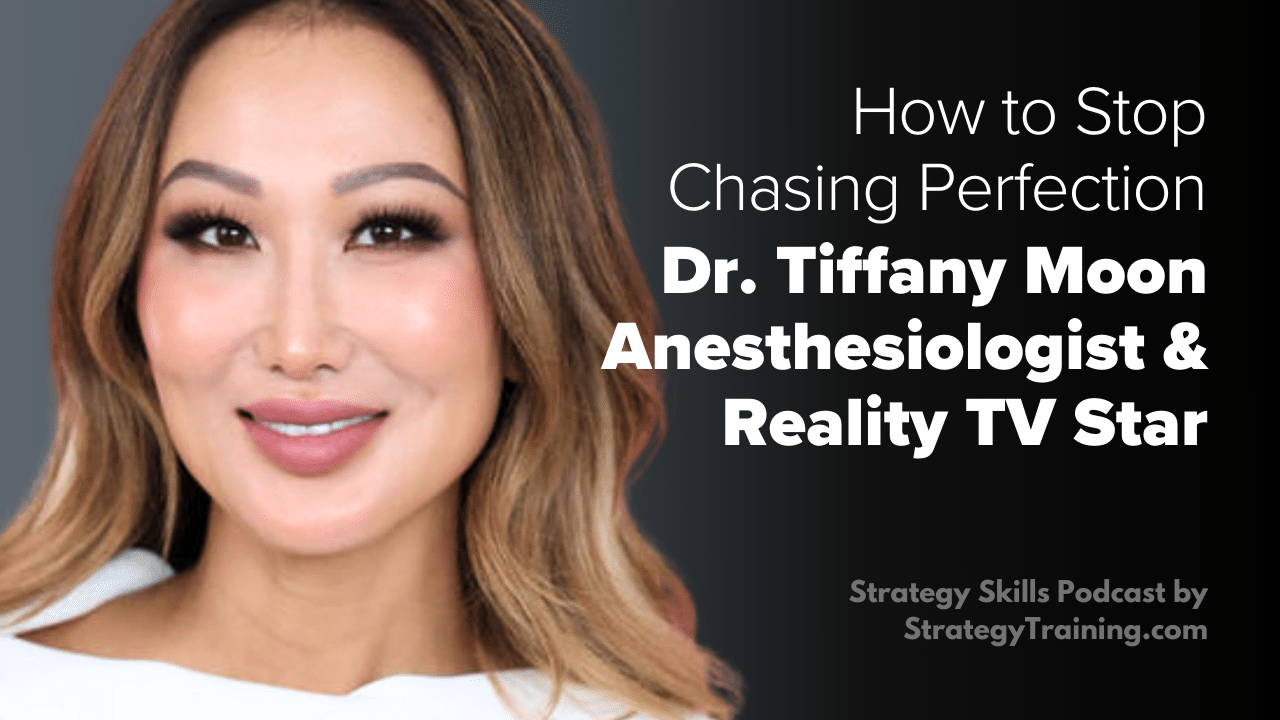
Dr. Tiffany Moon isn’t just breaking stereotypes — she’s rewriting the script.
In this episode, Dr. Tiffany Moon — board-certified anesthesiologist, founder of Aromasthesia, and former cast member of Bravo’s Real Housewives — opens up about what it really takes to balance ambition, motherhood, entrepreneurship, and public scrutiny.
From immigrating to the U.S. at age 6 to graduating from college at 19 and medical school at 23, where she finished in the top ten percent of her class, to launching a wellness brand rooted in science and self-care, Tiffany’s story is as raw and relatable as it is inspiring.
We cover:
- The culture of overachievement and how it can become an emotional cage
- The silent weight of perfectionism in high-achieving women
- How childhood trauma shaped her relentless drive and how she’s healing from it
- Why asking for help isn’t a weakness — it’s a strategy
- The behind-the-scenes reality of being a doctor and a reality TV personality
- Why she’s choosing presence over perfection in parenting, career, and business
Plus:
- Why even the most “put-together” people struggle with self-worth
- How Tiffany balances a medical career with being a mother, wife, and founder
- Why her social media presence is as real as it gets and why that matters
Tiffany also shares the surprising impact of being on reality TV, not on her brand, but on her identity, and why she now uses her platform to champion authenticity, self-care, and breaking generational cycles.
This is an honest, unfiltered conversation about legacy, self-awareness, and the courage to define success on your own terms.
I hope you will enjoy this episode.
Kris Safarova
Tiffany Moon, MD, is a board-certified anesthesiologist, entrepreneur, keynote speaker, mother of twins, and author of Joy Prescriptions: How I Learned to Stop Chasing Perfection and Embrace Connection. She is also the founder and CEO of Aromasthesia Candles, Three Moons Wine, and LeadHer Summit. Tiffany has published over fifty peer-reviewed articles, is one of D Magazine’s “Best Doctors,” and serves as an Oral Board Examiner for the American Board of Anesthesiology. She was the first medical doctor and Chinese American cast member on Bravo’s Real Housewives. Her story has been featured in Forbes, Variety, Harper’s Bazaar, USA Today, and more. She lives with her family in Dallas, TX.
Get Tiffany Moon’s book here:
Joy Prescriptions: How I Learned to Stop Chasing Perfection and Embrace Connection
Here are some free gifts for you:
Overall Approach Used in Well-Managed Strategy Studies
Enjoying this episode?
Get access to sample advanced training episodes
Episode Transcript:
Kris Safarova 00:45
Welcome to the Strategy Skills podcast. I’m your host, Kris Safarova. And our podcast sponsor today is StrategyTraining.com. If you want to strengthen your strategy skills, you can get the Overall Approach Used in Well-Managed Strategy Studies. It’s a free download and you can get it at firmsconsulting.com/overallapproach. You can also get McKinsey and BCG-winning resume, which is a resume that got offers from both of those firms. And you can get it at firmsconsulting.com/resumePDF. And the last gift from me for today is a copy of a book we co-authored with some of our clients. It is called Nine Leaders in Action. It went to be number one bestseller on Amazon, and you can get it at firmsconsulting.com/gift. And today we have with us, Dr. Tiffany Moon. Dr. Moon is a board-certified anesthesiologist and entrepreneur, and was the first medical doctor on The Real Housewives. Welcome Tiffany. So great to have you with us.
Dr. Tiffany Moon 01:35
Hi Kris, nice to be here!
Kris Safarova 01:39
So your career spans, medicine, entrepreneurship, media. What was the defining moment that made you expand beyond anesthesiology?
Dr. Tiffany Moon 01:59
I wasn’t really looking to expand my career outside of anesthesiology. I think, when the pandemic happened and I found myself with a little more time on my hands, that’s when I started my luxury candle company, aromasthesia. And then social media followed, just because I was making funny tiktoks with my kids. And then Bravo TV came knocking at my door and asked me if I wanted to be a real housewife. So these are all opportunities that were presented to me because I think I was open to them, and I like trying new things, but I never intentionally said, like, Oh, I’m gonna branch outside of the hospital and go be on TV. You know, those are not intentional decisions.
Kris Safarova 02:40
So talk us through that time when you were offered to be on a reality TV show. Was it a difficult decision to make? What went through your head?
Dr. Tiffany Moon 02:50
The reason I got offered to be on rural housewives is because one of my friends had been on the show for many, many years, and I had been to several events that were taping, and caught the eye of some of the producers, and they asked her about me, and said, you know, who’s your friend, Tiffany? Would she ever be interested in being on the show? And she’s like, Oh, no. Tiffany’s a doctor. She’s got, you know, children at home. Like, she doesn’t want to do this. They were like, asking her to nudge me year after year, and I’d be like, No, I’m not interested. And then finally, like the third time she asked me, I was like, Okay, I will talk to them, but no promises. And of course, now the rest is history.
Kris Safarova 03:35
So what happened once you agreed?
Dr. Tiffany Moon 03:37
Well, people think that when you go on reality TV, maybe the cameras just follow you around 24/7, that’s not the case at all. At least with my show, the filming is very scheduled. They actually give you a call sheet at the beginning of every week that says what days you’ll be filming. And the thing is, when I was filming for Real Housewives. I was still working full time as an academic anesthesiologist, so basically, Mondays through Fridays, I was in the operating room. I couldn’t film except for the evenings and weekends. The only time I could film during the weekday is if I took overnight call, and then, you know, the day that you go in, that night, that day you’re pre call, so you’re available, and then your post call available, but often like a zombie, because on call maybe you just sleep like one or two hours, sometimes just 20 minutes. So there was, like, a few filming that, when I saw it back on TV, I was like, Oh, I kind of don’t remember that day. You know, they say that sleep deprivation is the same as, like, drinking alcohol, right? Like they do those car tests, where they deprive people of sleep overnight and have them drive, and they make the same kind of mistakes as people who have a blood alcohol concentration. That’s like, over the legal limit of point. Oh. Eight so, you know, there were times that I was sleep deprived and filming for housewives and drinking all at the same time. So that’s probably why I don’t remember. Or it was just so traumatic, I’ve decided to block it out from my memory. I have no idea.
Kris Safarova 05:15
Was it difficult to balance your professional brand and your professional career with being the reality to be persona, which comes with all kinds of challenges?
Dr. Tiffany Moon 05:25
Yeah, I mean, I talked to one of my older mentors in medicine when I was presented with the opportunity to be on housewives, and I said, Hey, you know, I kind of got this once in a lifetime opportunity, and I’m thinking about doing it, should I do it? And their advice was not to do it for professional reasons. They said, You know, you’ve gone to so much school, you’ve worked so hard, made so many personal sacrifices, and you’re gonna throw it all away for some silly little TV show. And I was like, okay, hold on a second. Like, let’s dissect this a minute. Like, what do you mean by throw it all away? Like, whether I go on the show or don’t go on the show? Like, are my qualifications the same? You know, I graduated at the top of my medical school class. Went to one of the best anesthesia residency programs in the country. Was one of the youngest faculty members. Like, nothing you do, I mean, short of like, you know, criminal things, or whatever can it can take those things away from you. And I think there’s a little bit of a double standard when women choose to do things outside of medicine and they’re criticized for it. They’re seen as not taking their job as seriously. People love to weaponize the use professionalism against women, like if they’re doing something that they don’t like, they just call it unprofessional. And my whole thing about this is like, what I choose to do when I’m outside of the hospital, as long as it’s not like, ethically or morally wrong or hurting someone you know, like, That’s my business. That’s not your business, and it doesn’t affect how good of a doctor I am when I go back to work the next day. But I’ve personally been the target of people weaponizing professionalism against me and calling me unprofessional for things such as, you know, doing dances with my kids on social media, posting about luxury handbags and skincare and makeup. You know, people have definitely said things to me.
Kris Safarova 07:43
Many business leaders listening to us right now feel uncomfortable about public scrutiny and would like to know how to manage it, but especially as they’re becoming more and more senior, would it been on a high profile TV show teach you about managing public perception?
Dr. Tiffany Moon 08:00
Oh, wow, that’s such a good question. You know, I always tell people like, if you’re a nice, good person, you have nothing to worry about. It’s the people that generally aren’t always nice, good people who get caught on television saying something that they probably shouldn’t have said. And then there’s this quote, unquote, cancel culture, you know what I mean. And yes, reality TV does sometimes take things out of context. Yes, reality TV, when you’re filming for it, they encourage you to drink so that you become uninhibited. And, you know, say or do things that you might not otherwise. But I always say alcohol just brings out your inner self, like it just takes away that outer shell of facade. But it doesn’t like if you’re not an angry person, which I’m not, and I drink, I don’t become an angry person like it doesn’t change who you are, at least not to me. I mean, alcohol affects different people differently, but I think what you have to be careful of when you choose to go on a reality TV show where you’re public facing is that there are people looking up to you, and you have to conduct yourself in a manner that upholds the values that you have, you know, like I knew that when I went on housewives that I wasn’t going to, you know, drink too much and say bad things that would get me canceled and be mean to people like I just because I know myself, you know, and so I wasn’t worried about it. But it always amazes me how some people think that they can go on TV and get away with bad behavior and like the public won’t notice. It’s always it happens. Time and time again, they’re like, oh, you know, I was drinking, or they took it out of context, or that’s not what I meant, you know, just excuse after excuse.
Kris Safarova 10:11
What surprised you, once you started filming, you became part of this? What surprised you?
Dr. Tiffany Moon 10:17
Oh my gosh. I mean, it sounds so naive now, but I didn’t realize when I agreed to go on the show that there was going to be so much conflict in fighting. You know, I grew up in a traditional immigrant Asian household where generally there was no conflict, not that there was no tension. There was just no outward conflict. You know, we didn’t like yell at each other across the dinner table. And so what surprised me was just how much the producers wanted us to fight like they were constantly pitting us against each other. And in many ways, it brings out the worst in you sometimes hang out with a toxic group of people, and you become toxic too.
Kris Safarova 11:00
How did you manage this?
Dr. Tiffany Moon 11:03
Well, I quit after one season, you know, I removed myself from the situation. You know, these days I do a lot of work around work life balance. I’m speaking, and people always want to hear me talk about certain topics. And right now, the hot topic is creating healthy boundaries, you know, around protecting your time and space and your energy. And sometimes you’re just in a situation where the best thing you can do is honestly leave, you know, you always have the capacity to say, like, No, this is not for me, and remove yourself from the situation. Because, quite frankly, it wasn’t going to change. I wasn’t going to change the entire, you know, way housewives is run, which is, you know, to make women fight against each other. I when I figured out that that was the objective of the show, I was like, Oh, I’m out.
Kris Safarova 11:55
Is there anything you wish you knew before you started filming?
Dr. Tiffany Moon 11:58
I I really went on the show because I thought it would be fun and I would make new friends and like, you know, go on these trips and have so much fun. I wish I knew that most of the other women that I filmed with never had an interest in being my friend. I was naive to think that some of them would be my friend, and I was nice to them and let my guard down. And, you know, talk to them, treated them as if they were my friends. And then when the show came out, and you see what they’re saying about you behind closed doors, it becomes very obvious to you that they never considered you their friend. And it’s, it’s almost embarrassing, you know, because here I was, you know, telling people that they’re so nice and they’re so great, and then the show airs, and it’s like, oh no, she never liked me. She’s like, talking bad about me the whole time.
Kris Safarova 12:57
That’s very challenging. Do you feel that there was a good return on investment for you for being there for one season or not really?
Dr. Tiffany Moon 13:05
Yeah, you know, in terms of return on investment, that’s always tricky with these things. And probably everyone listening up to this point is like, oh my god, she’s so whiny, like she’s just complaining the whole time. But really, it was a very eye opening experience, because I’ve never done anything like that before. You know, I was the quintessential nerd. I graduated from college when I was 19, graduated from medical school when I was 23 met my husband the same year I graduated from medical school, got married and had kids, and, like, I never did anything crazy, never, you know, got in trouble. I was, like, such a good girl, so almost, in many ways, like going on rural Housewives was a little active rebellion for me, like a midlife crisis, you know, like, oh my god, Tiffany’s going on. Housewives, like, is she okay? And it, it gave me the platform to talk about issues that are important to me, like empowering other women, professionals, pay disparity, advocating for the AAPI community. You know this was back in COVID times when you know AAPI people were experiencing a lot of hate and violence. So I’m grateful, actually, to Bravo to have been given this opportunity. It wasn’t what I thought it would be. Sometimes I look at the cast members on the other cities, like not Dallas, but like Miami, Beverly Hills, New York, and I think to myself, you know, if I had lived in one of those cities and these could have been my cast mates, I feel like it would have turned out differently, you know, but we’ll never get to go back and do that, because that’s not the way life happens. But overall, my sentiment is one of gratitude for. Uh, being given that opportunity. But then after I saw it for what it was, I no longer wanted to be a part of it.
Kris Safarova 15:08
Did the show open up any business opportunities that you didn’t have before?
Dr. Tiffany Moon 15:12
I mean, not really. I mean, it’s not like everyone’s calling my office for me to put them to sleep all of a sudden. You know, I’m an anesthesiologist, like no one really wants my services. What they want is the surgery or to have their baby, and I just happen to be, like, a necessary byproduct of their hospital stay. If I were a plastic surgeon or a dermatologist or like a concierge OBGYN that didn’t take insurance, you know, and was doing, like, hormone therapy and stuff like that. I’m sure that the show would have increased my business profits and revenue, but unfortunately, I didn’t really get to capitalize on that.
Kris Safarova 15:55
What about your other businesses? Do you feel it helped?
Dr. Tiffany Moon 15:58
Yeah, I think it helped. Yeah, like my candles were very popular when the show was airing. I think that year, I sold more candles than I’ve ever sold before, and then it kind of slowly dropped off a little bit after that. So there’s definitely, like, the TV effect, where you’re just on TV and people like you, and they just want to buy whatever product you’re selling. But like, for me, personally, that’s not where I was going with this. I think sometimes people join housewives because they have a product that they want to get out there. And there’s no better platform to showcase your product than a show. You know, where you’re on TV, week after week after week for several months. I mean, the perfect example is Bethany Frankel, who, you know, has her whole skinny girl empire that she sold for, you know, 10s or hundreds of millions of dollars. And really, Housewives was the platform that gave her that household name recognition to sell her products. I guess I wasn’t smart enough to do that. And also, I don’t think you can do that on one season of anything. I think the audience has to stay with you for, you know, 357, seasons to do that. So yeah, I always joke that I lost money my season of housewives because there was a few days I had to take PTO vacation days because they needed us to travel. So I needed to take Friday off to, you know, go to Austin with the ladies. And, you know, when I don’t work, I don’t make money, and also they don’t pay for, like, any of the parties that you host, or, like, hair and makeup or outfits, so I basically just like broke even, from my health, from my housewives, money. Good thing, a good thing. I’m still a doctor.
Kris Safarova 17:49
Definitely. Do you feel that you learned anything useful for you that you will use for the rest of your life, in terms of story, dating, persuasion, conflict resolution, audience engagement, understanding what audience wants.
Dr. Tiffany Moon 18:04
Yeah, I never behaved according to what I thought the audience wanted. I talked to some other people who were housewives, and all of their advice was like, just be yourself. Because, first of all, it’s very difficult to not be yourself, right? You always have to, like, stay one head of one step ahead. And I always tell people, like, I don’t lie because I don’t have a good enough memory to lie and remember what lie I told you. And then, like, keep that going, you know? So I just tell the truth because the truth is the truth. You know what? I mean, it’s just not worth lying. And so with housewives, I never tried to present myself in a certain way. I was just who I was, and some people liked me, and some people didn’t. And that’s how life works. You know, no one has a 100% approval rating. I mean, the President of the United States doesn’t even have much of a barely over half approval rating, you know what I mean. And so yes, it was hurtful when I would read certain comments about people like attacking my character, or commenting on my physical appearance or the way I sounded, because I can’t really change my voice. I guess I could take some voice lessons for my voice to be less annoying, but people would just say like, oh my god, her voice is so annoying. Or why does she talk like that? Or why does she dress like that? Or she acts like she’s so much smarter than everyone. And I, you know, maybe I came across that way, but I wasn’t intending to. I think sometimes people read into your actions based on their previous experiences. So I just kind of threw my hands in the air and said, like, you know what? You can’t please them all. So I’ll just focus on the people who like me and who I can help, and everyone else. Yeah, too bad.
Kris Safarova 20:00
Do you feel that you learned something about yourself that you really value now knowing?
Dr. Tiffany Moon 20:06
I mean, I learned that I don’t like to be around toxic people. I really credit housewives for giving me a voice, because before that, I never really stuck up for myself when I was a child, and I had just moved from China to the United States, and I was bullied in elementary school. I never stuck up for myself, and no one else took up for me either, not even my parents. Our mo in my house was to sort of like, keep your head down, don’t make a fuss. Like, remove yourself from the situation and study harder so you can have a good job and earn money. Like that was just what my parents ingrained in me. But on housewives, when I was bullied and treated inequitably, I actually stood up for myself, which I was like, oh, like, Who is this person coming out? Like, I don’t know what it was. I don’t know if it was the COVID and we had just been pent up, or they just said the perfect right thing to trigger me, you know. But I stood up for myself, and I talked back, and in many ways, I was proud of myself for standing up to the bullies this time.
Kris Safarova 21:23
I can totally resonate with it. I remember when I was a child, there were so many situations, but one example, someone punched me. I was just very young girl. Someone punched me in the face, and they had this big black eye because I wasn’t Russian. So my father wasn’t Russian, he was from Azerbaijan, and I did not stood up for myself, same as you. And I came home and my father started laughing. So no one stood up for myself, even at home. And you are very right. It’s very difficult to do it for the first time as an adult. What did it feel like?
Dr. Tiffany Moon 21:56
I mean, I was, like, proud of myself. I didn’t really know where it came from. Like, all of a sudden, I just had all this pent up anger. It was like, I, you know, felt like that small child again, being picked on and called ching chong on the playground. And like, all this anger, like from 35 years ago, just like, came boiling up. And, you know, back then, my English was not so good. You know, I learned English when I was six, when I moved here, so I didn’t even have the vocabulary to say something smart to the bully. You know, I would just cry and run away. But now my vocabulary is great because I went to a lot of school, so like all, my words just came out and, you know, without being physical or anything, but I just lashed my words out at them. And I think they were surprised too, because I think they thought that I was just going to, like, lay down and take it. You know, she’s the Asian one. She’s quiet, she’s demure, she’s subservient. Because generally, when I’m out in a group of people, like, I’m not the one making the most noise, like, Look at me. I’m the life of the party. I actually prefer in a group setting to be like a bystander and a follower, you know, like, Oh, where are we going? Like, you make the plans and then I can just follow along. That’s great, because in the operating room, I have to be the leader. And in my home, you know, with my husband and my children and my dogs and planning vacation and, you know, getting everything in the house in order, like I’m also the leader. So if there’s a capable leader that I can follow, I love to be a good follower, sometimes.
Kris Safarova 23:34
I definitely understand what you mean. How did you maintain self confidence composure when facing criticism and public judgment, but also conflict with people you were filming with?
Dr. Tiffany Moon 23:46
Yeah, it just depends on the day. Sometimes I go home and cry to my husband and just be like they’re being so mean to me. I hate it. I want to quit, you know. And then some days I felt strong and I could deal with it and give it back to them, or tell myself, like, their opinion doesn’t even matter. Like, who are these people? You know, it’s always the people sitting in the stands that want to say something about the people inside the arena. You know, like, I’m putting myself out there. I’m doing a new opportunity. I’m trying to grow my brand. And you want to, like, say something. Well, what are you doing? Like, I don’t see you doing much. You know, it’s always those people on the sidelines that want to say about the people on the field. And I’m like, well, at least I’m on the field. You know what I mean.
Kris Safarova 24:32
Being on the show, once you left did it altered what you decided to do with your career?
Dr. Tiffany Moon 24:38
No, after I quit the show, I just went back to my life. I went back to work at the hospital. I went back to spending time with my husband and my children. After the show, though, I did start contemplating writing my book. So the show showed in 2021 and I started. Kind of marinating and having the idea of writing a memoir with a personal development angle in 2022 so it’s crazy now it’s like three years later and the book is coming out, because that’s how long it took me to write. It’s a very difficult process, but I think the show like pushed me to do the book, because I felt like I learned so much and I had a lot of rich experiences and lessons to share with other people.
Kris Safarova 25:28
As you were writing the book, Did you learn anything about yourself during that time? I as
Dr. Tiffany Moon 25:34
I wrote the book, I reflected about my childhood, and I was like, you know, I kind of am pretty resilient. You know, we’re always, I think, as female professional sometimes hard on ourselves, you know, like, if we if someone else heard the things we say to ourselves, they would say that we were very mean. And as I was writing the book, I kind of was like, wow, I’ve overcome a lot, and also, you know, my parents have overcome a lot, and I’m incredibly grateful to them for everything that they’ve given to me. It’s weird when you’re writing a book that’s a memoir, you know, and you’re kind of writing everything that’s happened in your life, it’s like going through therapy again, because you have to really get in touch with your feelings about the things that happened in order to properly communicate those events to the reader. So it was a very cathartic process, I would say, writing the book.
Kris Safarova 26:38
What is your definition of joy? Because joy is something that you really focused on as part of your project, and especially within the context of leadership, being a leader career. And why do you think so many high achievers struggle to find it?
Dr. Tiffany Moon 26:53
I think a lot of high achievers from childhood equate our self worth with achievement and success and the outward signs of success. So Joy seems like an elusive concept because my parents didn’t prioritize joy. They didn’t ask like, oh, how was your day at school? Do you feel happy? Or what did you do that brought you joy? No, my parents never asked questions like that. They would ask, what did you get on your mass test? You know, did you win the spelling bee? You know, it was all like outward achievement based metrics. And so then you learn in your mind, like, oh, that’s what should make me happy. But then you reach your like, for me, it was my mid 30s, maybe almost 40, and I just realized that I had been filling my bucket with the wrong things, because, you know, I achieved most of the things I set out to. And I saying that to brag. I’m just saying that as a matter of fact, you know, like I graduated early, always the top of my class, always high scores. I had this nice faculty position with a 401, K and health insurance. Like, as far as my parents were concerned, I’d made it, but something didn’t feel complete to me. I felt like there was a side of me that wanted to do something outside of the hospital, something that was creative, something that utilized my sense of humor, and something that allowed me to connect to other people. Because at the hospital, I mean, I take great care of my patients, but most of the time they’re asleep, so I’m not talking to a whole lot of people during the day, you know, or else they would think I’m crazy. So it’s just, it’s a lonely job, I think, and I wanted to do something else, outside of medicine, where I could feel like a connection to a person. The first thing I tried was social media, because you think like, oh, you know, I can connect to other people. But it’s also very superficial on social media, although I’ve made a few friends through social media who are now my friends in real life. And you know, we call each other and see each other. They come to my conference, things like that, but the way I initially reached out to them was on social media. So I think social media is a great tool if you use the tool correctly and don’t allow it to become your master, which a lot of us struggle with. But yeah, I just, I feel like so many professional people live according to a checklist that like when they check everything off, then they’ll finally receive the joy. And the thing that I’m trying to teach through my book is that the joy comes in the journey of getting to the finish line, and it’s not a destination. You know, Joy is a journey and not a destination. And I wish I had known that earlier, because they think I would have enjoyed it more, but I was just rushing. Yeah, through everything, rushing through school, you know, missing out on experiences, because I thought that there would be a pot of gold waiting for me at the finish line. And then you get there and there is no pot of gold. And you’re kind of resentful that maybe you could have run the race a little slower, or taken some sights in or, you know, stopped and smelled the roses along the way. So I wrote the book so that maybe other people can learn that before it’s too late for them.
Kris Safarova 30:31
You mentioned that you realized you were filling your bucket with all the wrong things. What were the right things you identified you should have been filling your bucket with?
Dr. Tiffany Moon 30:40
For me, it’s gratitude. You know, I always tell myself, like, I get to do something, I don’t have to do something, like, I get to go to the gym. My body is healthy. I don’t have any physical ailments. Like, it’s a privilege to go to the gym, so I never complain about going to the gym. And I think it’s just a small, subtle shift in your mindset and how you choose to see the world and how you move about the world, all of a sudden, changes your perspective on everything, right? So a lot of mindset work I’ve done, I fill my bucket with connection, like real human connection, not superficial, like small talk or how many followers do you have? Nobody cares. Well, some people care, but I don’t care about that. I care about having deep connections to my friends and family, the people that I’ve known for decades, my children, my husband, my stepchildren. These are the people that I want to surround myself with, I would say community, just helping out the community. If there’s, you know, something that’s devastated the community, or I am in a nonprofit organization that helps women in the community who’ve been affected by domestic violence, we help them get away from their abuser, make sure they have things that they need help them re enter the workforce, because some of them, for a long time, were caretakers, and they haven’t had a job outside of the house for many years. And so we provide them some interview training and give them some clothes so that they can look professional when they entered the workforce, I don’t know it’s just all these small things that center on connection and gratitude and laughter instead of like achievement and success and awards, because in many ways, I had those things, and I still felt empty. So then I had to make a conscious shift towards going towards things that brought me joy.
Kris Safarova 32:49
What are some of the key things you had to shift in terms of your mindset building on what you already shared?
Dr. Tiffany Moon 32:55
I think just sort of like I went to so many conferences, I’m trying to think of I’ve spent like, hundreds of 1000s of dollars doing executive coaching, joining masterminds and going to conferences. I feel like the last five years I was on some like, not spiritual, it’s more like actually, mindset and business. I think I wasn’t dreaming big enough. I thought that, you know, when I was 30, I would just live out the rest of my life in an operating room, taking care of patients, come home, take care of my kids, and that would be it. And it was fine. There’s nothing wrong with that, but then I discovered that there’s so much more out to the world. And you know, sometimes people will write to me or comment on something that, like they look up to me, or I inspire them, and like that’s still kind of crazy to me, because in many ways, I still feel like that scared little girl coming from China, you know, not making a fuss, always trying to lay low and not be seen. And now I’m like putting myself out there to be seen and to have a voice. And, you know, tell other women to rise up and empower each other, instead of fighting with each other and dragging each other down. It’s just such a subtle but important shift in my mindset that I’ve had over the last several years.
Kris Safarova 34:31
You mentioned before that there are ways to use social media in a way that is good for you. What recommendations could you share with people listening right now who are considering starting to build a personal brand?
Dr. Tiffany Moon 34:45
Oh, that’s such a good question. Well, you have to engage with other people, so sometimes I do social media coaching. I take private clients, and I just finished a cohort of group coaching. But you can’t just like, post something and then be like, Oh, no. Nobody’s interacting with my post. I mean, why should they? First of all, the algorithm isn’t even showing it to anyone. Like you have to cultivate people coming to your page, which means you have to go to their page and like and comment and share their stuff, sort of like making friends, right? Like on the playground, or as an adult at the bar, you have to go up to someone and, you know, compliment them on something, or, Oh, I see you’re wearing a hat from this university. Did you go there? You know, like, talk to them, right? Social media is the same way people just post and they’re like, nobody’s watching my stuff. I’m like, Well, why should they you’re not doing anything. And then I always say, like, figure out what your secret sauces, right? Because there’s like, a million, you know, people on social media. I mean more than that. What’s special about you and what do you want to post about? Because if it’s inauthentic to you, if you feel like you have to take time out of your day and like, oh, I have to post something on social media, then it becomes a job. Then it’s not fun. So just be yourself. If you cook a lot, set up a tripod, and today I’m making this dish, but I sub the noodles with zucchini. That’s more healthy. Okay, cool. You know, you have recipes to share for me. When I first started on social media, it was all fashion, because I was actually trying to escape the medical world. And people would be like, how come you’re a doctor, but you never talk about medical stuff. And I’m like, Oh, I didn’t know you wanted that. Like I was just trying to do stuff out, like I just got off work, so I don’t want to talk about work anymore. I want to, you know, try on some pretty dresses and talk about that. So, um, my advice would just be to be yourself, figure out what your secret sauce is, and try to capitalize on that to grow a loyal and engaged following by posting content that resonates with your audience.
Kris Safarova 36:52
And in terms of platforms, what do you think makes sense for people listening to us right now, who are primarily leaders within large organizations? They want to build a professional, personal brand.
Dr. Tiffany Moon 37:03
It depends on what your goal is. I think for the professional, I would recommend LinkedIn, because if someone’s looking for a job or they want to see where your past work experience has been, like, LinkedIn is the social media for professionals. They recently changed the algorithm, and now the LinkedIn algorithm is prioritizing videos, which is odd, because most of the time people on LinkedIn aren’t posting videos right, but they’re trying to catch up to like Instagram reels and Tiktok. I would say if you had to pick one main one, it would probably be Instagram. I think that’s the most popular. It has the most users. Tiktok tends to skew younger. I would not recommend Tiktok for most people, unless I talked to them and they had a very specific reason they were using Tiktok and then Facebook. The Best Use of Facebook is for the private groups, the closed groups, like, I belong to a couple of mom Doctor groups and travel groups, and you go in there to sort of ask for crowd sourcing an idea for like, oh, I have a vacation in June. My kids are three and five. Like, where did you go? That’s kid friendly. Like, and you get, you know, stuff like that. But like, Facebook, outside of the private groups, I feel like, isn’t really that popular, and Facebook tends to skew older, like grandma’s on Facebook, like Grandma wants to see, you know, Kid pictures, vacation pictures, and then there’s the smaller ones, you know. I mean, Twitter X is for, you know, short things, news, like, if there’s an organization that you follow and you want up to date, minute news, that one is the best one for, you know, immediate access to information that’s not pictures or videos. And then Snapchat, like the kids do Snapchat, I don’t even do it. I mean, there’s just, there’s so many apps these days, it’s crazy, but my recommendation would be like Instagram and LinkedIn.
Kris Safarova 39:04
What are your thoughts on YouTube?
Dr. Tiffany Moon 39:07
Oh, YouTube for long format videos. I forgot about YouTube. Okay, so YouTube is for long format, which is excellent if you are trying to teach something that requires more than, like, 60 or 90 seconds. So yeah, YouTube is like, I call it YouTube University. I have an executive assistant and a social media manager, and sometimes they’ll ask me something, and I’m like, I don’t know, go YouTube. It like, you know, when I was little, I if I needed to access a piece of information. I mean, my parents bought this thing called, like, Encyclopedia Britannica. You know what? I mean? Sometimes when I was bored over the summer, I read the encyclopedia. Now I’m giving away, what a big dork I am. Now you can just like Google it or go on YouTube, and there’s some guy that is explaining it to you know how to code, or you know how to create a custom GPT, like you can learn anything on YouTube, and people should take advantage of that. I. Um, and then they have YouTube shorts, which really is just trying to compete with tick tock and Instagram reels. But yeah, YouTube is great, both as a content creator, because of the long format you have time to explain concepts and teach and show way more than you know, short form video, which generally is 60 seconds or less, and it’s great. As a consumer, I have, like, really bad ADHD so I am not on YouTube because I can’t make a video that long. Like, I’ll ramble and I’ll forget what I was talking about. I’m like, What was I supposed to be doing again? Like, I’m really good for short content, but like, I don’t ever make YouTube videos because and then the editing. This is the thing people don’t realize about being a content creator on social media. It’s not really the filming that’s that difficult. Everybody can set up a tripod or ring light and press record. It’s the editing that’s a pain, and doing the closed captions and cutting and doing the transition and, oh, like, it’s, it’s the editing that’s like, where I, I have so many drafts in my phone right now of content that I’ve like, made, but then my add, like, got the best of me, or the phone rang, or I had a zoom, and then I just never, like, finished creating that piece of content. So one of these days I’m gonna, like, sit down and finish all the drafts.
Kris Safarova 41:26
You manage so much so, you have family, you have very demanding career as a doctor, and then you also do all the other things. How do you manage all of this?
Dr. Tiffany Moon 41:36
Lots of caffeine and a will to succeed? I don’t know. People ask me this question, and I wish I had a more eloquent answer, but I’m extremely organized. I have a lot of great help. You know, my husband’s great I have a nanny. I have an assistant, but at the end of the day, you know, the buck stops at me. You know, like the book, writing, the social media, the speaking engagements, working in the operating room. I mean, I wear a lot of different hats, and the reason is because I want to, I like wearing all the different hats that I do. If I didn’t like something, I wouldn’t do it anymore. So I think it’s just staying organized, and I don’t know, a sheer determination to get things done.
Kris Safarova 42:24
How do you manage to stay organized while also having challenges related to attention deficit disorder?
Dr. Tiffany Moon 42:31
Yeah, I tell people I have ADHD and I have OCD, like, I don’t know what happened, you know, but when I was little, I used to have, like, compulsive behaviors. I used to, like, turn the light on, like, a certain number of times, and I used to open my drawer a certain number of times. I kind of just outgrew those. I never was medicated for it. My parents, I don’t even think they knew, they didn’t pay attention to me that much. And then the ADHD really set in. Like, adult like, I don’t think I had it as a child, I could, like, sit still and be quiet, but like, as an adult, I feel like I can’t focus on anything like and I get interrupted so easily, and I forget what I was doing, and I have like, 50 tabs open, and then I’ll just be telling a story to somebody, and I’ll be like, what was I saying? Like, where was I going with this? And they’re like, I don’t know. And my friend was like, Girl, that’s not ADHD, you’re just like, perimenopausal. And I was like, Oh no, what do I do? What’s the solution? So I don’t know. I’m just over here self diagnosing and making excuses for my behavior, probably, but, but I do know lately, like I’m very scatterbrained.
Kris Safarova 43:49
Anything that you found that works for you in terms of staying organized, because I know number of people who have similar challenges. I’m pretty sure I myself have very serious case of Attention Deficit Disorder from childhood, so I completely understand what you’re talking about, and I’m constantly looking for ways to be more productive, more organized, and really being focused on being organized. I was wondering if you have any tricks, any things you learned figure it out for yourself that really work.
Dr. Tiffany Moon 44:16
For themselves? I mean, we need to ask your listeners to drop their management systems, like having a good CRM my assistant certainly helps keep me focused. I have a very strict calendar. I block out my time in like 15 minute increments, and I always say, like, don’t make it a 45 minute meeting, if it can be a 30 minute meeting. I like efficiency, like whenever I hire anyone to be on my team, I tell them like efficiency and productivity and accuracy are key. I’m sure I sound like a wonderful boss to work for, but, you know, I’m an anesthesiologist, right? So I expect precision and no mistakes. Like, if I make mistakes, people die. Um. Um, so I expect that from my team as well. I set a lot of alarms. I have a journal. I mean, I don’t have any magic tools, really. It’s just kind of the old school calendar management and setting alarms. I set an alarm, like, five minutes before a Zoom meeting so I can, like, go to the bathroom, grab some water, sit down, get comfy, and start my meetings on time, and then I just block out my day, like, from seven o’clock in the morning until six or seven at night.
Kris Safarova 45:33
And how do you ensure you’re getting sufficient rest so you maintain your good health and have energy for all the things you demand of yourself?
Dr. Tiffany Moon 45:43
I love biohacking. Like I’m just gonna bio hack my way to be 100 I think I prioritize sleep. I don’t just give other people sleep, but I actually make myself sleep a lot. I aim for eight hours a night. That’s usually not achievable. Sometimes it’s closer to six. Sometimes, if I’m on call with the hospital, it’s like two. But I do believe that you have to take care of yourself. You know, people always take their health for granted until they don’t have it. I know that more than anyone, because I work at a big hospital have a lot of cancer patients and trauma patients, so I try to eat healthy. I do the 8020 rule, which is that I’m good 80% of the time, and then 20% of the time I have tacos and margaritas, or, you know, whatever food I’m craving that day. I try to exercise. I try to go out, walk the dogs, touch some grass, get some sunlight. I take a lot of supplements. Like, it’s ridiculous. My kids were like, Mommy, why do you take so many pills? And I’m like, it’s all supplements. Like, my vitamin D is low. It was winter. Everyone around me was sick, so I was taking all this zinc. I have a omega, you know, Omega three for heart health, and then I have this other one I take called might appear from timeline. Like, every day. I’m not lying to you, I’m taking 20 pills, and I don’t. People are like, is it working? And I’m like, I don’t know. I didn’t get sick this winter when, like, all my kids and husband were sick and coughing, had the flu. I was like, the only one in the house that didn’t get sick. So I’m like, I don’t know if it’s working. I can’t tell, but I take all these pills every day.
Kris Safarova 47:29
You mentioned over the last five years, you learned a lot from different masterminds and so on. I also send us scary months of money, similar to you. I think we have probably been into many things together. So I wanted to ask you any things that you learned that really were eye opening for you during those five years.
Dr. Tiffany Moon 47:50
It’s funny, like we go to all these conferences, all these masterminds, and then at the end of the day, people are like, what did you learn? And I’m like, I learned. You just got to put yourself out there, take risks, surround yourself with good people. Dust yourself off. If you fall down, get up and keep going. They’re like, that’s what your hundreds of 1000s of dollars taught you. And I’m like, yeah, basically, I mean, if you want me to sum it up, you know, I have a lot of stories to tell you, and I will tell you, like, going to a conference where there’s other, you know, professional people who are spending money to better themselves is the best place to make new friends, right? Like, because you’ve kind of already pre selected that group, and they’re, like, willing to learn and consider new ideas. And, like, I just want to go to conferences and make new friends, because all, all my current close friends that I’ve made in the last five or 10 years were from conferences. Other than that, my friends were from, like, medical school, college, you know, middle school, things like that. But all my new friends are from conferences.
Kris Safarova 48:58
What is maybe one, two or three things you want people to take away from your book?
Dr. Tiffany Moon 49:04
I want people to know that joy is in the journey and not in the destination. Please don’t be like me and focus on the destination while ignoring the beautiful journey that you’re on and all its complexities. I want people to stop the cycle of compare and despair. Stop looking at what someone else has and what you don’t you don’t know what they’ve gone through to get there. And appearances can be deceiving. Someone who you think is doing well and their business is thriving may actually be on the verge of bankruptcy. You just never know. In any case, it’s none of your business, and don’t compare yourself to where someone else is at. If you’ve just started on social media and somebody else has X amount of followers and you don’t have it, I don’t care. It doesn’t matter. Only compare yourself to yourself, not to anyone else, and surround yourself with. People. I know what it’s like to be around bad people, toxic people that just drain my energy and make me want to shrivel up and cry. And I know what it’s like to be around good people who inspire me and empower me and are doing things that are innovative. And I’m like, Oh, wow. Like, that’s so amazing. You know, I’m cheering for you. There’s no jealousy, there’s no competition. It’s just, it’s just a whole different feeling of when you’re around your people than when you’re not. And you know, it’s like when you find your spouse and people like, how do you know if they’re the one like you just do,
Kris Safarova 50:40
Yeah, Tiffany, thank you so much for being here. Thank you for being so honest, so open. You are incredible. Thank you for having me. Where can our listeners learn more about you? Buy your book, anything you want to share.
Dr. Tiffany Moon 50:54
You can find me on all the social media platforms @tiffanymoonmd. My website is tiffanymoonmd.com, and the book is called Joy Prescriptions and is available everywhere books are sold or on my website joyprescriptions.com.
Kris Safarova 51:10
Our guest today, again, has been Dr. Tiffany Moon. Check out her book, Joy Prescriptions. And our podcast sponsor today is StrategyTraining.com. If you want to strengthen your strategy skills, you can get the Overall Approach Used in Well-Managed Strategy Studies. It is a free download, and you can get it at firmsconsulting.com/overallapproach. You can also get McKinsey and BCG-winning resume, which is another free download at firmsconsulting.com/resumePDF. And the last gift is a copy of a book we co-authored with some of our clients, and you can get it at firmsconsulting.com/gift. Thank you everyone for tuning in, and I’m looking forward to connect with you all next time.
Leave a Reply