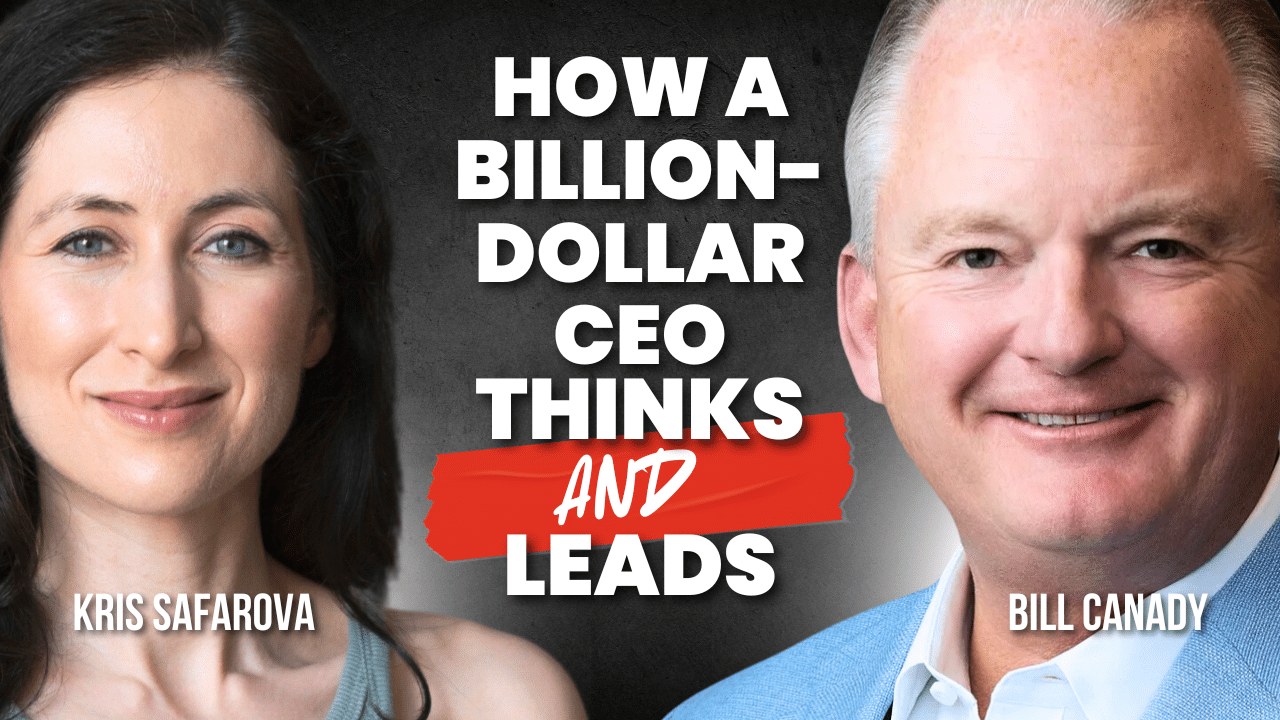
I welcomed back Bill Canady, CEO of OTC Industrial Technologies and Arrowhead Engineered Products, overseeing $2.5 billion in annual sales and 3,600+ employees.
Bill shared a practical approach to driving profitable growth, centered on focusing resources where they matter most. He described how applying 80/20 analysis revealed that just 200 customers accounted for over 90% of OTC’s revenue, and that focusing on expanding value with existing top customers outperformed efforts to chase entirely new markets.
He also emphasized the disciplined use of AI tools: not just automating tasks, but using them to surface patterns and insights in large datasets. As Bill put it, “A robot can do the basic math, but it can’t give you the insights. That’s where the human element matters.”
His new book, From Panic to Profit, lays out the profitable growth operating system (PGOS) built on five pillars: segmentation, strategy, deals (M&A), talent, and disciplined execution. Bill stressed the importance of leadership focus: “When you peanut-butter resources across too many initiatives, at best you get mediocrity. But when you focus, you can change the world.”
Bill Canady is the CEO of both OTC Industrial Technologies and Arrowhead Engineered Products (AEP). With over 30 years of experience, he specializes in driving organizational growth, cutting costs, and boosting profitability. At OTC, he led a 43% increase in revenue and an 80% rise in earnings, with annual sales now exceeding $1 billion. At AEP, he oversees more than 3,600 employees and $1.5 billion in sales. A U.S. Navy veteran, Bill holds an MBA from the University of Chicago Booth School of Business and a BS in Business Administration from Elmhurst University. His Profitable Growth Operating System (PGOS) has helped countless organizations overcome challenges and seize new growth opportunities.
Get Bill’s book here:
From Panic to Profit: Uncover Value, Boost Revenue, and Grow Your Business with the 80/20 Principle
Here are some free gifts for you:
Overall Approach Used in Well-Managed Strategy Studies
Enjoying this episode?
Get access to sample advanced training episodes
Episode Transcript:
Kris Safarova 00:45
Welcome to the Strategy Skills podcast. I’m your host, Kris Safarova. And our podcast sponsor today is StrategyTraining.com. If you want to strengthen your strategy skills, you can get the Overall Approach Used in Well-Managed Strategy Studies. It’s a free download, and you can get it at firmsconsulting.com/overallapproach. You can also get McKinsey and BCG-winning resume, which is a resume that got offers from both of those firms. And you can get it at firmsconsulting.com/resumePDF. And today we have with us back an amazing guest, Bill Canady, who is the CEO of both OTC industrial technologies and Arrowhead Engineered Products. At OTC, he led a 43% increase in revenue and an 80% rise in earnings, with annual sales now exceeding $1 billion and at AEP, he oversees more than 3600 employees and 1.5 billion in sales. A US Navy veteran, Bill holds an MBA from the University of Chicago Booth School of Business. And I’m so delighted to have you back, Bill.
Bill Canady 01:52
It’s so exciting to be here. Kris, I’ll tell you, you do such a great job with the introduction. You’re like my hype person, so it’s wonderful. Thank you.
Kris Safarova 01:59
I’m so excited to speak to you again today, because I think that what you can share is incredibly valuable for our listeners.
Bill Canady 02:06
Yeah, you know, it’s the crazy time we’re living in. You know, many of us would say we’ve been around a little while. It’s always some type of crazy time, and in today’s world, between AI coming on, between companies going global, going back local. So, you know, we’re all over the board. It’s an exciting, exciting time and and somewhat a disconcerting time for us all.
Kris Safarova 02:27
What do you think we need to understand in terms of how the world is changing? Let’s say, from the time COVID came around, what is different about the world that many people may not see, but it’s there?
Bill Canady 02:39
You know, I think there’s been a couple of really big shifts since COVID. So the one, the most obvious piece, is a lot of people are dispersed today, right? They’re working from their homes or working from their back bedrooms. They’re working from different offices, if they’re even in an office. So so we are far more remote than we’ve ever been. And the result of that, and one of the reasons we can do it is the technology that we have, right? So like you and I, we’re on amazing technology that was around before, but not very effective, right? And today, I can take my phone, I can take an iPad, I can take a computer, and I can have almost like we’re in the same room together. Technology has grown in ways that we couldn’t even imagine five years ago. And one of the big drivers, as we talked about, was COVID. One of the outshoots of that has been AI, right? Like, if you’re using Zoom today, and we’re not, but if you’re using Zoom, zoom has a little diamond on it that starts that it will translate everything for you. It’ll tell you what’s that was going five years ago. We couldn’t have even imagined that so so to me, it’s technology and the distance we have with each other, but the technology is trying to bridge that gap for us.
Kris Safarova 03:54
What do you think people need to pay attention to in terms of skills? They need to be strengthening, developing to stay relevant and up to date and not fall behind?
Bill Canady 04:06
Yeah, it’s such a great question. And this has always been, been true, right? We, if you go all the way back into before we had cars, right? We had wagons and buggy whips, and there was wonderful craftsmen who were making those wagons and buggy whips. So one day we went to cars and we didn’t need so many of those. Well, it’s the same thing that we’re facing today, right? With this technology going the skills that you have, which may be just fantastic for five years ago, six years ago, maybe they’re not as relevant as they were. It doesn’t mean that we still don’t need them, but if you’re going to be on the edge of things, if you’re going to be keeping up with things. You got to be really, really comfortable with it. So what does that mean? So first is, you need to be comfortable communicating remotely like we’re doing here today. A lot of people don’t like that. Second piece is you need to be very comfortable in communicating with using tools like email and things like that. That’s been around a long time, but you. You’ll see people struggling with it, and now it’s starting to creep into our jobs, not just how we do our jobs, but, you know, I remember, and this is such a tiny example, I would be asked to I’m a veteran and and I would be asked many times, would I give a short speech or something on Veterans Day as we were raising our flag? And I was always very happy to do it, and I would write something up. Now it may take me maybe a day to do something like that. I come up my idea, and I’d want to make it relative. Now I can take and go in, take chat, G P T, put in veterans days coming chat, G P T, already knows something about me, and within 30 seconds I get a pretty good speech here that I can work with to make it my own right, just the speed that we can use today to not only create simple things like that and write emails, but also in trying to find solutions. I’ll give you an example. I sit on a board for a university, Elmhurst University. It’s a wonderful board. So I got my undergrad from and I’ve been very blessed to be able to give back, and today, I am the chair of the Investment Committee. One of the things we do is we recruit students from all over the world, and many of those students speak a very different language than English, whether it’s Chinese or or tangolin or Mandarin or whatever it is, right? A small school like ours, you know, really had to outsource that and find people who could deal with those students when they were looking for information on campus. We have it, but it could be 2am and they’re looking for something we were able to a couple years ago, partner with a third party. We spent about $200,000 and today, if you go to our website, if you request information, we can provide that information to about our university in any language you can possibly think of, in real time. We can produce documents. We can send them those documents, and it has become such a wonderful recruiting tool. We could not have done that five years ago, we would have spent 10s of 1000s, even if we were lucky, to be able to take and find someone to speak that language. Today, we can do it in real time. What an amazing transformation that’s been and what has allowed us to really expand our footprint around the world.
Kris Safarova 07:14
Bill, you have a lot on your plate in terms of managing two very demanding roles at least, plus all your additional things that you do, plus writing a book, all kinds of things. How do you manage all of this? How are you able to fit it all in?
Bill Canady 07:29
There’s just really three things. So the first is all these tools that we’ve been talking about. I take advantage of those tools all the time, right? You know, whether it’s helping me write a speech or something like that, or if I want to do a quick search, I’ve always used Google. Many of us have for for many, many years. It’s a wonderful resource. But today, instead of getting back 100,000 different examples of something that may have nothing to do with the search I’m doing, I can go to AI, whether it’s Google’s or chat GPT, as we mentioned earlier, and get a very pointed answer very quickly. The second piece is my team. I have wonderful people who work with me and for me and and things like that, and empowering those people and having experts in those jobs and really looking to them to make those decisions, and leading through that has made all the difference for me. And the final piece is even, you know, we talked about the book we’ve written. It’s really about focusing on the critical few. It’s about using the principle of 8020 which is 80% of your output comes from 20% of the things you do, such a simple concept that’s been proven many times over. It’s me determining what am I focused on, and making sure I spend my time on those critical few things you get, you know, at all this great technology and all the things that you see, you have so much coming at you. You can get distracted. You can spend hours on on on Twitter or on tick tock and all that. And that’s fun to do. I, for sure, have done it. But if you can determine what’s really important to you and then get after it, you can make a huge difference.
Kris Safarova 08:59
Do you ever find it challenging to figure out which things you do exactly contribute to 80% of results?
Bill Canady 09:08
It’s almost impossible. It seems like sometimes right, particularly in the moment. But what we’ve learned is, as we look in our history and we see where those results come the data typically tells us where it’s at right? Sometimes it’s just pausing in the moment and looking and it’s kind of a thinking is required. It’s a little bit of a common sense, like I tend to wear the same types of clothing every day, and generally, for whatever reason, I wear something blue. I’m not even sure why, but, but I do, and it kind of goes with everything. And I travel. I’m in a hotel room today, and so I can’t afford to bring a whole trunk with me of full of different clothes, so I’ll bring three or four items, and they’re blue. So guess what? You know when I have a shirt that’s red or or green, I’m for sure not going to wear that very often. I can go in my closet really quickly and identify the clothes I wear again and again, just by where. Are at what’s the same thing in many of the tasks we do. If we look at the data, if we look at where we’re spending our resources, we get excited about things. We start spreading them around. Nothing starts happening the moment we start focusing the moment we look at that data, whether it’s the data in our bank account, where it’s the data on our P and L, our profit and loss for our business, we start seeing where those results really come that’s where we need to place our bets, right? So many of us try to be fair all the time. We think we should be fair to everyone. We think we should treat all opportunities the same. We try to say yes to everything. But you know, that’s not leadership, that is that’s the absence of leadership. And when you peanut butter, everything on the best cases, you get mediocrity when you actually start focusing, you can change the world,
Kris Safarova 10:49
Very true. And then once you figure out the case, so I need to focus on this 20% of the tasks, and now I have space to add additional tasks that also could contribute to 80%. How do you find those additional things you can do as an organization and also you personally?
Bill Canady 11:06
Yeah, so that’s a really interesting question. So one of the most interesting pieces is, if you look at the things you’re focusing on that are working today, right? And you start digging into those, you’ll find that there’s more opportunity inside of those. So generally, at the first you don’t need more things to focus on. You’re not looking for additional opportunities. Even though it may feel like it is, it turns out there’s more there. Let me give you an example. So when we took over OTC, it was during the height of the pandemic. Things were really struggling. If we didn’t turn the company around it was going to probably go out of business, right? Don’t know that it would have, but it was Sure. On the edge of it, I got our team together, and we needed to grow the business, basically by about $200 million that was the math. We had said that would work. That was the math that would give us the return we wanted. And we had every idea in the book to go do it. It was this customer, this new market. Let’s go in this geography. Hey, we’re in the US, maybe. Let’s go to Canada. Let’s go to Mexico. Hey, we’re there. Let’s go to Europe. And I said, Well, why don’t we just look at what we’re actually doing? So we did this little experiment. I got the key folks in the room, particularly the sales leaders, and I said, Tell me the top 10 accounts we have now. Our number one account was Toyota, and we were doing $40 million a year. It was a big deal, right? And we really hadn’t been growing it, right? And we asked ourselves, if we look at Toyota, just where we’re doing business today, so in the states that we’re doing business with, the products that we’re doing business with, how much opportunity, how much opportunity was there to go get? If we got it all right? In other words, we weren’t in Japan. So let’s not go to Japan. We weren’t selling them in Mexico. Let’s not, let’s just focus in the geography we are with the products. The team went around, we did a little bit of research, we came back and our opportunity, our Sam our served available market, right? The stuff we were doing was $250 million and the group was blown away by that. And so we said, Now wait a second, this is our best customer. We have 210 more million. We’re doing 40. We have 250 total available to us. The number that we need to get to is 200 in total. We have more opportunity than we need in just the very first customer. It changed everything for us. We started thinking differently about it. Instead of just trying to get more pricing out of Toyota or get more of this product in, we actually started forming teams around Toyota. We went to them, we asked, What can we do to be better suppliers, better partners with them? And we rapidly grew that business. Now, we did not get ourselves a two $50 million with them, right, but we more than double that business over the period of time because we focused on what we were good at. We knew they liked us, because they were already doing 40 million with us, and they were paying their bills, and you we like them. So we didn’t have to go displace anyone. We just had to be a better partner with them. I think you’ll find that most of the time in your life, if you look at what you’re already doing, are you getting it fully? Are you capturing all of it? If not, why not? What do you have to change some of those you’re going to be getting it already, or there’s no obvious opportunity. Other ones of those that you’re already good at. There’s more there. Start with what you’re good at, start in your own backyard. Start with your own family. You’ll be amazed how much more you can get out of the stuff you’re already doing.
Kris Safarova 14:33
Bill and as you started figuring out, how can we add more value to this client so that we can also have higher revenue beyond what you already mentioned, such as asking them what you can do additionally to what you’re already doing, and other things you mentioned, anything else that you could mention here that could help our listeners apply this? So now those listening doesn’t think, Okay, I have three top clients. We definitely can do more for them. But how do I go about?
Bill Canady 15:00
About it? It’s a really interesting question, right? So I think there’s two pieces that you’re going to want to look at to begin with. The first of those, understand your customer. Understand deeply what they’re doing, where they’re going right now. You can add value. The second thing, understand yourself. What are you really good at? Where do you add value? I’ll give you an example what I’m talking about one of the programs Toyota wanted us to take on for them was a repair program. So we would, we would put people in their facility, go in whatever they were having problem with, take that stuff out, look at it, and then find someone, if we couldn’t fix it, find someone who could, and we would get a very small fee for that. We started that program, and when we looked at the numbers, we were terrible at it, right? Because it was outside of what we did. We were really good at the service side, but we didn’t know most of those products, and we didn’t understand how to handle them, so we weren’t good at it. We went back to Toyota and worked with them to take and redo that contract. So it was more around the lines of products that we were doing, that we knew how to handle. We understood those markets with it. So we went from a program that was a big loser from us and the customer was not happy with us, candidly, because we were making so many mistakes, to making this program about what we were good at and what Toyota was good at, and how those two align where they overlapped at it. Customer became much heavier, happier with us. Now here’s an interesting thing that today actually makes this easier for all of us. You can take those spreadsheets, and let me tell you, those spreadsheets can get big, right? Be 1000s of items in there. You can take that set of data, that Excel spreadsheet, if that’s what you’re using, dump it right into a GPT, an AI model, and within seconds, it can tell you what the commonalities are. It can tell you where you’re losing money, where you’re making money. It used to take us hours, if not days, to take a look at that same data. Today, the technology is advanced so fast and so quickly, it is tremendous at looking for patterns in data. Right? Used to cost us 10s of 1000s of dollars that they can do those analysis. So this one of the ways that today technology is actually making us better at what we do, is providing more jobs for us, not less, right? Because before I’d have to outsource this, I’d have to take and find someone to go do it. Today, I can have it done very quickly, and our team can spend the time on the things they’re doing which are really important, taking care of that customer, making sure the product is there, making sure they’re served in a way with it. So technology can make you really better at what you are now, one of the things you have to be careful is sometimes that technology gives you the wrong answer. That’s where the human component is right. That’s where the things that we’ve been doing our whole career, you know, understanding the understanding our products. So you actually have to look at it. You can’t just plug the data in and just send it off with whatever it says. You actually have to go through and look at it and make sure that this robot, if you will, this automation, has come back with the right answer. That’s where the human element comes in. That’s why we’re all going to have keep having jobs, and those jobs become important, even more important, that expertise that we bring gets more and more important every day, because a robot can do the basic math, but it can’t give you the insights.
Kris Safarova 18:16
Yes, and it’s not accountable for whatever happens afterwards.
Bill Canady 18:21
No, you’re gonna live with the consequences. That’s so true. So make sure you spend the extra five seconds read the data before you send it off to your customer or your partner or something like that. So it will help. But if you are a little lazy, a little careless, you’ll just take those answers as this is the way it is. Be prepared to get surprised in some unfortunate ways.
Kris Safarova 18:42
If you do it exactly when you started figuring out, how can we serve our top clients better add more value? Anything surprised you? anything that happened that you kind of did not expected it to be that way?
Bill Canady 18:56
You know, there was a couple surprises that really jumped out. The first was actually how good our team was. You know, when you’re sitting there, you’re the CEO, you’re coming in, and sometimes you feel like you have to have all the answers. Well, that’s that’s not true. What you really have to do is make sure your team gets together and all those great minds are put to work on solving this problem, right and that comes back to one, asking the right questions, and two, listening to the answer. So it was amazing how close and how right the people were, who were dealing with the customers every day, the ones out there talking to the customers, walking those factory floors, knew what the problems were right, but it had not been heard, that information had not bubbled up in a way that we could do something about it. When we got them in the room and we started listening to what they said. It became obvious how we solved those problems. So it’s really impactful to do it. So the first piece that was a big surprise was listen to the people already talking to the customer. The second one, which is equally important, actually, go talk to your customers. Go take yourself out there. Go spend some time not to sell them. Not to convince them that they’re wrong or that you’re right, but what a problem are they solving? And how can you be a part of that? Then the final piece of it, which was which I think really surprised everyone was, we actually wound up saying no to some of the business like that project that we had had that was a really important price, very large and everything, we weren’t making money on it, and we didn’t have the skill set to make that money. With a small few changes, the customer was able to get what they were really looking for. They were able to find someone to do the stuff that we really were not good at. So sometimes, in order to really give the best service, you gotta say,
Kris Safarova 20:37
No, very true. Let’s talk about your book.
Bill Canady 20:40
All right, one of my favorite topics.
Kris Safarova 20:43
Maybe we could start with you explaining what is a profitable growth operating system.
Bill Canady 20:49
Yeah. So you know, when you’re looking at your business and things are going really tough, you’re not sure what to do. You need a process. You need something that is it’s like the laws of physics, right? Every time this happens, an equal and opposite reaction happens that things that you can count on. And when I look back over my career, what I had found is we had been doing certain things that really drove a lot of a lot of change, a lot of positive change, and certain things that were distractions, we were able to go through and codify that and start with this is what works. The math works. Look at the data. See where it’s at. You still need that human element, just like we’re talking about AI before you got to look at the math, but you still need that human element with it, right? The thinking is required. So we designed a system that we called P gos to profitable growth operating system, which is just five very simple things that we all do in our businesses to varying degrees of success. It’s segmenting, right? Using 8020 where are we making money? Where are we not? Right? It’s using a strategy. How are we going to get to where we’re going to go? It’s using deals, M and A, mergers and acquisitions, right? And it’s talents about the people. These are the people who are going to get you there. They’re going to get themselves there with it. So we use these tools and everything, and we build a system around it. So now we’re on our second book. It’s called from panic to profit, which I think turned out to be a great title given where we are in the world today, a lot of people are nervous about what’s going on, whether it’s AI or different issues around the world. And the panic to profit is really the journey that you go through in taking a company who’s struggling, taking an organization that needs to get there, and it’s the simple steps you need to take to get that business, get that group, save that that company, for those folks, so simple steps you need to take in order to get there, and it deals with the implementation of it that you’re going to do over The next couple years to really get it on solid foundation. So that’s the book. It comes out, actually, April 29 so right here in a couple of days, it launches, and we’re really excited about and so far, the feedback and every the early reviews are really positive on it.
Kris Safarova 22:54
It is a great book. Let’s explain what is a visionary, a profit, and operators.
Bill Canady 23:02
Boy, that’s the central piece of the whole thing, right? So it takes, we believe it takes, three types of people to successfully run an organization, to run any organization. The first one is the visionary, right? That’s the person. That’s the CEO, typically, but not always. It’s the CEO who is running the organization, right? They have to say, this is the goal, this is where we’re going, right? They set that vision. They set that goal. The operators are the people who actually go out and do it every it’s the presidents of the business, the vice presidents, the directors, it’s the people who run the business with it. And then the final one is the profit, right? So the profit for us is the person who one tells you how to do it, right? They’re the train, the trainer, and they go find the profit. So it’s kind of like, you know, mythical being comes in that has the answer. So what they have is they are trained as experts in our process, and you need those as you go through it. So in order to successfully run a company, you have to have a visionary who makes it a condition of employment to follow the process. The second piece is you’ve got to have operators who will actually follow the process, who actually go do it and do it each and every day. It’s not additional work. It’s how we run our business. And the final one is, you need an expert who’s going to help you and guide you to get there. So that’s the visionary, the operator and the profit. It’s the it’s a golden triangle of making it rain money within your business.
Kris Safarova 24:25
I want to ask you something at this point, because you came from military, and then you entered and you got all the way to the top of leading not one but two major organizations. What do you think were some of the critical things you had to do to make the adjustment and be successful?
Bill Canady 24:46
Boy, it’s the it’s the it’s the magic, the magic question for us. All right, so if you think about it, you kind of have to earn the right to win in your life’s journey. And not everyone wants to be a CEO. CEO or be in the military, you know, but it takes all of us to bring an organization together, and if you’re going to make it to the very, very top, you need to focus on just a few things. And it’s the same ideas that we run a business with, is the same ideas that we run our life with, right? First of all, identify what’s working for you. What works for that person may not be the same that works for me, but I promise you, there is things that you’re doing every day that are going to help you get there, right? And we talk deeply about mission driven versus value driven, right? So many of us have a mission in life that we want to go accomplish. Whatever that is. I want to be a CEO. I want to be a great mom. I want to take and give back to my community, all very worthy with it, right? And if you’re going to go do that mission, you have to put that out there, and you’re going to have to make sacrifices to get yourself there, whether it’s going to get a certain education, going to a certain school, taking a certain job, for many of us, it’s about moving to go and do those things, right? Our values is what brings it to life for us. And sometimes people allow their values to cloud what they’re doing versus focusing on that mission, right? They become so important to them that they do certain things. Those things are wonderful doing all that, but remember, put your mission at the heart of what you’re doing. Focus on that, because there’s going to be trade offs on it. So so as I tell people, I think it comes down to just really three very simple things. The first, be a continuous learner. You don’t know it all. You, for sure, are never going to know it all people around you, the greater group around you is smarter than any one individual. Be prepared to listen to that. The second piece is be prepared to make sacrifices, right? The mission that you’ve set for yourself, regardless of what your values are, you’re going to have to execute that if you’re going to make it through and sometimes that means you’re going to miss certain events, right? Like I, I like to think I was a good dad, but, man, I was gone a lot, and thank God for my wife and her dedication to our family, because it made, made all the difference, right? And then the final one is, you know, be a decent human being. Be someone that teach people with dignity and respect, right? No one gets there by themselves, and people want to work with people who are they can count on, right? That that are on that same journey as they are so continuous learning, recognize that you’re going to make the sacrifices that you’ve got to do, and then, you know, keep those values of being a good human being, because you want to win, but you don’t want to win at all costs. And it’s balancing those things as you go through it. And you can always see when people get too far, they get so focused on being successful, they sometimes do, the wrong thing, get themselves in trouble. Other times, they don’t do enough, right. They take and trying to be a little too, too, one direction or the other. So I find those three things make the absolute difference for us. The final thing, if you will, is it is make sure you actually accomplish something. Go do something, right? You see, the greatest people give all this great advice everything, but they don’t actually move the ball forward. Make sure at the end of the day you go do something, it’ll make a difference.
Kris Safarova 28:09
Bill and how do you still stay a continuous learner? Because right now, you have so much on your plate, most people would struggle to find them to sleep.
Bill Canady 28:17
Yeah, well, it’s an interesting question. So I don’t know that I was always a continuous learner when I was a much younger person. I kind of, I thought I knew every I was really smart, then I’ve gotten way dumber as I’ve gotten older. I remember I got my I got I was running a group. I was really successful at it. And when you’re really successful at something, your reward is you get more work, right? So I got another group, and I went into my second group, my second company, and I did exactly what I did in the first group, and I almost killed it, right? It did not work at all. I just took this playbook and I laid it right away. I go, Wow, I did it this way. I treated people that way. It turns out that the tools that you need, like a carpenter, the tools you need to build a house are the same tools you need to build a condo. But you need a blueprint. You need to know what you’re doing, and you need to follow that that blueprint. You need to listen to the people around you, to understand what’s happening in the market and your competitors and all that. So the way you get to be really a great continuous learning, I think it comes with a lot of failure, right? You go, wow, I didn’t listen the last time. I didn’t pay attention to it. I didn’t change as the need changes with it, and I lost, right? And today, when I look around what’s happening today, huge amounts of technology are coming in. AI has made a big, a big presence in all our lives, whether we realize it or not, right? You’ve got a lot of global things going on. You have to be open to it. You have to take and go with and understand, understand that it’s going to have an impact. But you can’t let it rule your life, right? It’s that balance piece of being able to deal with it that makes the big piece that makes the big difference. If you lock down, if you quit. Listening like a tree in a storm. When that wind blows, if that tree does not bend, that tree breaks right? That’s how we that’s how we have to look at it. That’s how we have to deal with it. And we have to be prepared that when we get better information, we absolutely change.
Kris Safarova 30:14
Bill. And we probably have some listeners right now thinking, oh, man, if I could just bring Bill into my company for two hours, for one day. I wonder what he would recommend I do. I wonder what he would do to figure out the 80/20, and everything else. Let’s take hypothetical situation where you come in, into a new company, and you have one day, few hours, let’s say eight hours. To give some kind of recommendation. How would you go about it?
Bill Canady 30:45
So we have a very simple, four step process that we run our companies and we help other people with theirs, right? We start with, what’s the goal? What is the central focus that everyone’s trying to rally around in private equity, a lot of times it’s a return on investment, as we call it, moi, or multiple invested cash and and let’s just say that you’re at 100 and you want to get to 200 we know our goal is to go find that that result. So when we go into a company, the first thing we ask the CEO, the first thing we ask the team, is, what is the goal you’re all rallying around? You’ll be surprised. They do not agree on the goal, right? The CEO has not done an adequate job of getting that goal, one identified and two bought in the second piece that we look at, and this is where it starts becoming obvious, is given what they’re trying to work on, what is the strategy they’re using, and if the goal is not well known, and many people think it’s, different things you’re going to find going to find that they’re doing too much. They’re focused in too many different areas. They’ve spread themselves too thin, and that is the recipe for disaster, right? They may have a wonderful group of people, and you’ll say, all right, tell me your strategies, and they’ll name 25 different things that they’re working on. And you’ll find it’s exactly the same people across all 25 of them? Well, let’s be honest, I can barely do one thing, much less 25 it’s true for most of us, they just don’t have the bandwidth to do it. And that means everything is kind of getting done, and it’s not being done very well. And you’re going to find a whole handful of stuff that is just nothing’s happening. If you can take your resources, get aligned around a common goal, your team more times than not, can absolutely get that done. So we look at the goal, or is it people aligned? And we look at the strategies. What are they doing? What we start recommending then is, is, once they know where they want to go and they’re clear around it, they need to organize their organization. They need to reorg, in many cases, right, put their around that one or maybe two things. It changes everything we find in the first year of them getting organized around the critical few, typically they’ll see between a 200 and a 500 per basis points improvement in profitability. So if they’re making 10% they’re going to be making 15% by the time the end of the year. That’s a massive change, right? That is a 50% improvement in profit in one year. It’s a game changer for a lot of companies, and it comes with doing less, which people struggle with. But I go, there’s no more hours in a day. You don’t have more. People have more people. Have more where you’re going to get the money from, take those resources, focus them on the critical few. It changes everything, and it changes it quickly.
Kris Safarova 33:30
And to identify critical few, you will look at data.
Bill Canady 33:34
So all starts with the data, because you can’t argue with it, right? The data is the data. You may not like it. There may be all sorts of reasons, and they’ll give it to you, right? It’s just like with us, when we took over OTC and we looked at it, right, we had 16,000 suppliers, right? We had 12,000 customers that we were working with each and every day. When we looked at it and we peeled it back, 200 customers made the difference for the whole company. Over 90% of our sales, our revenue was coming out of 200 and less. 20 of those customers were responsible for almost 65% of the revenue of the whole company, a billion dollar company, right being run on 20 customers. You know what? It’s true for all of us, our very few critical customers, our very few employees, make the difference once you identify that the data tells you almost instantly, once you identify that you have to have the courage to organize around it.
Kris Safarova 34:29
And if you do all this analysis, and you see that everything is going down, so revenue from different revenue streams is going down, and the business is kind of in a dying industry, what would be some additional potential steps?
Bill Canady 34:45
Yeah, that’s a really interesting question. We see that actually quite often, it’s rare, but not unheard of, that industries go away, right? Sometimes they shift. It’s like, you know, the companies that were making wagons could have went and made cars. They didn’t, right? They just chose to say where they at. I think back I grew up at a time that we had two really iconic retailers in the world, Sears and Kmart. And if there was ever a company built to be on the internet with web pages, it would be Sears. Remember the catalog? We all got this giant catalog mailed to us all the time. I remember Christmas, we’d circle the pictures in there, and that’s how mom and dad would know what we wanted for our gifts and things like that. They never made the transition. Where are they today? Where are they gone? You know, they’re gone and not, not because their values. These were wonderful companies. They they took care of communities, they donated, they did all these types of things. They put their names on stadium, but they but they died because they were not focused on what really their customers were. Were focused on which was giving selling reasonable products at a reasonable price that they could take and and go do so. So what we find when we’re looking at companies right? They’ve lost their mission. Their mission was taking care of customers, selling them a reasonable product in this case, and instead, they’re they’re off doing something else. So when, when we look at a customer a company, and it’s dying, let’s say we’d have been at Sears, we’d be like, Well, what’s happened? And the market had shifted from catalogs coming in to people being on web pages. And it had shifted from being a broad everything, right? That Sears catalog took everything to being more niche, right? These category killers were coming out. People like toys r us at the time were coming out, and that’s where everyone went and got their toys. They were no longer doing them at department stores. Now, times change, and it went back. And today, Walmart is by far the largest toy seller. But it’s not about what’s happening 20 years it’s like, where are you at in your cycle? And it’s in the executives of these companies, typically, in these cases, won’t make that tough decision. They take and do what’s comfortable, what makes them feel safe, which is stay the course. And over time, it just melts itself away and it gets to where it’s non recoverable, right? So if you’re a leader, and if you’re an advisor, and you’re coming in, and you look at what is happening in that company, that advisor’s job to say, look, things are changing right now, and while it’s still in your in your purview, right? Sears was in retail. They had a better footprint than anyone else in the world, right? But the market was shifting. It was shifting from these big catalogs to something else. They needed to make that change. They didn’t make that change, and today they’re gone. So generally, it’s not that people quit buying products and things like that for these companies, it’s that the market has shifted. People are using AI. We talked about AI. People, are you using AI in yours in an appropriate fashion for the times. Are you selling your customers in the way that they want to buy? Are you hitting those price points right? Does it make sense what you’re doing? Those are simple questions that your data will tell you really, really quickly. How does your sales look? Are they decreasing? Has profits gone? You know, way. If so, why? You can get to that pretty quickly, but you have to be willing to get uncomfortable and make changes that not everyone’s going to like. They’ll take and more often than not, deviate to this is how we’ve done it. This is the our way. And a few years, you come back and they’re gone.
Kris Safarova 38:19
Bill, and obviously in so many customers across those two major organizations. Are you noticing any patterns in terms of customers hungry for something, they want something, but they either not getting it to the level they want or not getting it at all?
Bill Canady 38:36
Every day, you see customers that are across the total spectrum, right? They’re really happy with you, and other ones are really upset at you. When you peel it back, typically when customers get upset with you is this, you quit servicing them. Your products are up, they’re not working, or the quad has gone down, or you’re not getting them there on time. It’s those types of things, because, candidly, customers are out running their business, just as you were running yours, and once they made a decision that you’re a good partner with them, they want you to do the job that you’ve agreed to do, so they can go do theirs. They will not change unless you drive them away, generally speaking, because they’ve got something else they’re focused on. They’re focused on their own customers, right? So customers get unhappy when you start breaking that covenant and and so then what happens is it gives a chance for another incumbent to come in, or another person to come in and take and take away what what you’ve been doing. You know, generally speaking, you know, if you look at all the studies, it says you have to provide 20% better value to get a company to change from where they are, to come to you that can be pricing, it can be service, can be whatever, and the 20% what it’s really trying to communicate is not a specific number, is that it has to be really meaningful. It has to be a big, big change. Most change is driven not because a company wants to go to someplace new, because it’s. Expensive and it’s hard to do. It’s because where they’re at is treating them. They feel so poorly, so poorly, they have no choice but to go. And that poorness can be really can summed up in just a couple areas. Either. A, you know, the market’s changed, and I need a new product that does it, and you’re still selling me something. It’s old, and it doesn’t work for me. More. B, your service is terrible, right? Your service is terrible. I can’t get what I need. Or C, your price is now so out of line. You’re so expensive compared to the rest of world, you’re injuring my business. One of those three things are generally what drives customers away. It is much, much much harder to go win new business, right? Because you have to come up with that big value proposition. And if their current customers or their current suppliers treating them well, they’re really not incentivized to change. So this is why, if you remember we talked about Toyota, it was better for us to focus on Toyota and keeping care of them than it was to go when someone was totally new. We knew Toyota. We were in their systems already. They were in our systems. We electronically did business together. In other words, they could send us orders electronically. We could fulfill them electronically. All that had been done. It was really just focusing on areas that they needed more help around our business exploded with them, whereas the whole new customer, they would have to leave their current vendors get their system to align with ours, and it never aligns perfectly, and they go through this, this really friction to do it right. So if you want to keep your customers and you want to keep them happy, you want to keep them growing, and you want to grow your business faster, look at the data, figure out where the big opportunities are with your current core market, and you’re going to grow faster now, if you’re unfortunate, and you’re having to be in a dying industry, so you’re selling buggy whips, and everyone’s going to cars, right? You’re gonna have to figure that out. You have to go through it, and that’s going to be uncomfortable. But the data will tell you which way you should be leaning. Generally, for most of us, it’s get better at what we’re already doing.
Kris Safarova 42:03
Bill, what would you like people to take away from your new book?
Bill Canady 42:08
The first is it is we are we are living in a time that there’s more opportunity than ever been, right? I know there’s a lot of noise going on out there, from new technologies to geopolitical issues. There’s always been a lot of noise out there for well run company, and I define that as they have employees who are engaged. They have leaders that are focused on the future. They’re taking care of their customers. It has never been a better opera, better time, a better opportunity to be out there, because everyone else out there is going to be struggling right this second, right? They’ve got their own internal issues. They’re caught up in what’s happening in the world. They’re fighting the changes. The change is going to happen, whether we do it or not. Our book walks you through how to deal with that, and it walks you by dealing with something that you can get your arms around, get the data, understand the customers and products that you making money with today. Focus on those. Take the resources from the areas where you’re losing the products you can’t make money with, the customers that you’re not important to them. They’re not important to you. Take those resources, apply them to the best customers and best products, because that’s where your true opportunities are, and it’s where you can grow the fastest. That’s what it’s all about. 8020 is all about identifying where you can win, shifting the resources from where you can, where you where it’s going to be harder and going to win in that it makes all the difference, and it’s the easiest way to get there.
Kris Safarova 43:33
Bill, and if you could go back and talk to yourself, let’s say when you turned 18, what would you tell yourself?
Bill Canady 43:40
Well, that’s an interesting question, right? It’s a great question on it. The first of all is, trust the process. You’re gonna have to, you know, it’s the old joke, it takes 20 years to make an oak tree, so the best time to do is 20 years ago. Second best time do it today, right? So trust the process. Realize I have to go do what it takes to be there, right? The second is, I did not know everything. I don’t need to know everything. And in fact, if I feel like I need to know everything, people don’t respond to it well, right? So, so recognize, you need others around you, and you need you’re going to be standing on the shoulders of giants to get where you’re there, to get where you want to go. So so it’s work with those around you, treat them with dignity and respect, give back to them just as you need. And it really builds for a great career, right? And the final one, and I got lucky with this, is, is Mary, well, right? Like, make sure you got a great partner in your life that you look after and they look after you, that you’re aligned around where you want to go. There’s makes there’s nothing that makes it harder if you don’t have a support network at home so you can get past it. But it makes it Sure. It sure does make it easier if you and your family are all aligned around, this is where we’re going.
Kris Safarova 44:53
And on your advice to yourself to marry well, which you followed, even though you didn’t have the chance to give you that advice. What advice would you give to our listeners who are currently still selecting a spouse they’re gonna spend the rest of their life with? Hopefully?
Bill Canady 45:08
Yeah. So you know, it’s not too late to start doing the right thing if you’re struggling today. Pause. Look at where you’re at. Do the math. Look at the data, right and you don’t need some fancy degree or some amazing calculator or spreadsheet, you can just stop and look right? You know what’s happening. Understand where you’re losing it. Quit doing that. That’s so easy to say, but it’s hard for us all to do right. Start focusing on those critical few things. Recognize you’re going to have to pay the price, right? Whatever it is. If that means you need a degree to win, go get that degree. You know, typically it’s not necessary, but if you do need it, and you feel you need it, go do those things that it takes to to win. Be that continuous learner, right? Get out there, help others, right? It will make a difference. Start with the data, whether it’s your own personal data or your company data. Understand what your unique value proposition it is, and then start organizing yourself around it. Some of us are talkers, and we’re going to go be sales people. Go do that. Embrace that. You’ll be the best ever. Some of us are great at math. Go do the math, right? Become a finance person. Go be a product person, right? There’s all sorts of understand your unique gifts, understand what tools you’re working with, and start building on it. Start where you are. It will make all the difference in the world. Quit fighting yourself. Follow the data.
Kris Safarova 46:26
Bill, and if you could instill one belief in all of our listeners’ hats, what it would be?
Bill Canady 46:33
You know, I think the most important thing out there, from, from if it’s if you’re going to have a successful career, successful life, right? Comes back to first, make sure you’re actually getting something done. There’s a whole lot of people that talk about things, but they never actually go do it, actually, once you understand where you want to go, start doing and the second one is treat people with dignity and respect, right? It is just so important. You know, it’s out there. People are tough. It’s this tough world we live on. It costs nothing to be kind, right? So focus on what works for you. Go get it done and be a genuinely kind human being. It brings a little bit of joy to someone. I promise you.
Kris Safarova 47:13
Definitely. It can make someone’s day or even a week or a year. It makes a big difference out there. Bill, thank you so much. As always. Where can our listeners learn more about you? Buy your book? Anything you want to share?
Bill Canady 47:26
Yeah, just go right to my website. It’s my name, so it’s billcanady.com. you can Google it, or you can just type that right in and on there. You’ll learn more about me, what we’re doing, the books we’ve got coming out, keynote speaking, everything you can think of. So it’d be great to have you and you can reach out on that and contact me if I can be of any service.
Kris Safarova 47:46
Bill, thank you so much as always, for being here and for all the work that you are doing.
Bill Canady 47:51
Thank you so much for having me. Kris, what a great day. It’s really a pleasure to see you again.
Kris Safarova 47:55
Thank you. Our guest today again has been Bill Canady. Check out his book From Panic to Profit. And our podcast sponsor today is StrategyTraining.com. If you want to strengthen your strategy skills, you can get the Overall Approach Used in Well-Managed Strategy Studies. It’s a free download, and you can get it at firmsconsulting.com/overallapproach. You can also get McKinsey and BCG-winning resume, which is a resume that got offers from both of those firms, and you can get it at firmsconsulting.com/resumePDF. Thank you for tuning in, and I’m looking forward to connect with you all next time.
Leave a Reply