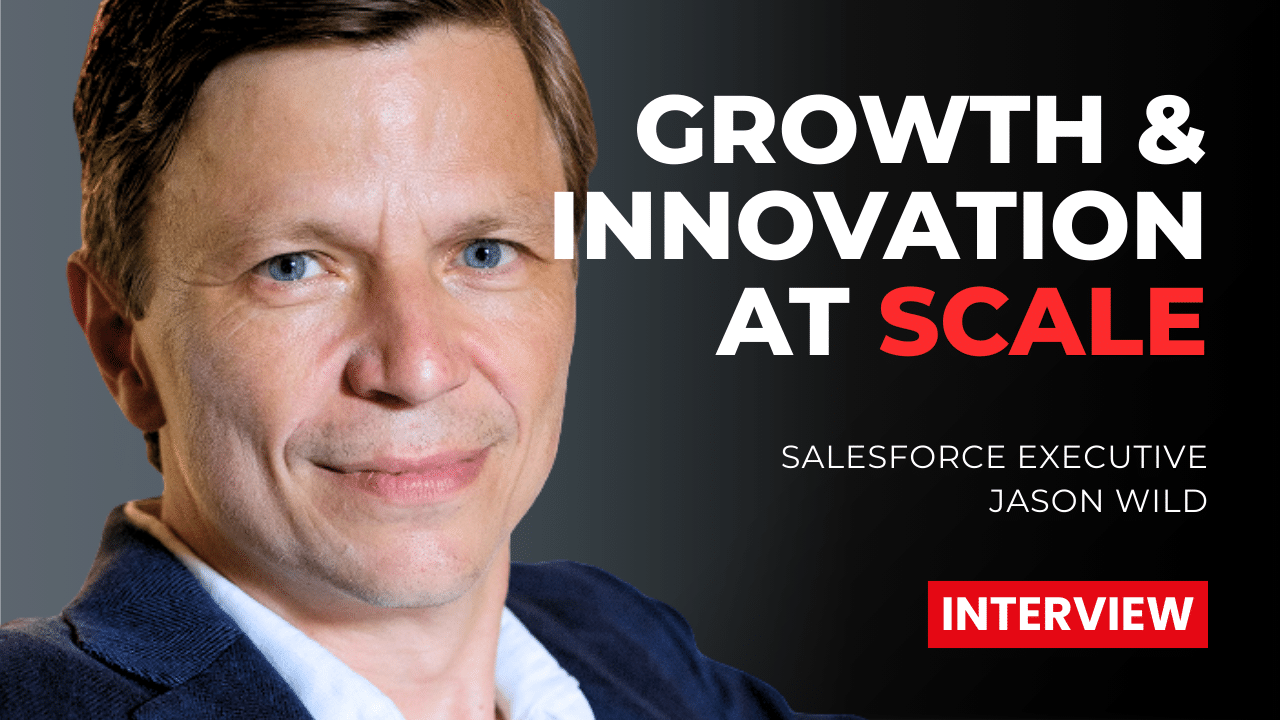
Jason Wild discusses the discipline of building and scaling businesses through careful capital allocation, operational focus, and a clear understanding of risk. He explains how leaders often misjudge growth by pursuing expansion without fully understanding the underlying economics, noting that “growth only creates value when the returns exceed the cost of capital.”
He emphasizes the importance of distinguishing between revenue growth and value creation, and why many organizations confuse activity with progress. In his view, strong operators develop a detailed understanding of where value is truly generated and concentrate resources there rather than spreading them thinly.
A central theme in the discussion is capital discipline. Jason describes how effective leaders treat capital as scarce, even when it is not, and make decisions with a clear threshold for returns. He notes that businesses often underperform not because of lack of opportunity, but because they fail to prioritize rigor in investment decisions.
He also highlights the role of incentives in shaping behavior. Poorly designed incentives, he explains, can encourage short-term gains at the expense of long-term value. Leaders must ensure that performance measures align with sustainable outcomes rather than superficial targets.
On execution, Jason stresses the importance of operational clarity. He explains that complexity often masks underperformance, and that simplifying processes and focusing on a few critical drivers leads to better results. This includes being explicit about what will not be pursued, as much as what will.
Finally, he reflects on decision-making under uncertainty. Rather than seeking perfect information, effective leaders act with incomplete data while maintaining clear guardrails around risk. The combination of disciplined thinking, aligned incentives, and focused execution, he argues, is what separates durable businesses from those that struggle to sustain performance.
Get Jason’s book, Genius at Scale, here:
Here are some free gifts for you:
Overall Approach Used in Well-Managed Strategy Studies
Enjoying this episode?
Get access to sample advanced training episodes
Episode Transcript (Automatic):
Kris Safarova 00:47
Welcome to the strategy skills podcast. I’m your host, Kris Safarova, and our podcast sponsor today is strategytraining.com and we have some gifts from you. You can access episode one of how to build a consulting practice at firms consulting.com forward slash build. You can get the overall approach used in well managed strategy studies at firms consulting.com forward slash overall approach. You can get McKinsey and BCG winning resume example at firms consulting.com forward slash resume PDF, and you can get one of the books we wrote. We actually co wrote that book with some of the listeners, some of the clients. And you can get it at Friends consulting.com, forward slash gift. And today we have with us Jason wild, who is a former executive at IBM, Microsoft and Salesforce, and also a former child actor. So that is very, very interesting. Let’s start there. How did that happen?
Jason Wild 01:48
Well, hey, Kris, it’s, it’s really good to be with you today. Yeah, child acting. Well, it’s the long story. I won’t, I won’t bore you with with longer story. But, yeah, it feels like another lifetime, and definitely another career. I grew up in Chicago, blower, middle class, blue collar family. My mom as a kid had been in local theater and acting, and loved it, so she she wanted her dream was to be, you know, famous actress, it didn’t happen. So I guess she realized later in life that if you can’t follow your own dreams, have kids, and you can pursue those dreams through your kids. So from a very young age, my brother and I, we started in local theater, but I’ve been in commercials. I’ve co started movies with Mr. T, Jade Fonda Kris, Kris stafferson played, dating myself, some some famous people, at least in the 1970s and 80s. Although Mr. T, I think, is, has done a good job of staying famous through the through the years, in the generations and and honestly, as I got into my business career later, did this until I was probably 15 or 16, but, you know, related to, like, our conversation in the world of business and consulting honestly. You know, it wasn’t until I got well into my 30s, and I had people coming up to me who were younger than me, asking, Hey, you know, what did you do to get to where you are, and how can I do what you know you’re doing? That I started to really reflect and embrace that past which kind of emotionally and viscerally felt like, yeah, it was fun, but it was irrelevant. It had nothing to do with, you know, trying to be a business leader or, you know, a sales manager or strategist. So it wasn’t until people prompted me that I think I kind of took a trip down my own memory lane and re embrace that. And you think about it like the best actors don’t come across as actors. So the place Hollywood, arguably, that is the land of fake. Not everybody is fake. I really appreciated and learn the importance of authenticity and people being their real selves experienced, you know, chaotic moments of pure creativity. And many, many stories of, you know, creativity unchecked the power of storytelling. And I think we’ve all seen it in a business context where somebody gets up on stage, they talk about something, and it maybe puts people to sleep, and someone else talks about the same topic, but it moves people the hair on the back your neck stands up. So from a very early age, I learned the power of storytelling, and I also was probably rejected at least 300 times by the time I was 15 years old, which I’m not sure I want to put my own kids through that, but it helped develop a really thick skin that prepared me, unknowingly from for the corporate world of being able to move on and not dwelling on failures or why one person didn’t. Take your pitch. And so, yeah, it’s, it started there and, and it is a, you know, got later to my career, and I was leading innovation strategy teams. One of the things that I, you know, I would have them do is we would bring in improvisation experts. Chicago’s famous with Second City and improv theater, and being, you know, a tremendous source, disproportionately of you know, creative and comedic geniuses and and it was interesting just to see the reaction of my own team. The first very skeptical. I think if they could, they would have probably told me that I’m half nuts. But then as we were going through it, the light bulbs going off, and then realizing the importance of thinking on your feet and deep listening, and how improv is a mechanism and a vehicle to be able to practice that in a non pressured way. So it’s absolutely a part of my identity. And then I’ve been a practitioner, and I think acting is a form of being a practitioner as well. So that’s a little bit of a story. And obviously, if I was a better actor, I wouldn’t probably be having this conversation with you. We’d be on maybe a different podcast, Kris, talking about my latest series on Netflix. But I’m glad, glad that I took this turn, because I’ve realized that through business, and it took me some time to realize this, movies and storytelling can be really, really powerful, especially in having an impact on the human condition. But I think when you think about business and leaders of companies of 150,000 employees, but not just that serving millions of customers, just that Canvas to help improve how people work and live. I’m happy that I ended up here, and I encourage everyone and all of their teams, no matter what they do and how commoditized their industry might be, there’s a lot that you can learn from the world of improv, which is basically real time problem solving through oral discourse.
Kris Safarova 07:07
Jason and before we move on from this topic, if you think back to those 15 years, whenever you started acting, until and I think you stopped at 15, was there a moment when you had the big realization, or someone shared an insight with you that allowed you to be a much better actor that you could share with us?
Jason Wild 07:28
Yeah, oh my gosh. There were, there were so many lessons. I think, I think one of my favorite ones was, you know, with Mr. T. So when I was doing the movie with Mr. T. I was 1213, years old. It was the CBS movie of the week called toughest man in the world. So obviously it was not about me, and the story is about Mr. T is the head of a youth center that runs out of money. So he hears about this contest, and if he wins the prize, then he could save the Youth Center in this in this poor neighborhood, right? So, you know, when you’re a kid, you spend, you know, months, you know, on the studio production lots, you know, filming and all of these sorts of things. And Mr. T, I mean, he is, you know, a larger than life personality. He would often like show up for filming in his convertible red Rolls Royce completely in character of the Mr. T from the A team with all the gold chains and the ripped jeans. And he was intimidating and but I noticed something that he would always show up every day in full character, but also with these, like, really beaten up, chewed up boots, boots that looked like they were just literally hanging by a thread. And he had taken, like, duct tape and wrapped around these boots, like at least 20 times. And I got to a point where, you know, I had a good enough relationship with her, like, Hey, Mr. T what’s up with the boots? And he says, Hey, Jason, let me tell you a story. I’m not going to do my Mr. T accent, please. He’s like Jason, let me tell you a story. You know, when I was growing up, my family had nothing, and when I turned 16 years old, the only thing my father ever gave me in my entire life was a pair of work boots, because he said, you need these boots to get a job. And so he said, I wear these boots every day. So I remember where I came from, and to me, I think, you know, I took so much from that, just the humility, how surprising it was that that was the story of someone who was showing up in a Rolls Royce, but literally felt a direct connection to where he was from. And I think to me, that showed that he was being himself. He was being authentic. He was not afraid of what people would say. And as a celebrity, maybe he can get away with that more than others. But. Someone who is very brash and confident being one of the most humble people that I ever met when he opened up himself, and that moment of vulnerability has stayed with me forever. So I feel like I’ve been very privileged and lucky, and some of the jobs that I’ve had, people come up to me and tell me, Wow, you have one of the best jobs in tech. And I agree, and and I always tried to remember Mr. T in that moment of always stay humble, Jason.
Kris Safarova 10:31
And one more question on this, is there a little tip you could give every one of us, or all the listeners right now, if they, for example, are very scared about speaking on stage, and they’re all demands. It is there something you could give them some kind of tip to help them?
Jason Wild 10:50
Yeah, well, I guess you know, the good news is, is, if it helps, I still get the butterflies, I still get nervous before I walk up on stage and and I think, you know, I have to remind myself that when my my heartbeat is racing and when my stomach is churning, it’s, it’s, it’s for good reasons. It’s because I really want the speech to go well. I want it to have an impact. I want people in the future, years from now, to look back and say, Hmm, that moment was a turning point in how I think about something. So I think the more that I realized that this is happening to me, inside of me, for good reasons, I think, you know, it led me to then start to unpack, okay. Well, how can I get better at optimizing towards those sorts of results and embrace those sorts of feelings and not be scared of them. So I think it helped lead me down a path of more self awareness and understanding. What are the things that I continue to want to improve at so that I can deliver on those sorts of results so and I think the other thing is you can never practice too much. I think there’s something about it. Just sounds so simple, but practice, practice, practice. I can’t tell you how many people are afraid, because, you know, we’re our own harshest critic and judge that you can’t put a phone in front of you, press play on the camera when no one else is watching and see, okay, hey, you know, how do I come across when I’m watching myself? And skip that because of the emotional anxiety, and rather, would, you know, tap into that vulnerable moment with 500 people watching? So I think that there are little things that sometimes we skip to in the moment take the easier path that ends up being more difficult in the long run.
Kris Safarova 12:51
Let’s talk about your corporate career at Microsoft. You were responsible for growth and strategic partnerships during the historic announcement of Microsoft, partnership with some ottoman and open AI. I know some of the things you may not be able to share with us, but maybe you could give us some context that you can share.
Jason Wild 13:11
Yeah, there’s, there’s a lot. There I was. I was at Microsoft for only two years, but you know, as you say, it was, you know, two, two of the most interesting moments in the 50 plus year history of Microsoft. I had been at Salesforce in my dream job for many, many, many years, Microsoft had been recruiting me a bit, sometimes more than others, and I started to listen. And so yeah, I did join in at a very interesting moment in around the summer of 2021 and Microsoft was an organization that always fascinated me because, you know, I started my career, really, at IBM. And IBM started as kind of a consumer facing brand, but IBM has largely obviously become a B to B brand. So as IBM would send me around the world, you know, leading strategy and innovation work and strategic partnerships. And I would never see IBM when you would see Microsoft. And Microsoft was everywhere. So there was something about the pervasiveness of Microsoft that, you know, that always stuck with me, and I was really impressed by so I joined Microsoft at a moment, really, to start with, you know, the transformation of the go to market Microsoft was trying to evolve from, you know, a multi decade kind of distribution model where a lot of the center of gravity was in headquarters, and, you know, and they were investing, you know, methodically and slowly over time to build up more capability, kind of in the local markets, but obviously in advance of this partnership. And, you know, unexpected growth wave from Microsoft, you know, they saw a need to. To really, in my words, take a cannonball into the deep end of the pool around consultative selling and an up level upgrade the confidence and capability of a lot of the client facing people from kind of, hey, you know, how can I take your order? What do you want from Microsoft? Sort of legacy conversation to now, let’s work on some business problems and CO create that future by leveraging the Microsoft ecosystem, right? You know, sometimes it’s similar, same capabilities, but a very different conversation, and one that’s trying to get out of, you know, it and Azure container services and a strategic conversation about transformation. So that was the first exciting project that I was asked to lead. And I think it was done intentionally because they wanted me as an outsider, to bring my beginner’s mind to a place like Microsoft, which, you know, I really, really appreciated. And I think another thing that we worked on that I thought was really interesting, was, you know, a reboot, a reset of all of the country level scorecards for the commercial organization. Because Microsoft realized that we could have vision, we could have people talking about intention and change. But, you know, especially in an organization size of Microsoft, which at the time, had the second largest sales team in the world, after Cisco. You need structure, and you obviously need a very strong, hyper, specific performance system to ensure that you know, people are hopefully fulfilling that promise, and that alone, I think, was just an interesting exercise, and for Microsoft, not too unsimilar from I think, many other organizations. And part of the reason why they wanted us to do this was there was a lot of measurement around Microsoft products, Microsoft’s market share, but I think a real opportunity to kind of flip that lens and measure more about customer markets and to some degree, competition, which sounds very common sensical for many organizations, but for a larger organization like Microsoft and its portfolio, right? This, this was a, you know, big, significant change and and I think getting the leadership team to realize that it wasn’t about tech, it wasn’t about processes, necessarily. It was really this was about people and culture and making some tough but necessary choices around what are the three or four areas that Microsoft needs to be world class and therefore execute flawlessly, versus trying to be good at everything. So that was the first kind of major project, and in a very Microsoft way, you know, senior executives is a form of onboarding. Usually do that, right? Because it’s a good way to kind of learn Microsoft, learn the ropes, the culture, how decisions are made, right, while you’re, you know, hopefully having an impact that’s something that’s tangible.
Kris Safarova 18:02
Jason, and did you have any concerns about Microsoft partnership with open? Ai, I
Jason Wild 18:08
mean, you know, in anything, there’s always risks, you know, there’s risk in me walking down the stairs to have this conversation. And, you know, I think, you know, obviously I’m in a position where I can only talk about things that are public, but I’ll say three things. I think. Number one is that lots of people were surprised that Microsoft even made the partnership and recognize they need to partner externally, which you know you you can interpret many different ways, but I think it starts with a signal of, hey, having to partner to acquire a world class tech objectively, I see that as goodness that even arguably one of the most successful tech companies in history realizes when their own internal capabilities are insufficient, they’re willing to partner under the promise of a king maker Alliance. Number one, I think number two is that, you know, the tech industry is notoriously good, and this is not just Microsoft, but the industry in general. And I would include management consultants as a part of that ecosystem. We’re really, really good at inventing reasons to call and reasons for clients or prospective clients to say, hey, that’s really interesting, and I want to get your point of view and what are the implications on my business. So to me, it was fascinating, just in the moment where lots of people were starting to say, What about Microsoft? And is Microsoft losing its edge, and is Microsoft gonna start? Is this the beginning of the end that all of a sudden, voila, there was this incredible reason to engage with Microsoft, and Microsoft was cool, relevant and sexy. Again, that was not accidental at all. So. So, you know, to me, I think the concerns around that are, again, are the readiness of any organization to have those sorts of conversations, right? And we talk about this in our in our book around cultures and culture of innovation, you have to have people who are willing and able, just because you have the will and desire that’s great. But then, are you ready to have all of those conversations at scale? You know, when you’re really saying, hey, I want to be like McKinsey and talk about value creation and how technology is going to enable, right? You know this, these potential futures. Then I think the third one is, you know that? And this may sound strange, but you know, even though I pretty much worked my entire career for tech companies, I pride myself in being a very human centric leader, and I’ve and this comment is, you know, my personal opinion, generally speaking, but I can’t tell you 1000s of times that I’ve seen, projects, programs, strategies, where people say some thing that sounds really amazing and interesting and compelling, but ultimately they’re basically trying to tech their way to the future. They’re acquiring technology that you know, as someone once said, ultimately becomes a digital skin on an analog body. So for me, it was really important, because I saw I was at IBM, years before I joined Microsoft, there was a part of Watson in the Watson go to market. So, you know, I’ve been around AI for almost 20 years. So to me, I wasn’t surprised at its potential and what it can actually do. So I think, you know, related to that, I, you know, I want to make sure that tech is for the benefit of humanity and it’s done equally. So me, personally, I’m a big believer that the future is open source when it comes to llms and AI, I think that it’s very risky for us as human beings to entrust organizations that will try to convince us that it’s higher and better security, but at their core, they’re driven by incentive models that are about Wall Street profitability, right and increasing their share price. So in my personal opinion, I really, really strongly believe at the bottom of my heart and in my gut that it’s going to be important in the very near term future that we move to towards open source models with the right governance to ensure that there is the right transparency, and we have to thread this needle transparency with bleeding edge innovation in those models to ensure that we understand where all of this is going and the models are aligned to the core incentives that we care about As humans.
Kris Safarova 23:00
Jason, and what do you think will likely happen? So you would like it to be open source, but what do you think will actually happen?
Jason Wild 23:08
I’m not sure. I am an optimist. I’ve always been an optimist, maybe to a fault. I do think that the we’re getting close to an AI bubble. But that doesn’t mean that AI is going to disappear. I mean, there were bubbles in previous industrial revolutions. It just it becomes, you know, a speed bump or a moment. It didn’t stop the revolution from happening. So I think you know, what makes this industrial revolution different is, if you look at the past, there was one technology that entrepreneurs used and found, you know, applications in society and business, right? And then it’s like, kind of a big deal. That’s why we call it an industrial revolution, because it ends up changing how people work and live. What makes this moment different is we have multiple technologies, not just AI, Blockchain, quantum, all sorts of things, and they’re kind of feeding off of each other. So I think it takes the level of uncertainty to a whole nother level. And I think through our book, genes at scale, this is why we talk about kind of stereotypical legacy leadership was really about trailblazing, right? The myth of the low and genius, you know, lone hero. Hey, we’re here. We got to get to this planet. Let’s get there as fast as possible. Get in the car, get in the spaceship, follow me. It’s about followership and clarity of vision. And what we’re realizing is, is that, you know we as leaders, we’re operating in like fog every day, and just when you think that like there can’t be enough any more uncertainty, there’s now uncertainty into the world of org design, and we have conversations with CXOs and CEOs who confidentially whisper, I don’t know. What kind of organization I’m going to need in a year, let alone three years, half double. So there’s no uncertainty into the world of org design and managing people. And so I think it all comes back to like being really, really strong and systematic at learning and being a great learner and being great at problem solving, the world will always have problems. We may not see what those problems are. So the best way to get prepared is get great at problem solving. And so I do think that, you know, there’s going to be a bit of a transition in terms of the market. I was reading a statistic that I think came from LinkedIn, that there was something like a 650% year over year increase in the number, in just the US alone, in the number of people who have started their own ventures or LLCs. Obviously the majority of those are probably not going to succeed in long term. I think it’s a clear indication of the transition that we’re entering and and I I think the world will look different in five to seven years. This may sound crazy, but I also believe that as much hype as there is around AI, in some ways, we’re still under hyping, I think, our perceived belief of of what that future is going to look like. So I’m optimistic. I do think that when some of those things start, start to happen, instead of governments taking kind of a wait and see. You know, attitude and mindset, they’re going to have to be more proactive. And I think they’re going to start to realize that if they don’t intervene, and they don’t start to put the right constraints around this, then, you know, then this could get to a place where it’s going to be very hard for us to control it. And I think in the first year, it’s really hard Kris to to define governance around something that you don’t understand. And I think that was the inherent problem and why there was a lack of confidence that I could empathize with many of our government leaders and regulatory authorities, but I think now there’s no excuse for them to have that level of understanding in terms of what this capability is. And in every opportunity that I have, whether it’s with my kids, local school CEOs or government policymakers, my point of view is, don’t treat AI as a human it’s very dangerous to personify it, the Eliza effect, although it’s our human nature, and we’re programmed to do this on the other side, it’s also very limiting to call it a tool. AI is a tool. It’s much more than a tool. For me. I look at it as infrastructure. When you think about it as infrastructure, then the canvas becomes really, really big in terms of what’s possible. And I think it also should be, in a good way, terrifying. You know, we should be frightened. That’s the right human emotion. Because, you know, we’re frightened for the good reasons, and therefore, you know that frightened and feeling terror should cause us to take action individually and collectively. So it’ll be interesting to see how this plays out. For sure.
Kris Safarova 28:27
Kris, Jason, what do you think world would look like in five years? Three years, and it’s very, very hard to predict, but you have much better understanding on what is likely to happen versus many other people.
Jason Wild 28:41
Yeah, oh my gosh. I really, I really don’t know. I do. I do think, you know, I’ll say a few things, you know, the predictions from 510, years ago about the rise of the gig economy, right? And kind of the expansive definition beyond, kind of our classical view of small businesses and how people will be more and more in Project mode. I think we’re all seeing that. And you know, statistic that I mentioned before about, you know, the huge surge in the number of people who have started their own LLCs and their own ventures. So I do think that, you know, that prediction is becoming true in a big, big, big way. I think, secondly, you know, I touched on this a little bit before. I think it’s an interesting moment where, you know, I think leaders have, you know, always, to some extent, you know, been trained and been prepared to have to navigate straddle and make sense of uncertainty. But I think that the fact that there are things that we didn’t have on our bingo card that have been added to that uncertainty list, including org design, right? And what sort of organization that I’ll need, I think, you know, when we wrote the book, genius at scale, I mean, we’ve done research, you know, almost 10 years. Uh. Um and really trying to find exceptional leaders who use their leadership authority to really empower enable others and bring intention to how do you create true cultures where people are willing and able to innovate time and time again and and I think serendipitously, is, you know, we were sharing the research, preparing for the book, you know, sending some advanced copies, doing some speeches. What we ran into, it was really, really interesting, as people started to say, Hmm, the ABCs, which is the core framework of the book, architects, bridges and catalysts, that they really represent. You know, even though this was not our intention as authors, kind of the beginnings of what a future org structure could look like, especially for larger companies with the arrival of AI. And, you know, we love that for so many reasons, because, you know, I didn’t write a book just to write a book, right? We wanted to write a book to ignite a movement as a love letter to a different style of leadership, leadership that is about shared purpose, that values can create value, and as a different narrative than the one that sometimes the media focus on about the billionaire tech bros who wear these badges of honor, about how difficult it is to work, you know, for them, and 90 hours and all of that. So it was really rewarding for us to hear from strangers about like, not only giving them hope, but potentially be a beacon of light to what these future organizational models could look like. Because when you think about large companies. On the one hand, it’s really important that you have structure, you know, you have some predictability to the work that’s being done. Because, you know, there’s 10s of 1000s of people working in these places, but literally, the world is like shifting underneath our feet like a meter every day, every week. So you also need some breathability and agility in terms of how you morph your value proposition. So you know, the ABCs are, of course, really about the mindsets and behaviors of exceptional leaders, leaders who have created cultures who, time and again, generate incredible sorts of innovation, not just disruptive innovation, but small, incremental innovation. I think that was a really, you know, cool aspect that we’re excited about is, how do we now start to go from whiteboard to reality around the ABCs is a framework, not only for leaders, but for future, you know, org models that have to balance performance management and keeping the lights on, but also co creating a future. And when they do, how do you land that into the operational part of the business and keep all of that going in a coherent way? So those are some of the things that we’re really excited about in terms of how we can hopefully activate that future in a way that people are excited about.
Kris Safarova 33:02
Jason and you earlier mentioned being strong and systematic at learning. You specifically mentioned being really good at problem solving, which is a critical skill. We actually focus heavily on strategytraining.com. On developing that skill, among other skills of executives and leaders. But what other skills they think our listeners need to focus on developing to master the chances of staying relevant.
Jason Wild 33:27
Yeah, no, definitely. I think that there are a couple of more. I think, you know, I think many of us have heard over the years that, you know, the soft skills are important too. And this is not a new thought, but for us, I think you know what we realized as we were studying these exceptional leaders, and in addition to the two, you know incredible academic you know people that I co authored the book with, I’m a practitioner, right? So I’ve led projects, work workshops in 40 countries. So to me, I’m always thinking about, like, the concrete takeaways, the concrete actions, and what does this mean to all of these people around the world? So there’s hopefully many, many insights, and, and we’d love to hear from you, Kris, of course, and and, and the people listening about about the book, and please bring your feedback. Hopefully there’s many, many insights. But I think pulling on this thread of the soft skills, I think you know, the power of language and the importance of language. I speak Spanish. It took me several decades to speak Spanish, and there was something about when I left my own country and when I had another language, there was something powerful that I learned a lot about those cultures, but I learned a lot about myself, and because I was lacking that comparative data. So you know, the power of communication and language. Language is a world model, one of the exceptional leaders that we talk about. It’s. Study in the book. It’s a chapter of the book. Is Michael Koo, who was the head of the clinical supply chain at Pfizer and led the team who got a vaccine for covid out there in 266 days, when usually it would take them in a good decade eight to 10 years. So how do you do that in record time without obviously compromising quality and the pressure of the world watching with literally like people will die if they don’t get the vaccine. So obviously, Michael and team did many things, but on this point of the importance of language, he’s really good at listening before pitching, he went through, you know, deep, deep coaching, and tied it to survey feedback where you know little things like, Hey Michael, you know, don’t say anything until the end of the meeting. Because when you you know, you talk people then fold their arms and they go into listen mode, because they’re used to a command and control environment let them talk. So these little things that you can practice around communication, one of the things that I love was he banned the word change. And I think many of this of us can relate to this, because, you know, he really understood that word, you know, had a legacy kind of negative connotation when people would hear change is like, roll their eyes. Oh my gosh, more change. We went through a change program last year. We’re tired of change. And instead he said evolution, that we’re going to evolve now, obviously, being a pharma company with a bunch of pharmacologists and clinical people, it also, I think, spoke to a lot of their DNA, you know, pun intended, and how they think. But if you think about that, like, who doesn’t want to evolve, who doesn’t want to keep up with the Joneses, right? If you don’t want to be better at what you what you’re doing individually and collectively. Then why are you a part of this group? So I think, like the little things do matter and the power of even one word and language, so I think that’s another one that we talked about, Al Jay Banga, who currently is the president of the World Bank, but when we studied him, he was the newly minted CEO of MasterCard. We studied him over his almost 10 year journey, and when he left MasterCard, and a big part of what he did was bring true customer centricity to the culture of MasterCard. And two things that were like brain turns for me about Ajay that were fascinating when he joined he looked at an employee survey where they had employees rank a bunch of different attributes and things that were important to the future of the company, including innovation. Innovation ranked 26 out of 27 in its importance to the future of MasterCard. He told us he literally almost like when he saw he almost quit his job, fell out of his chair, and he knew that he had a big mountain to climb, but it was even bigger than he realized. And so he knew that if he didn’t get people to believe genuinely that innovation was key to the future of MasterCard, he and they would fail. So we talked a lot about, you know, in the story, what were the things that he did? And a big part of it was reframing the opportunity from MasterCard has been, and is, at the time, a credit card services company. No wonder no one thought that innovation was important, because it was basically about fighting over a little bit of market share against their traditional rivals. But when he said the real opportunity, and it wasn’t just his idea of what the leadership team is being a world class technology company in the payment space, then everyone else saw that opportunity and answered the survey differently. Now, of course, it took more work, but now people could see that of now, of course, innovation, thinking and working differently was going to be essential to getting to that future. So I think, you know, in a long winded way, point is hopefully you read the book, hopefully you get a lot of insights. The reason we wrote the book is lots of books on innovation, lots of books on leadership, but amazingly, like very few books about how do you actually lead innovation in a way that can be actionable in the context of wherever you are in your organization and your own transformation journey. And I think that Ajay example is a powerful one, because he also realized that he had to bring in other people. He couldn’t do it on his own. And after he helped transform MasterCard and get them to be truly a culture of innovation, he was appointed by the White House to be the president of the World by. Bank and take that mindset in that playbook, not just from the world of payments, but now, how do you solve hunger and poverty at a planetary level? So we were really excited for Ajay, because we know he’s an exceptional leader and and the detail that he brings and the thoughtfulness to thoughtfulness that he brings to culture building, I think, convinced us of something that I had seen over the years, which is, there’s something really amazing about culture, right? You can’t copy it, you can’t buy it, but it’s intangible. And, you know, sometimes it like puts people to sleep, but at the same time, it’s, it’s the thing that is the difference maker in pretty much every organization that we’ve studied. So there’s many things hopefully that leaders and aspiring leaders and consultants can take from our book and looking forward to the feedback around the movement that we’re trying to
Kris Safarova 40:59
create, of course, and you mentioned before that you learned Spanish very hard to learn another language. You mentioned that it allowed you to learn something important about yourself. Could you share with us a little more on that? Yeah.
Jason Wild 41:12
I mean, I you know, the one thing about English being your native language is it can make things easy and almost too easy, where I think you can get too comfortable and too lazy, that pretty much, you know, I take an airplane from anywhere to anywhere in the world. From JFK, you can find somebody who speaks English. But I think the thing that I realized was that, you know, I wasn’t that I was optimizing for my own comfort versus what I could learn from those experiences. And by learning Spanish, it opened doors into conversations and places and relationships that it would have never happened without that. And I’ve been really fortunate. I’ve one of the coolest projects I’ve ever led was with the mayor of Rio de Janeiro to get ready for the World Cup in the Olympics. I don’t speak Portuguese, but before that, you know, I learned a few sentences of Portuguese, Brazilian Portuguese, and I can’t tell you what that did to have an American get on a plane from Chicago and for them to see that I was just making the effort to kind of lower the barriers between us and Portuguese is a beautiful but even more of a complicated language. Maybe I’ll convert to Buddhism, and when I’m reincarnated in another life, Kris, I’ll work on learning Portuguese, but there’s just something about, I think language helping us understand more about how people think in their in their cultures, and the more understanding you have about people, the more fun life is, let alone the relationships that you can you can make commercial.
Kris Safarova 43:00
Could you share with us, if you feel comfortable, what did you learn about yourself by speaking Spanish?
Jason Wild 43:05
Yeah, I think it improved my English, which I think was just a big surprise of I think it helped me develop my own empathy. There was a place. One of the things that I love to do is I’ve traveled so much, is growing up in Chicago during the Michael Jordan years is a big basketball thing. So I have buckets of, kind of, I have categories, excuse me, of bucket list, and one of them is to play pickup basketball in as many countries as I can. So I played pickup basketball in Thailand, Argentina, China. So I remember being in the Hilton Beijing trying to figure out, how the heck am I going to, you know, find the place to do pickup basketball. So I’m trying to get the concierge. She understands English, and this impatient person behind me was waiting to do his restaurant reservations, but couldn’t do that until, you know, the concierge was done with me, and I’m glad that he interrupted, because he said, I’ve been listening to your conversation, and I just want to give you a little advice. And he was talking to me, you’re talking in your English. You need to speak in his English. And it hit me, I was talking in my Chicago English, and when I then said, All right, hey, I want to play basketball, and I’m looking for a place, and I used a combination of words and like hand language, all of a sudden, voila, I had it all written out. That one conversation in that Hilton Beijing has stayed with me forever. The more that I became conscious about, not in a condescending way, but how I can get to the basics of communication, which is, what is the message that I’m trying to deliver, and verifying that that message was delivered successfully, so that we can engage in something interesting, it helped me become a much better communicator. So. So without getting out of my own comfort zone in my own country, it helped shine a light on the things that I can improve and I’m not. It’s hard to put a finger on those, but it just became something that was subconscious, and I think I practiced speaking other people’s English more than my own, and by doing that, I think it’s enabled us to engage more and more in places and conversations and topics that I could have ever expected.
Kris Safarova 45:28
Amazing study. Thank you so much for sharing this. For people who will read the book, what are the key things you want them to take away after eating it?
Jason Wild 45:37
Yeah, I think there’s so many things and, you know, I think a few takeaways. I think we wanted to write a book that also was in the spirit of the best experiences that we’ve been a part of, including, like workshops, and I’ve had the, you know, the privilege and pleasure of leading, you know, hundreds of workshops over, you know, 25 years of my career. And when you look at like client workshops, the best ones, of course, the content is relevant and spot on. That’s table space, table stakes. It’s inspiring, inspires people to think and hopefully act differently. But there’s also an element of entertainment that’s business proper, that’s not like Hollywood entertainment, but it really recognizes the the harsh, harsh truth of the reality that we all live in this world that’s a war for attention, and there’s some fire or alert, you know, on a smartphone that’s one second away from some senior executive picking And walking out, and walking out, and it’s like out of the conversation. And so I think we took those principles into the book, which is not typical for business books. So, you know, many business books or, you know, have lots of theory, and maybe that’s okay. So our approach was to, you know, write a book where we’re focusing on these protagonists, these leaders, and telling the stories where you almost feel like you’re a fly on the wall in great detail. So obviously there’s like the scholarship element of it, but the theory is coming out through the stories and and it’s really about like providing a platform to tell these these stories for these people, so that the takeaways for the readers you know can come in all different in different ways, whether you’re in business school or you’re a CEO you know today. So we were really trying to write a book that was universally applicable and hopefully timeless, you know, because I have friends who are writing books about AI, and I want to tell them, like, good luck, and that being relevant, you know, even when it’s published. I think the second thing is, is this myth of the lone genius? And the reality is, is that innovation comes from people, right? And innovation is not a tech challenge. It’s not a strategy challenge. It’s about how do you get people to come together, to be willing and able to want to innovate? And so it becomes a social challenge. You can’t mandate innovation. You have to invite people to want to co create. You maybe can convince people to go all in in a crisis, but over time, they’ll figure it out. And so the best leaders don’t focus on the what of innovation. And of course, you know the why of innovation. Simon Sinek at all has been well documented, and we’re big believers in the importance of clarity of purpose, but clarity of purpose is incomplete without shared purpose and really getting people to feel like they are connected individually to whatever the platform and mission is of that organization. So shared purpose is related, but very different from clarity of purpose. And I think the other side of this is then to get people to realize is that ecosystems are formed around ideas and people Sure, eventually we may associate companies with ecosystems. I had eight great years, most of them great years at Salesforce. When people think of CRM and cloud computing, very quickly, their mind instinctively goes to Salesforce. But that movement started around a set of ideas and a coalition of willing people, including Marc Benioff, who said, there’s a better way democratizing access to the cloud, right? You just need a login and internet connection and the rest is history. So it can seem very overwhelming to people to say, how do I ignite a movement? But in our book, we have different stories, including two. Junior individual contributors who were engineers of the largest airline in Japan, and they ignited a movement around avatars that started with a bold, ambitious question around why people can’t teleport, and they convinced a regulated airline in Japan right whose business is about selling and moving people who sit in seats from A to B to lead a global movement that arguably, I believe, is the most human centric robotics movement in the world. So if Kevin and Akira can do it, and they figured out how they leverage themselves in an environment, that you could say is against the odds. Regulated airline in East Asia to ignite and lead this movement, including getting, like, 10s of millions of dollars of funding, and Jeff Bezos is involved now, then anybody can do it. And I think that’s what we’re trying to do in this book, is not only give hope, but a bit of a prescriptive set of tools and a toolkit to enable people to say, Yeah, I want to do that. But where do I start?
Kris Safarova 51:09
Jason, where can our listeners learn more about you? Your book? Anything you want to share?
Jason Wild 51:14
Yeah, thank you so much for asking. Well, we, we hopefully, hopefully you can find your book in your favorite digital more analog bookstore. We also have a book website, [email protected] which, in addition to English, is also an Espanol and Portuguese for anybody who else is interested in that. And we wanted to create the book website to give a little bit more detail about why we wrote the book, some of the endorsements, a bit more in terms of examples around the architect, Bridger and catalyst, so we’d love for people to check out the book and the website and let us know what you think.
Kris Safarova 51:55
Thank you so much, Jason. Appreciate you being here. Always.
Jason Wild 51:58
My pleasure. Thank you so much, Kris, and looking forward to many other conversations in the future. Same here
Kris Safarova 52:04
we have today with us. Jason wild, who is a former executive at IBM, Microsoft and Salesforce, you can get his book, and I hope you enjoyed the conversation. I really enjoyed our conversation today. Jason, so many interesting things you shared with us, and definitely would love for us to continue. And our podcast sponsor today is strategy training.com you can get some gifts from us. You can get access to Episode One of how to build a consulting practice at firms, consulting.com forward slash build. You can get the overall approach used in well managed strategy studies, and you can get it at firms consulting.com forward slash overall approach. You can get McKinsey and BCG winning resume example, and that is an actual resume that resulted in offers from both of those firms, and it works for every level of seniority. And you can get it at firms consulting.com forward slash resume PDF. And you can also get one of our books that we co authored with some of our clients and listeners, and you can get it at firms consulting.com forward slash gift. Thank you so much for tuning in, and I’m looking forward to connect with you all next time.
Leave a Reply