“Most people can’t remember the last time they went to bed and thought: today was fun.”
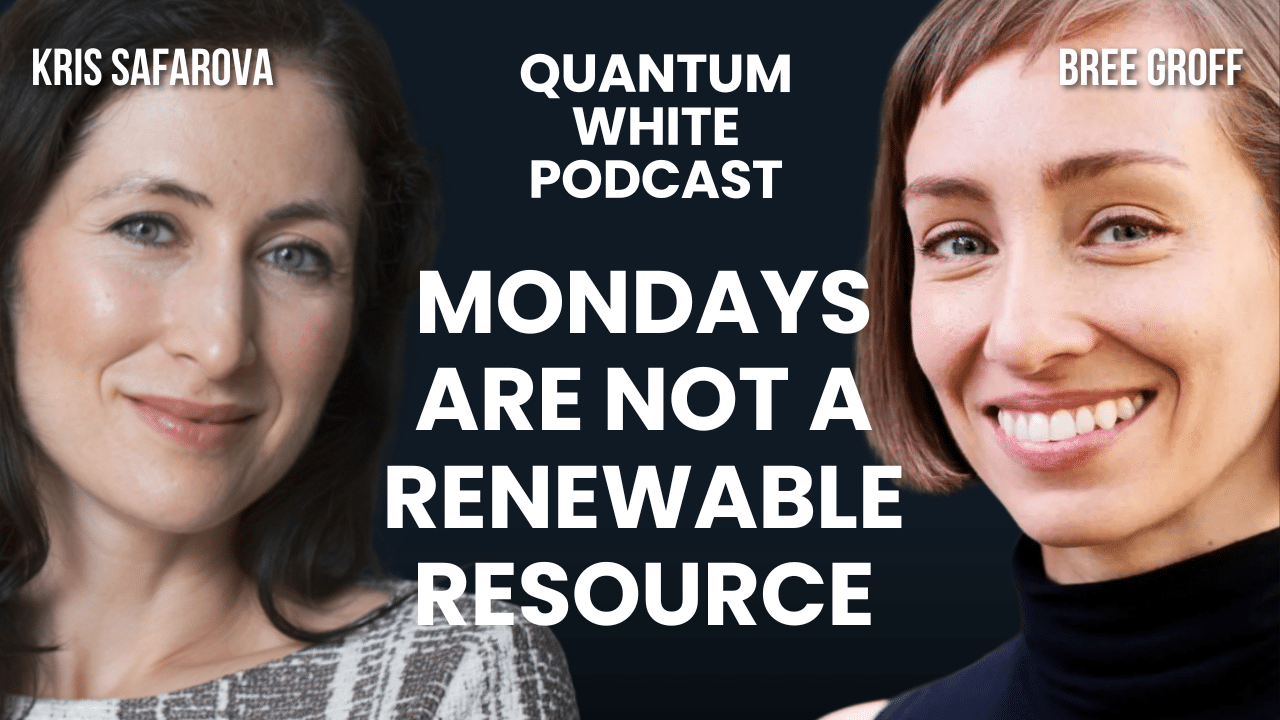
In this conversation with Bree Groff, author of Today Was Fun, we recenter the conversation on joy, pleasure, and meaning at work. Bree shares why her mom always said, “I have the best days,” what it taught her about how we spend our lives, and why fun is not frivolous, it’s the driver of creativity, performance, and belonging.
We also dive into the future of work and AI:
- “If the AI is a train speeding up behind you, don’t try to outrun it. Step off the tracks. Be the most human version of yourself.”
- Why we should measure success not only in revenue and customers, but in whether our companies create good days.
- Why Mondays are not a renewable resource and how leaders can treat each day as a responsibility.
As Bree says: “The pain is optional, and the fun is free.”
Here are some free gifts for you:
Overall Approach Used in Well-Managed Strategy Studies
Enjoying this episode?
Get access to sample advanced training episodes
Episode Transcript:
Kris Safarova 01:13
Welcome to the strategy skills podcast. I’m your host, Kris Safarova, and this episode is sponsored by strategytraining.com and we have few gifts for you. Number one is you can access episode one of how to build a consulting practice level one. You can access it at f, i, r, M, S, consulting.com forward slash build. You can also download the overall approach used in well managed strategy studies at firms consulting.com forward slash overall approach. And you can also get a McKinsey and BCG winning resume, which is a resume that got offers from both of those firms. And you can get it at firms consulting.com forward slash resume, PDF. And today we have with us Brie grove. Welcome back. Brie. So great to have you again and Bri, for those of you who don’t remember, is a workplace culture expert and author of today was fun, and she has spent her career guiding executives at companies such as Microsoft, Google, Target, Hilton through periods of complex change. Brie lives in New York City with her husband and daughter. Are you welcome? Yay.
Bree Groff 02:22
Thanks for having me back. I’m so excited to get to chat with you again.
Kris Safarova 02:27
I’m always so excited to chat with you on air of air, and you’re just such an amazing person. And I’m so glad that the book is doing well, and I’m so glad that we get to talk about it again here. So you advise some of the world’s largest companies, What convinced you that fun is an important conversation that you wanted to have right now, because you are expert on so many things, you could have been talking about so many other things. And I know some of the answers, but I think it’s a question, yeah,
Bree Groff 03:01
you know, to be honest, it wasn’t obvious to me that fun was what I wanted to talk about at first. So when I started writing the book, I thought in which you can sort of see in the structure of it as well, like I care and think a lot about camaraderie and how to build that in a team, a lot about creativity, a lot about the emotional reliability of leaders. But when I really backed up to think about, what am I trying to say here? What is the ultimate aim this, I want to say more than what you know, a dozen HBr articles, SMED together could say. And what I realized is what was most important, and what I felt like the world most needed was a recentering on how valuable our days are, including Monday through Friday. Because so often I think we consider ourselves human resources, or I’m only as good as my economic value, you know, like our system will make us think that, or, you know, my days aren’t even mine. I’ve sold them to an employer or to a client, and my my joy or fun is, actually, is irrelevant. I’m the input to the system. And so what I wanted to do is to recenter the conversation of our own joy and pleasure and fun at work. And when I really thought about what’s the simplest metric of that like, how would I even know that my days are worth having? Then it seemed to me, if we could curl up in bed at night, think back over today and say to ourselves, today was fun, but maybe that’s plenty. Maybe that’s like more than plenty. Maybe that’s a brilliant way to spend our lives, saying that not every day, some days are super stressful, but most days. And so that’s really where I wanted to center the conversation that we deserve to be loving our days, because that’s, you know, our work days are five sevenths of each week. That’s too much to throw away. And the
Kris Safarova 05:14
scary thing is that for most of our listeners, they don’t remember the last time they went to bed and thought today was fun.
Bree Groff 05:23
Yeah, I and I get that like I no toxic positivity here, even though I know I have a neon smiley face on the cover of my book, still, I totally get it. I spent large portions of my career Well, generally having fun, but also really stressed out with a lot of pressure on my shoulders, I understand what it means to not be having fun in the traditional sense of the word of like, Haha, I’m laughing all the time, and yet I still think it’s important to at least start from the place of believing that our days are worthwhile of fun, believing that our pleasure and fun at work is relevant is an important, an important thing to focus not only our own resources on, but organizational resources as well. And so I think if we can at least open up the conversation to wait, if work should be fun, how can we start making it so, which is much different than coming at it from the place of work is called work for a reason. Work is drudgery. Now you stop the conversation before you’ve even begun now, like, why do we even we’re not even thinking about improving the quality of our days because it’s not on the table. But I always offer we don’t get paid because work is painful and people wouldn’t do it otherwise. We get paid because we create value, and then the pain is actually optional and the fun is free. Based
Kris Safarova 07:00
of us, someone listening to us right now who doesn’t remember the last time they felt, not even on the weekends, where can they start to shift their life towards being in a place where they can say that at least sometimes,
Bree Groff 07:14
yeah, well, it doesn’t have to start drastically, although That is one place to start. Some people are like, I just need to quit my job. And sometimes that’s the solution. I asked the question in the book, is your job even fundable? And some aren’t. But if a drastic solution is not on offer, if someone who hasn’t had a fun day since they can remember and needs that paycheck is listening, then I think you start with micro habits. I read this one post yesterday that said, I have to check the math, but I think it checks out. 1% of your day is 14 minutes. There’s like 14 minutes and 37 seconds or something, and they were making the case that isn’t 1% of your day, like, isn’t that small enough that you could devote 1% to just enjoying yourself, just doing something that gives you pleasure? And I think, like, oh, 1% for me. Like, sure. I guess I could devote that. And yet, how often do we wake up at 6am so that we can exercise? And maybe there’s kids to get places, to get to work, to take the meetings, to come home, and like, 14 minutes like, that’s far too much. So I think you could start with micro strategies. Sometimes this looks like micro acts of humanity. I often like, I am sort of right now I show up to a meeting or work with my hair wet, and it’s, it’s a little, small act of rebellion in a professional world that says you must have your hair perfectly coiffed to say, look, look, I’m a human. And I wanted to exercise this morning, and then I wanted to take a shower, and then I wanted to be on time for this meeting. So those little micro acts of I am not a professional robot. I am a human being. This is what this looks like. So that’s one, and also sometimes the quickest way to have a little bit more fun at work is to make a friend, because everything in life is better with a friend. And so I’m a big believer in stopping to ask a colleague their middle name. It’s the simplest way to just get to know somebody a bit better. And they’ll say, Oh, my great grandfather was named. Came from here. But those little acts can have huge impact, and there’s research on this too. Having a best friend at work, Gallup has studied for decades now. It’s strongly linked with business outcomes, including safety, retention, profitability, things like inventory control, which doesn’t make sense to me, but. Nevertheless. So having a best friend at work is good for business, but you could also understand how it’s good for your life. And so even if you’re feeling miserable and you’re not having fun at all, if there’s somebody that you can DM and be like, this sucks, and they can write back like, Oh, I hear you now, at least, at least you’re seen, you know that can take you from the bottom of the pit to like, one foot up from the bottom of the pit. So some places to start 100%
Kris Safarova 10:30
I wanted to ask you something. Your mom used to come home and say, I have the best days. She said days in the plural. Why do you think she chose that phrasing?
Bree Groff 10:43
Yeah, so the story I tell in the book for context. So my mom was a kindergarten teacher. She died about three years ago now, but she loved her job and not every day was fun. I remember she had stressful parents and stressful and she worked with the Chicago Public Schools, so there were policies that were not fun. So I don’t mean to romanticize teaching, especially because teaching is really, really hard. Needs to be paid better. But day to day, I think, like the atomic unit of anyone’s life, a day, right? How you spend your days? Or, to quote Annie Dillard, how you spend your days is how you spend your life. Any one day. For her, was generally fun. She loved this. She loved the kids, the little five year old. She loved seeing their growth. She loved the family. She loved her classroom. She was she was just so well suited for the job and so good at it. And that’s what she would tell me when she would come home. She’d say, I have the best days. And I think she used it in the plural sense, or I imagine it is so, because not every day was fun, but on the whole, she had the best, the best days, and I think it was just her honest way of saying, it’s okay to enjoy your life. It’s okay to make choices that make you happy. Like she knew that teaching was not the most prestigious of all or high paying of all professions, and yet she chose to do it because she thought it was important and joyful, and that was plenty.
Kris Safarova 12:33
And I can say that teaching five year olds is actually very hard. When I was in school, we had to do some kind of work project of a summer where you work somewhere for two weeks, and I went to kindergarten. I thought that is just dream job, spending time with little kids. So much fun, and you just from day one, you go back, at least, my experience was tremendous headache, digital headache, because the screaming never stops. It is ongoing. So your mom, her job was hard, actually, and it’s incredible that she found a way to see the best in it. And I’m so sorry you lost her, and they were so lucky. Your parents were so lucky to have you as a daughter.
Bree Groff 13:20
Thank you. That’s very kind. So you
Kris Safarova 13:25
grew up with amazing parents, and then you entered the corporate world. It’s not very nurturing when you first entered corporate life, what felt most alien compared to that model of joy you saw at home? Yeah,
Bree Groff 13:40
you know. So I had a first career in teaching, actually. So when I first entered the workforce, like properly, aside from summer jobs, I was a seventh grade math teacher, and then taught high school math and physics. And so I think growing up and seeing how work was modeled for me those first few years teaching all of that, what I took away was, if you are expressive and human and you’re most magnetic, which really, you know, magnetism just comes from authenticity. Really, I think people are attracted to people who are themselves and the fullest version of themselves. When I would show up that way as a teacher, I was successful because the students could see I was interested in the topic, and I thought they’d be interested, and they could see that I liked them and I was having fun. And so there was this bigness, this this opportunity to be vibrant that I was rewarded for. But then contrast that with entering the corporate world and consulting, and I felt, in many ways the opposite, especially as I mean, I was entering as a junior employee, as a junior consultant, I wasn’t rewarded. For being big in the same way. In fact, I was rewarded for being sort of small and palatable. And that was really not fun. It was a, it was very much a I felt the expectation to stay in my lane, to listen and learn to especially client facing, to be very presentable and unobjectionable to clients. So I was, you know, in many ways I, and I don’t mean to say that, like any of the leaders or companies I worked with were like scolding me, but this was just like the vibe, the the corporate vibe, that quickly I understood, okay, you want to say things that make you sound smart and make people nod their heads. You sort of get the hang of the jargon so that you sound like you’re in the in crowd. You want to be personal, personable, but not too revealing in like, like, Oh, everybody, I threw my back out this morning. They’d be, you know, sometimes it’s like, go keep that to yourself. I don’t know your back hurts. Go get some handful. And I, I think it just felt very inhuman in many ways. I saw and I felt the need to button myself up every morning, literally and figuratively. I felt the need to put on my business mask and be the sort of professional version of myself, such at the end of the day I would be, like, done. Okay, take off. The button down, like, Finally, relax, get to be a human again. And I just realized how damaging that felt personally. And then also, as I learned more about the industry, how damaging that is for business as well, because people are not bringing their best ideas and doing their most brilliant work, they’re doing work that makes them look normal, which, you know, no business is really going to succeed on the basis of doing normal, unobjectionable work, so not as much fun. And
Kris Safarova 17:09
what is interesting is consulting, in my experience, is one of the best places to end up in corporate world, like banking, you would be horrified the experience, because I’ve been in consulting and banking and in a good place.
Bree Groff 17:31
Oh my god, it’s true. I mean, I live in Tribeca, right near the financial district in Manhattan, so I see so many button downs and khakis and like, everybody looks the same. And, yeah, there’s, I mean, I’m a huge fan of a work uniform, actually, but there is this. It’s not about fashion. It’s really about conformity and the whether you are welcome to be a human being at work, because often you can enjoy yourself if you don’t feel like yourself first. And so I think that’s ultimately the problem,
Kris Safarova 18:10
very true. So what would you say to our listeners who in their mind, somehow they think that fun is not serious, there’s no place for it in their work
Bree Groff 18:21
life, yes. So I hear that sometimes I say fun, and people are like, Oh, happy hours and off sites like, surely fun cannot coexist with work. You often think about like, Oh, I’m having fun. All right, back to work now. Oh, you’re you know, it just does not compute. So my rebuttal would be, when we actually think about what work is, work is fun at its most fundamental so work when we are creating some sort of value, we are showing off our skills. We are building alongside other people that whom we hopefully like. We are creating something that hopefully we are proud of. We are making somebody’s life better through a product or a service. We’re learning new things, like, all of these things are actually fun at a fundamental level within the work itself. So there’s nothing at odds there, you know, we, we get paid because we create value. You know, it’s, it doesn’t nothing about works as we get paid because we painfully create value. That’s just not a necessary input.
Kris Safarova 19:36
And of course, it’s such an important component for creativity. Yeah, something you have to have fun, otherwise you’re not gonna get what you can get. Yeah?
Bree Groff 19:45
Like, when we think about creativity, there has to be a notion of play, of mischief. Even when you think about big, bold ideas, like they’re usually a bit subversive, they’re different than what’s in the market. So you have to have. Have that sort of wink, or the willingness to go there and then, conversely, doing brilliant work is really fun. Like, if you know you or anyone listening has had those moments at work where you’re like, Oh, I think we’re really on to something. Like, this could be big. I like, I really believe in it. Like, I can’t wait to get going on this project, that feeling that you’re about to do something brilliant and brave and important, that is fun. That’s what makes fun, not simply, you know, hanging out by the coffee machine, although I suppose that’s fun too, definitely.
Kris Safarova 20:40
And what is interesting is that different corporate cultures in different countries allow for different degree of fun, on average, because I worked in multiple Yeah, it’s very interesting to view how different the cultures are. So I think in Canada, the United States, we can learn a lot from some other cultures on how to make it more fun and still get really good work done, better work done, because people feel sense of belonging. They feel they can show up more as themselves, but you can say that your back hurts, and people say, Oh, really. You know, I tried this and it helped me.
Bree Groff 21:20
Yes, yeah, absolutely. And I’m so curious about your experience internationally as well. I know I’ve consulted across many different cultures, quite a lot in Peru, in Europe as well. I remember doing an off site for a Portuguese company, and we had scheduled a 30 minute lunch in our agenda, like we would for all of our American clients. And I remember getting to the lunch, and the Chief Technology Officer we were consulting for was like, Oh no, 30 minutes like, we’re sitting down to an hour and a half lunch with wine, and I was like, Oh, that’s amazing. I want to do it the Portuguese way. And it’s just been fascinating to see globally how different people have different approaches to work and life. Exactly.
Kris Safarova 22:17
We have a lot to learn, and you are doing very important work of bringing the ideas to companies and saying, Look, we can do differently, and you can get even better results. You can get even better quality of work, and you will have happier people and low cost of replacing them, because that’s unhappy they have to leave their soul crushing job. Yeah, so when you’re working with companies, can you share with us one or two stories where you were surprised in a good way by the changes made and what specific changes were made without, of course, we believe in anything confidential,
Bree Groff 22:52
yeah. Let me anonymize a few. Yeah. So, okay, so one in class, one client in particular, we did some culture work for a really large organization, where we had developed for them, sort of a news, like a structure for thinking about their culture. So there was a like a tagline of sorts of how they thought about their culture, there were values, there were behaviors. And the organization has many retail brick and mortar stores as well. And one of the things that we learned was actually communication with from the headquarters to retail is way harder than you would think for a company whose whole business is sort of like supporting retail operations, but it was just very hard to make like HQ leaders accessible and human, and for them to show care To the retail location. So what we ended up doing is we created these gift boxes that went out to every single retail location, and in it they we had, like, the tagline of the culture and the values and all sorts of like crafts and like accoutrement for them to decorate the break rooms in the retail locations. We also included these note cards, because what we learned about this culture is that what we were trying to do is amplify the good parts of culture that already existed. And so we learned that a lot of managers had this habit of writing physical thank you notes to the people working for them when they saw them do something exceptional. So we included this whole letter writing kit as well, and it was so warmly received. And then of the because I think it felt like a gift, and we’re so used to you. Headquarters and the big bosses asking and extracting and that, like, is that sort of orientation, but when the leaders really and they were committed to this and excited about this, committed to showing up with, we’re coming bearing a gift for you. Like, use this to decorate your space. Use this to appreciate each other. It was so well received. And what was even cooler is that people then we could then saw it on the like, all over the internet. People would take pictures of all of the different things we sent pinned up in break rooms because, and we didn’t ask them to do this, but they were just putting it all over the internet. Of like, look what we created, and we like, we love our location and all of that. It’s just one example of like. None of that was strictly necessary from a strategy and execution standpoint. It was an act of generosity. And in doing that, I think it also really conversely endeared. You know, gave a sense of trust and endearment from employees back to the leadership. So I loved that project and stayed with me.
Kris Safarova 26:10
It sounds like an amazing project, and I can imagine all those people, they had much nice experience going to work. They felt that they created something that the break room, it became more of their place, versus somewhere where they have to be somebody else. Yeah, how it can be very nurturing for people, and then you have happy employees, and they serve your customers, but just rip off from where you started. So when you work with leaders, do you see some of them have to redefine the definition of success to allow fun into teams lives,
Bree Groff 26:53
one of my hopes is that we simply add a concurrent definition of success alongside business success. Because, yeah, of course, you need the business to run, to pay the people, and like all of that you know, like, that’s a big part of consulting is to make sure that that’s true. What I hope for and advocate for is that employee engagement and happiness is seen as more than the driver of business success, because that argument is very well made. I’m glad it’s well made. The notion that employee engagement drives performance, purpose drives performance. We’ve been hearing it for the last decade, two decades, maybe more. What I hope is that we can start to elevate a successful business is one, yes, that makes money and serves its customers, and of equal value is that this company creates great days. It creates well paid, happy employees, because that’s a value too, especially when you think it’s scale. Some of the organizations I’ve worked with 10s of 1000s, hundreds of 1000s, of employees. Those employees lives have to we have to think of them as more than an input to the business. We have to think of businesses as I’m trying to think of the best way to say it, but like as creators of great days for those people as well. And so what I would hope is that when you’re looking at whatever, bottom line, top line, middle line, all the metrics that you like on the business side of things, and all the metrics around customer, client satisfaction that we are also hope holding up an equal measure, things like employee experience, engagement, retention, all of Those numbers as well, because that’s an that success in and of itself, that is a really successful business is one that’s employed people gainfully and happily for many years. That’s a beautiful thing.
Kris Safarova 29:15
I think we have to talk a little bit about AI Sure, why we live in it. Where do you see I amplifying joy, and where does it risk hollowing it out?
Bree Groff 29:26
Yeah, so amplifying joy. My joy is amplified every time I ask it a stupid question, and it tells me answer. In other words, when the robots work for us, it’s an amplifier of joy. When I don’t. I never use AI to write from scratch, but sometimes I’ll put a piece in and I’ll say, what are the weakest points here that I could should consider cutting in that case, it makes my right. So when the robots are working for us, great. Right? And I think that’s the question every business is asking is like, how do we leverage AI in order to make our people more productive and successful on that side of things, I would also argue the goal is to make people more productive and successful and not simply free them up to do more different work on their nights and weekends, we already have a burnout epidemic. At best, we are using, we’re using AI to take overworking down to a reasonable level, which is working where AI detracts from joy. I think, like a much larger scale, I’m worried about what everyone else is worried about, which is mass unemployment. What happens when companies are not incentivized to use AI to say, like, create a four day work week is one example, like, in that case, you’re using AI to create efficiencies and productivity? Obvious, yes, of course. But the question is, what are you going to do with those efficiencies and productivity? Are you going to give time back to people, or are you going to fire them? And that’s where I start to get really nervous, because in every stage of technology advancement and AI advancement, I’ve seen the argument shift from it first is like, oh AI is going to be really good at those stupid rote tasks that we don’t want to do. And then it’s like, okay, now AI is kind of getting good at strategy. And now it’s like, oh, AI is actually kind of getting good at creativity as well, like all of these, you know, like all of our defenses are being like, knocked down one after the other, and still, we’re at the phase right now where there’s, I think, a little bit of a plateau on where AI at the speed at which AI is it advancing? I’ve been following the work of Cal Newport in this place, and he wrote an article on what if this is as good as AI gets for a little while, but ultimately, I think it’s coming for those higher level human tasks that we like to think are uniquely human, but maybe just aren’t, and And I think the solution for that is as leaders and actually probably organ like at the government level as well. We have to think about what incentives can we put in place so that the AI continues to work for the humans, all the humans, and we are not working for the robots, because that I don’t want to work for a robot that would be a dystopia,
Kris Safarova 32:43
and building on this for someone who is scared about losing their job, and a lot of people are now scared, even clients who are working for those companies that are building those the models and using them, how can they approach This so they can have more joy, because it feels that now people haven’t even lost joy because of this additional fear that they will not be useful.
Bree Groff 33:09
So on the one hand, I think sometimes we just go where history takes us. I’d like to think that we’re all part of making history. But you know, is any one person, sometimes we’re just gonna go where the AI goes. And frankly, like, I don’t know that we can prevent like, it is scary. Our jobs are insecure. Any employer that tries to say otherwise is not telling the truth. The only strategy I can think of, and it’s one I’m employing myself, is that as as the I like to call them the robots, instead of AI, because I think it’s like cheekier and sillier, and for some reason, defangs ai a little bit for me. So the robots, as the robots get better at human tasks, our only and best strategy is to not try and outrun the robots, as in, if the robots are a train speeding up behind you, and you are on the tracks, you are not going to outrun that train. And so if that train is really, really good at productivity, can work 24/7 and never get tired, then don’t put your energy into getting really, really good at productivity and working 24/7 and never getting tired, because you’re not going to win that race. You are a human and the train is a train. The only escape is to veer left and get off the train tracks. And by that, extending the metaphor, I mean we have to be the most human versions of ourselves. What this looks like for me is I don’t use AI for my writing because I want my human voice to always show up, because I know even as AI is getting good at writing, and you can say, write an article and breeze voice still. Still, humans will always value other human connection that I feel really confident in as much as you could make a robot with a padded body that can give you a hug, it still won’t compete with a human hug. And then, similarly, like we have to lean into humans caring for other humans. There’s, there’s actually a service where you can type in a note, like a note card you want to send to somebody, and they will have aI write it, or actually maybe on their end, it’s a human write it for you and send it. And this is so creepy I find because if I’m getting a handwritten note from someone, I want to think it’s their handwriting. It because that the human knowing that a human brain or hand or heart has actually touched something that is valuable in and of itself. So I think the opportunity is to think creatively about what is uniquely human. Where do humans uniquely want other humans? And then how can we do our best in our careers? However, we’re trained to lean into some of that. So I can imagine, like financial services. There’s like the robo advisors, right, which I have used before. And I thought, Well, does someone put my money where you think I should go? But still, I value talking to someone to be like, what do you what do you think human? And so I think in any industry, there’s that opportunity to what do humans need for other humans? And then how can we pivot our careers? There as best as possible.
Kris Safarova 36:40
Beautiful answer. I love that story about the train, not the first beautiful so if you imagine the workplace, let’s say 20 years from now, what role do you think joy will play compared to today? Oh,
Bree Groff 36:56
I hope so much more. I hope so much more. Because, Gosh, 20 years it’s like really mind boggling, is it? When I think back 20 years ago, I was just getting my first smartphone, I think if my timing is right, so it’s hard to say, but in broad brushstrokes, I think what we’ll come to realize is that work in creation is a human joy in and of itself, which is what I’ve been arguing. And so even if a robot and AI can do all the jobs, there’s still a reason to work, and that’s because working is actually still fundamentally fun, maybe not like grinding it out. But when you think of working as the act of creation, to create is human. And when we think of work as the act of value creation and taking care of each other on this planet, that is human. And so I hope we are designing our roles when we’re like, oh, maybe we don’t really need that as many roles as as we needed before. Well, how can we amplify we were talking about that success metric of a company exist in order, in addition to making money and making customers happy, it exists to provide good employment in good days to people who want to contribute to society. I think in that with that sort of success, Metroid joy is really up there, like, how are we? How are we giving that to people opportunities to contribute to the world, which is really all organizations are they’re just structured ways for humans to work together, to contribute to society and not have it be all Lord of the Flies. We’ve organized ourselves, in other words, and this is
Kris Safarova 38:48
such an important point, because if you think about it, our lives are so brief. And anyway can be the last day so someone comes to work for your company, it could be their last day they spending. It being Yeah, so it is a huge responsibility to try to make it a more enjoyable place for them.
Bree Groff 39:08
You know, I’ve talked I’ve talked before about I’ve had two teammates pass away from cancer, two people that I have led on consulting teams. And when I think back, like they’re such beautiful humans, and I’m so lucky I got to know them, and it makes me immensely sad that they are gone, and the only thing I’m thinking about in relation to my leadership was like, did I give them some good days? Of course, they contributed to the project into the business and to our clients, like, yes, of course. But I’m thinking about, did did we laugh on those days? Did they feel happy and safe and cared for and supported? The last thing I’m thinking about is, oh, did I extract the maximum amount of economic value from them? Them like that. Just feels offensive and cold and but I think when we extract, not extract, when we extrapolate that idea that that you mentioned that some of our lives are shorter than others, but everybody’s going to run out of Mondays at some point, Mondays are not a renewable resource. When we think about the value of our days, knowing that every one day is as valuable as it’s going to be, even when someone is 90 years old and wishing for more, then we have to take those days seriously, especially when we are the stewards of other people’s days, as we are in leadership,
Kris Safarova 40:43
and we have to have that same level of empathy when it comes to our life, because we run out of Mondays. I know
Bree Groff 40:53
it really makes me love Mondays. I would rather a Monday over being dead any day, any day by a million.
Kris Safarova 41:03
When we were speaking in the beginning about the person who goes to sleep and not saying to themselves, today was fun for a very long time. Just remind yourself that we will all run out of Mondays. You deserve for it to be a fun day, enjoyable day.
Bree Groff 41:18
That’s right, you deserve it. This is one of your few so you do what you can, you change what you can change, and accept what you can’t is it’s you know, and do your best, even if you have to thin slice your joy and just have one friend at the office or enjoy a cup of coffee while you think about a role that might be a little bit more fun.
Kris Safarova 41:43
Brie, what are the final words of wisdom you want to live our listeners with
Bree Groff 41:48
my final words of wisdom? I suppose mostly what I want to give people is a sense of agency back over their days that even though it can feel like our days are not ours, they are and even if you have a terrible organization and a terrible boss, you are still in control over the small moments of your Day, and they are worthy of fun, enjoy, and I hope that by opening up even the possibility of what could this one hour look like if it was supposed to be fun, like, oh, maybe I’ll go do this report I have to do from outside on a bench, because I deserve some vitamin D, even that in small ways, I think, can make a big impact on our days, because the report will get done either way in your fluorescent lighting or under the sun, and if you have the opportunity just pop outside your office for an hour sit on a bench, then maybe that’s a place To start.
Kris Safarova 42:59
Thank you so much for being here. Where can our listeners learn more about you? Buy your book, anything you want to share?
Bree Groff 43:06
Yeah, so come find me at my website. It’s brigroff.com or b, r, E, E, G, R, O, F, f.com, from there, you can find links to buy the book. You can also get it wherever books are sold, you can sign up for my sub stack and find me on LinkedIn and Instagram.
Kris Safarova 43:27
And if you could put one belief in every listener’s heart, what would it be
Bree Groff 43:36
someone said to me recently, and I’ve since adopted it. You can schedule joy for later, you take it now, or you don’t take it. And I was like, Yeah, that’s good. So I suppose the belief is like, if there’s a joy on offer to you, you take it. No one’s gonna give us joy. We have to snatch that right up. So the belief that closing your eyes and enjoying a bite of your sandwich is worth it. You deserve it, and if you don’t take it now, you’re not going to take it, so I hope you do. Bri
Kris Safarova 44:12
thank you again. So much for being here, for all the work you do, for being an incredible human that you are, for being here with us today, for everything you shared, I really appreciate you as a human, as a person, as an expert, and I’m so glad that we had this time together today.
Bree Groff 44:30
Me too. I love I love their conversations. I think you are such an interesting and inspiring person, and I just I feel lucky to have spent the hour with you.
Kris Safarova 44:41
Thank you, Bri. Our guests today again have been Bri Groff and author of today was fun, and our podcast sponsor today is strategytraining.com. If you want to strengthen your strategy skills, you can get the overall approach used in well managed strategy studies. You can get it at f, i, r, M, S. Consulting.com forward slash overall approach. You can also get McKinsey and BCG winning resume, which is an example of a resume that got offers from both of those firms. And you can take a look at it and see what you can adjust on your resume. And doesn’t matter how senior you are, it always good to have a good resume. And this one, you can get at firms consulting.com forward slash resume PDF. And lastly, you can get access to Episode One of how to build a consulting practice. We spoke today about consulting, but if you want to build your own business, or you are leading a practice within a large organization, within the ledge consulting firm, that will be a great episode to access. And you can get it at firms. Consulting.com, forward slash Bill, thank you so much for tuning in, and I’m looking forward to connect with you all next time,
Leave a Reply