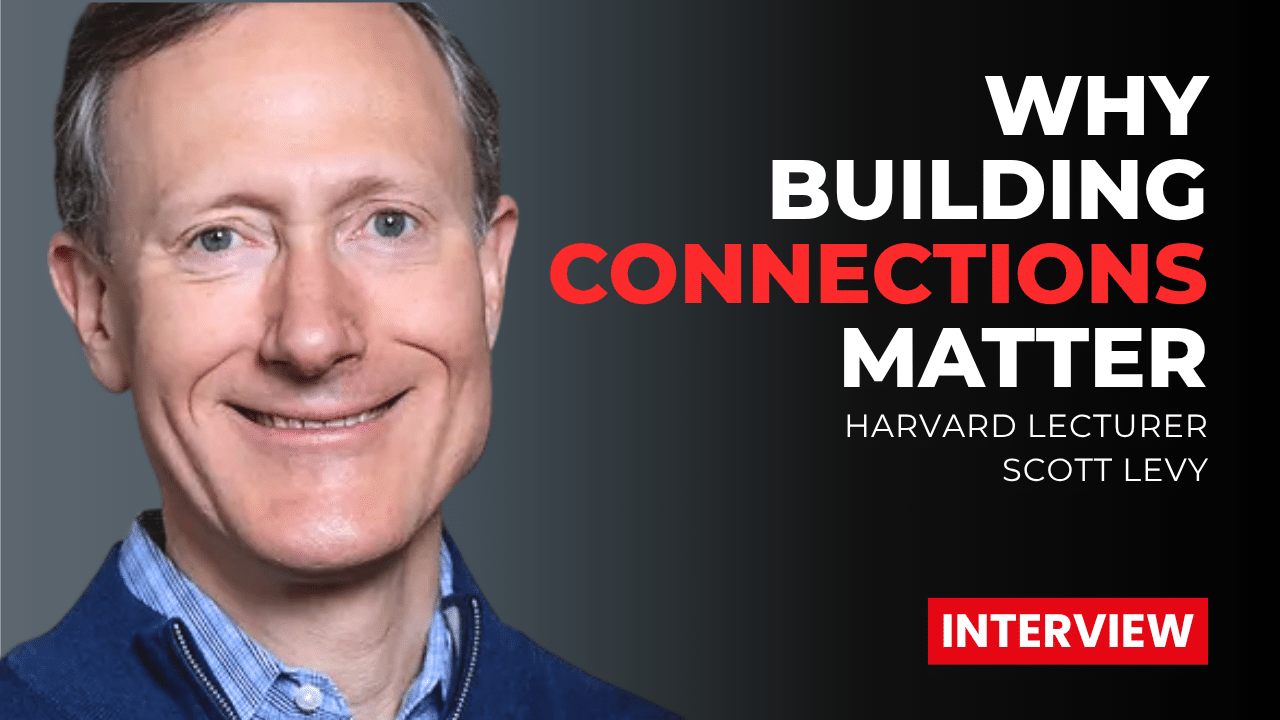
Scott Levy spent two decades as an investment banker at firms like J.P. Morgan, advising corporate boards and senior executives on risk, growth, and capital decisions. Then he pivoted, serving on a public school board, teaching at Harvard, and writing Why School Boards Matter.
In this episode, we discuss:
- How Levy broke into investment banking and the lessons that carried him through twenty years on Wall Street
- What he learned about resilience, risk-taking, and long-term thinking at the highest levels of finance
- Why he left a successful career to focus on public education and democracy
- How business principles can, and cannot, be applied productively to education
- What executives misunderstand about AI, and the questions they should be asking
Here are some free gifts for you:
Overall Approach Used in Well-Managed Strategy Studies
Enjoying this episode?
Get access to sample advanced training episodes
Episode Transcript:
Kris Safarova 01:13
Welcome to the strategy skills podcast. I’m your host, Kris Safarova, and this episode is sponsored by strategytraining.com and you can get some gifts. You can get access to Episode One of how to build a consulting practice level one. And you can get it at f, i, r, M, S, consulting.com forward slash build. You can also get the overall approach used in well managed strategy studies at firms consulting.com forward slash overall approach. And you can get a McKinsey and BCG winning resume, which is a resume that got offers from both of those firms. And you can get it at firms consulting.com forward slash resume PDF. And today we have Scott Levy, who is an adjunct lecturer at the Harvard Graduate School of Education and has been elected four times to a local public school board in New York State. He spent two decades as an investment banker advising corporate boards and senior executives. And the reason I posted because I think it is just a brutal, brutal type of work. I spent some time in banking myself. How you survived two decades? It’s incredible. You have very strong body to handle it, so I’m looking forward to diving today. Thank you so much for being here. Well, it’s a pleasure to be here with you. What first drew you into investment banking? So from a very young age, I always was really interested in business. Part of it maybe, was growing up in suburban New York, and so I was fairly close to Wall Street, and had in my mind that after I graduated from college, I wanted to definitely become an investment banker, and when I was in college, I a lot of my experiences extracurricularly, were around business. I studied economics, not finance, but economics, and just had the appreciation for the system of banking issues up at the federal level, but at the end of the day, I had other interests too. I was always very interested in education and public policy. At one point, I had gotten a summer internship in banking, and at the same time, a summer internship at the State Department. And I was very interested in the State Department too, and interested in Global Policy and International Relations. But at the time, I needed to make money, and the State Department job was unpaid, and in DC and in New York, I was going to have a paid internship and be able to live at home. And so it became a pretty straightforward decision, but it was not a decision that I look back on, because I was very excited, actually, after graduation, to start a career on Wall Street, and after internship, you started full time? Yes, so well. So I was interned during the summer for two summers, so I I got to know what it was like, and so I didn’t jump into it, not knowing anything about it, because I had two summers of experience. And then when I graduated from from college, I decided to go full time, and that’s when I joined JP Morgan, back in 1994
Scott Levy 04:03
and they had, back then, an incredible training program that was six months long. I don’t think too many firms have that these days, but for six months, I almost had a mini business school experience where they brought in faculty from different business schools, and many of the senior managers at JP Morgan taught concepts of corporate finance, and really gave us training that then we used as soon as we went out into the groups and started to do the work. So to learn this sounds like a much nicer role, so I can see why you stayed there for two decades.
Scott Levy 04:34
Well, I did work hard, but I learned a lot in the process. No doubt about it, there was never two days that looked alike, and always worked with interesting companies, and, you know, learned a lot about doing business in different parts of the world, in different parts of the United States. So it was a it was a great broadening experience. So once you joined and you were going through the six months of training, what were some of the key things that you learned during that period that were kind.
Scott Levy 05:00
That Aha type of things, that you really were glad that you learned those things. So I think one of the biggest takeaways from those early days was the importance of relationship building, and that was true externally with clients. You’re making sure that you really build relationships with your clients that were based on mutual trust, where you had a bond with them, and ultimately they felt really good about working with the firm that you were at. And it was also about learning to have constructive relationships with people within the firm, whether that’s peers that were at the same level that I was, and of course, the teams that I worked on all the way up to the top. And I think that maybe, you know, that transition from college to work that was maybe one of the most quintessential lessons that I learned. I also learned that there’s a lot of judgment in in lots of different jobs. It’s not all about, you know, exact quantitative analysis. You can do the quantitative analysis to have a framework, but at the end of the day, you’re making decisions based on a judgment, and that sense of judgment and perspective is really important.
Scott Levy 06:09
And I think I also learned the value of hard work and perseverance and having the fortitude to see a situation where things didn’t work out. Maybe we pitched a client and we really wanted to work with that client, and ultimately they chose another firm. Live to see another day. Think about the relationship longer term. Don’t necessarily despair from defeat, but be stronger and get better and figure out why you didn’t prevail and how next time around, you can give yourself a better chance of winning that piece of business. I think those are some really early lessons that I learned that were important. And when I mentioned that it sounds like a good enough role to stay for two decades, I didn’t mean that you weren’t working hard. No, obviously it’s investment banking. You worked incredibly hard, and I have worked seven days a week my entire career. So even now, no one is forcing me. I’m still there seven days a week, working really hard. What I was thinking more about the environment, it sounded like it is closer to management consulting, where you are viewed as an asset and you have been invested in the company is investing six months top partners are coming to teach you. This is very different type of environment versus what I experienced in banking. Well, that’s that’s probably right. I think it was very unusual back then that, and certainly unusual now to have that type of investment. And I also think that back then it was a little bit different because we were viewed as employees that may actually stay for a long period of time and an entire career, I ended up staying at the first firm I started at for about, let’s see, it was seven years, and then I transitioned to a second firm, and I stayed there for a number of years longer, and then, and then I was at a third firm as well. So three firms in that span of 20 years. But I think in all cases, I always felt really good about the people that I was working with. I felt good about their values, doing the right thing for clients, being thoughtful stewards of capital. And so I never had a situation where I felt like I was with a group of people that I didn’t feel comfortable with and that weren’t going to reflect values that I held near and dear to my to myself, and that is very important. So looking back, what were the most challenging experiences in your first year on Wall Street? So I think the most challenging experience probably was,
Scott Levy 08:42
I would say it was getting up to speed on a very
Scott Levy 08:49
interesting question.
Scott Levy 08:52
I think it was all about trying to learn the technical aspects of the job. Because I came from a liberal arts background, and although I stayed economics, it was really not very finance focused. And so I had to learn about a lot of different things at once. I had to learn about companies and income statements and balance sheets and cash flow statements. I had to learn about how to value a company, how to think about the strengths and weaknesses of the industry that they were in, and how to think about whether or not it was a company that should be valued at this level or that level, and there are all these new concepts thrown at me. And I think that what I, you know, certainly found out was that there was a big portion of that that I learned from the six months in the training program, but there was so much of it that I learned once I was on the job and once I was traveling with different members of the team and spending time with clients and getting deep down into the weeds on a model that might be pages and pages long, or trying to put together a PowerPoint presentation in a really compressed period of time. But I think that all those it was a lot new back then in terms of the technical aspects, and then as I got more senior and started to be very comfortable.
Scott Levy 10:00
The technical aspects, then there are all these other challenges that emerge, like what I was saying before building relationships, being able to go out and cold call a client and then ultimately be comfortable if they decided that they didn’t want to work with you, and don’t see that as a mechanism to walk away, but rather double down efforts and really try to build relationships and win new business over time.
Scott Levy 10:24
Do you feel there were habits, disciplines you build early on that really carried you through 20 years in banking and beyond? Without a doubt, I think that the first is just staying super organized and just really being very thoughtful with things that need to get done over certain timeframes, and really sticking to that. I think that a big part of what you need to do is have that resilience and understand that if something doesn’t go your way, then that doesn’t mean that you should retreat from it, but rather you should double down. I think that’s a really important skill. I think just the sheer hard work of investment banking, which sometimes can be 90 hours a week and can involve going to California for the day, then coming back to New York and then going to Europe, having that ability to persevere through that’s important, but also to have perspective that there is life, even if you’re working a lot of hours beyond the office, and that you want to, at the same time, be really thoughtful about the things you do outside the office and spend time with the people that you love, and make sure that you you’re continuing your relationships with your friends and your family and and doing all the other things that you want to do as part of Having a balance and and really happy life. I think all of those were, you know, early lessons that I learned, that I had to learn to navigate, that have definitely held true all the way to today. And when you have a family, which, you know, Midway and through my career, I started to, you know, I had kids, my wife and I had kids and and then that really changes your perspective. Because I remember when I was a junior banker, and I remember once specifically being on the tarmac at the airport about to take off to go to Asia on a business trip. And I was so excited, because it was my first time visiting Asia, and it was going to be such an exciting experience all the way through. And at that point, I did not have any kids, my wife was working incredibly hard with her career, so during the week, we never saw each other much anyway, we really had time together on the weekend, and so this was all positive to me. And I was sitting next to someone I deeply respected and literally ran the tarmac, and he started saying, I want to go home. I want to go home. I want to go home. I wish you were home. I’m like, What do you mean? This is so exciting. And to him, that trip was taking him away from his kids and his family, and it was taking him away from those daily experiences of watching his kids come home from school. And so I completely appreciated that, you know, probably about 1015, years later, when I was in the position where every time I got onto a plane, I had to think about the fact that I was leaving, you know, my kids behind and and that was very, you know, troubling to me, because I wanted to be there as much as I possibly could so it’s interesting how your career and your perspective changes in different facets of your life, of course. So once you had your first kid, how did you manage? I think what you do is you learn to be super smart about the time that you have out of work, using it very wisely and really spending a ton of time with with your kids, I think that you also learn how to be smarter about your work. How well these days, it’s a very easy thing to say, but back then, it was much more difficult to work remotely, because we didn’t have the same, you know, high speed power, and there was more of an expectation to be in person to everything. I think now these days, it’s even easier, but that ability to know when you don’t have to be in the office to get work done gives you the flexibility to be there for those moments with your kids. So I think that’s an element that could be really impactful to people. I think that for a long time, and this did change, because eventually I had a pretty long commute, but for a long time I had a very short commute, and that was an added benefit when my kids were young and I was working, you know, so much. And I just think that part of it is also
Scott Levy 14:12
even when you’re on a business trip, calling and having those conversations. Now you can obviously do it over FaceTime, or, you know, do a zoom and and you can still be very connected, even though you may physically not be there. All those things are super important. And I think the single most important thing is just letting your kids know that you love them and that you know the reason that you’re gone is not because you don’t want to be with them, but because you do have other responsibilities. And hopefully, as they grow and as they get a little bit older, they understand that and they appreciate that too.
Kris Safarova 14:42
As you were getting more and more senior, of course, you had teams reporting to you and so on. What does it take to succeed in investment banking, and when you were selecting people to keep and promote and so on, what did you value the most? I think investment banking is a combination of.
Scott Levy 15:00
A few different skills that you really need to be successful. I don’t think it’s just one skill. I’ve seen people that are amazing quantitatively, they have incredible technical skills, but then they fall short on the ability to pick up the phone and to call a client that you may not know very well and figure out how what is that hook? How can you get into your client’s office so that you can actually be in front of them and then, hopefully, over time, build a relationship? So I think that’s one piece that is really important. It’s this combination of the technical skills and relationship building skills. I also think there’s an incredible temptation in any business to focus on short term results, because ultimately, if you can produce short term you likely will get compensated well, and it will reflect well on you from a career standpoint. But I think investment banking is a business, particularly if you’re on the client coverage side, or mergers and acquisition side, where you have to take a long term approach, and you cannot look at things in one month increments. You’ve got to think about building relationships, particularly with more complex companies where you may not your firm may not have had that relationship before. You need to think about long term. And sometimes that really does mean going into a client, and maybe there’s a particular asset that’s for sale and telling them, You know what, my opinion is, that you shouldn’t buy that asset. And here’s why, even though, if they bought that they bought that asset and they hired you, you would get a fee. So you have to, I think, I think what separated out to me, the bankers that I really respected the most, to you know, to others in the field, were those bankers that said, I am putting myself in the shoes of my client. I am going to think about what’s right for them long term, and I’m not going to get wrapped up in what my PNL is this year, I’m going to get wrapped up in what my PNL is over a long period of time, and I know that good things will come if I’m a really thoughtful partner to my client and do what’s right by them. And I think that that’s a really critical piece that often does get lost. Of course, you worked with very senior people on the client side and internally. And of course, you yourself a very senior person. Did you notice anything different about how very successful, very senior people think about risk, think about growth of the business, versus how people whose careers stagnate and they kind of get stuck in middle, right? I think that you need to have a certain element of risk taking in any of these jobs. And I think the real challenge is, how do you take risk and do it in a smart and thoughtful way, if you take risk in a way that’s more haphazard, probably good things will not come. But if you take risk in a strategic and thoughtful way, then that’s where you really see dividends. And I think that you can only think about risk in terms of making a bet on a company from the standpoint of providing them with capital. Of course, that’s a major risk that banks take, and you need to be really thoughtful about where you’re placing that capital. But also, are you going to take risks with your time? Are you going to invest in a client where maybe there hasn’t been a historic relationship, but that you see the path to a big opportunity, and you may need to explain to the people you’re working with that the short term results aren’t going to come. But over a series of months into potentially, sometimes even years, you can see very fruitful things happen, and you’re willing to take that gamble in order to go after that larger opportunity. I think that’s a risk that sometimes needs to be taken. I think that you have to take a risk sometimes, if you’re telling a client something that you know they don’t want to hear, maybe they have an asset that they want to sell, and you truly believe that the asset is valued at x, and they and you know that if you go in and tell them that that may not be the recipe to win the business, but that’s really what you feel in your heart. Is the right intellectual answer? Well, maybe that, in my view, is the best way to go, because again, that honesty, that transparency, possibly you might not get selected for that, but over time, if you are right, if you’re right about your judgment, and they see that, then the next time they have an asset, and maybe it’ll be a bigger asset, they’re going to turn to you and they’re going to say, You know what you actually told me, not what I wanted to hear, but you told me The truth. So I really think it’s risk taking across the board, but again, doing so in a way that’s all thoughtful and strategic and not haphazard. This reminded me of something that happened to me early on in my career, when I was in management consulting, which I should have never left, just should have stayed there until I become an entrepreneur. So I was a very junior, the most junior person you can find. And I was on this team with a partner and senior manager and the managing partner, and we were about the presenter client, and I was telling them, taking a risk, that this is not going to work with this client. And they were telling me.
Kris Safarova 20:00
Don’t understand negotiations. This is how you go. You go with much bigger ask, and then you’re going to settle somewhere. And I said, No, you cannot do it like that, especially not with this client. And I could feel because I’m the same way. When I’m negotiating, I’m actually looking for what is best for everyone, what is the ideal that works for everyone. I’m not coming bigger than what I need, but I’m also not going to accept less, because it’s not going to work. And so I mentioned it so many times, and then I was right, ultimately, and after that, people listened very carefully,
Kris Safarova 20:32
absolutely makes sense. So let’s talk about how did the culture of investment banking itself evolve during those two decades. Oh, that’s it certainly evolved a fair amount. I think that
Scott Levy 20:48
when I first came into banking, certainly there was much less diversity on Wall Street and in corporate America, but certainly on Wall Street. And I think, you know, over time, I saw that change at, you know, at a very rapid clip. I was involved back many years ago, in the early stages of my career, of being part of an initiative, really, to kind of look into why is it that, you know, Wall Street didn’t have the same, you know, even versus corporate America back then didn’t have the same diversity of workforce, and those were really interesting issues to look into. And I think the other thing that changed was there was just such a difference when I first started in technology, and then as it evolved, even though you don’t think of investment banking as a technological business, there were so many more and sophisticated things that we can do for clients 1015, years into my career than at the very beginning. And as I mentioned before, it was also completely revolutionary when it came to traveling and being productive versus what it was back in those early days. Although still maybe there’s some benefit to not having Wi Fi on planes and just being able to, every once in a while, unplug but, but, you know, when I, when I used to, you know, do presentations in the early days, what would inevitably happen is that you would find a mistake in a presentation on a plane, because you might be up all night working on the presentation, and you first had that chance at, you know, 6am in The morning on the plane, and you’d see a mistake. And the planes at that point, you had phones in them, and they were like, attached to the seat, and you’d have to pick up the phone and call somebody where you were going and say, go to the local Kinkos and reprint out the books, because there was a mistake on page 32 and then obviously, just things have gotten so much more sophisticated, and everything with being electronic completely transformed. So, so there are a lot, a lot of changes along the way, but I think the fundamental basis of the business hasn’t changed. It’s getting to know your clients. It’s trying to be thoughtful. It’s trying to give them good advice. M&a deals are m&a deals. And, you know, and equity offerings, or equity offerings and high yield markets certainly has evolved from when the early days of when I was first involved in it, but nevertheless, the fundamentals are still very much intact. Of course, Scott and you have seen senior leaders struggling with major disruptions over those two decades, and of course, with your career afterwards. What parallels Do you see now with executives, senior leaders, struggling or trying to figure out how to deal with AI, yeah. I mean, I think that, certainly I think a lot of the same issues were thought about back in 2000
Scott Levy 23:37
when the internet was exploding and valuations of internet companies were exploding, and then in the whole leverage world, in sort of 2006
23:48
and 2007
Scott Levy 23:50
when certainly the financial industry was undergoing a tremendous amount of change and risk taking. And now here we are in a new period of AI. I think that what I’ve learned over the years is it’s very difficult to predict exactly what’s going to happen, and I think it’s incredibly difficult to pinpoint the valuation of, you know, of assets in, you know, the AI world, and whether AI what it’s going to do to the future of employment. You know, is it going to make us all more efficient? Is it going to be a loss of many white collar jobs? There’s so many quintessential questions, and I think that you can frame those questions. You can start thinking about them individually. And obviously, for every company out there, AI is going to have an impact on on their, you know, fundamental business in some way. And I think you know, thinking about that is super important, but you also have to brace yourself for the unpredictable. And I think that you know, regardless of the business you’re in, you have to just realize that there’s a range of different ways that AI may be able to either help or potentially threaten you, and just be ready for those different scenarios.
Scott Levy 25:00
CEOs, because it’s, it’s just hard to know as something’s like, AI is evolving where it’s going to land. So I think I’m out of the prediction business and more in the let’s be thoughtful around the range of, you know, different impacts that it could have. And let’s get ready and try to take advantage of of the way that AI can, you know, can actually make all of our lives better. And for our listeners who are senior executives, senior leaders, what are some of the key AI related questions you think they should be asking? Well, I think that they should be asking questions about how, based on their day to day workflows, of the folks that are working in their companies, how AI could potentially be a tool that can be used to make everyone more efficient and to provide a
Scott Levy 25:51
just a more a quick way to analyze significant data and to be in a better position to make really informed decisions, and are those tools, things that need to be built within the firm? How can we leverage things that are out there in the world, but thinking really critically about ways that AI can help in places that may not be obvious? And so I just think that bringing data sets together that have been disparate in the past, thinking about ways in which, if you have repositories of data, making mining that and making sense of it. So it’s not only doing what you can do today efficiently, but what can you now do that you couldn’t do before? Because you may have this tool that is going to leverage your ability to do something better than it’s ever been. And you know, even when you are writing something or trying to, you know, be cohesive about particular your new presentation that you want to put together. How can AI be a tool to instead of doing that in 10 hours, do that in in five hours? I think those are just some really straightforward ways. How can AI make the customer experience better to the extent that you’re in a customer facing business? How might AI alienate customers if you overuse it and you lose that human touch? Makes a lot of sense. How do you yourself keep up with what is happening now with AI and technological advancements? You know what? I think that the way that I most do it is just try to infuse it into my everyday life and for just all kinds of different things. If you, let’s say, are trying to figure out,
Scott Levy 27:31
tackle a new topic that you don’t know much about. I mean, AI is an amazing way to figure out the right, you know, some of the right questions to ask. It’s an amazing way to try to look at what’s out there on the web in an organized manner, and then what I always do is spot check everything, and I would never take anything verbatim without going to a real source. Because I think there’s the biggest flaw in AI, in my view, at least still, is that you don’t know whether what you’re getting is fact, or whether AI makes it look like it’s fact, but in actuality, it’s actually misinformation, or it’s not really answering the question that you first had. So I don’t believe that we can just hand everything over to AI. You get a finished product and you’re done. But I think as a tool in my everyday life to do so many different things that I need to do AI has become, you know, a really critical resource. And are there any specific tools you prefer to use that you feel comfortable sharing? I generally like to use chat, you know, GPT as just a way to, you know, really, that’s the one that I’m used to. But, I mean, obviously there are many platforms out there, and I think that from certainly everything that I understand different platform, different platforms have different, you know, advantages and disadvantages, but, but, yeah, I that’s the one I tend to like to use in my personal life. What do you think people misunderstand or don’t pay enough attention to as it relates to AI advancement? So if we are thinking about our listeners, most of them are leaders, senior leaders, executives within major organizations. What do you notice many people who are at senior levels seem to either misunderstand or not pay enough attention to you know? Part of it, I think, is that sometimes there are two, two extreme reactions that that we all have when we think about AI, and sometimes we say, Oh, this isn’t going to impact us at all because of the nature of what we do, and the fact that it just doesn’t make sense that AI can either disintermediate it or really, you know, help with it. And I think that that’s one extreme that probably in most cases, is not a fair way to look at it. Because I think whether you look at medicine, whether you look at law, whether you look at business, whether you look at education, it doesn’t really matter what sector you’re thinking, there’s going to be an implication to every sector and every type of business. And nobody’s going to be immune from the fact that AI is going to change the way we work. And on the other hand, if you.
Scott Levy 30:00
Say, oh, AI is going to change everything tomorrow, and I’m not going to need to have anybody work in my company. And I mean, that’s also obviously the opposite extreme, and in at least most cases, not necessarily a good reflection of the way we’re going. And obviously, for different types of institutions, there’s going to be some blend. And I think it’s really trying to think through the use cases in the blend of where you end up, but but paying, you know, close attention to it and spending significant time on it’s like anything else. If you budget time for it, it will be something that that gets taken seriously and is important. But if you if you don’t budget time to it, then it might pass you by, and then you could find yourself in a more vulnerable position.
Scott Levy 30:44
And for our listeners, what will be your advice on which skills they should really focus on strengthening or building, given where the world is going now? So I think that if I took one lesson, it’s really just the ability to have resilience when you don’t achieve an objective, or there’s something that’s happened where you don’t get a promotion, or you don’t get that piece of business from a client, and find out a way to have that experience make you better, make you stronger, and not bring you down to defeat. And I really think that over the course of time, there’s probably not a leader on the planet that, at one point or another, doesn’t have a time when, you know, they were dealt a blow. And it might be a blow internally, it might be a blow from an external source. It might be a more systemic thing. You know, I was at Lehman during the, you know, the World Trade Center, you know, 911 incident, and our offices were downtown. And I happened to be traveling that day, actually, to Washington, DC, of all places. But I had, you know, many, many colleagues who were down there when it happened. And though our offices were damaged, thank goodness everybody was okay, but obviously an incredibly traumatic time for the country, an incredibly traumatic time to anybody that worked in lower Manhattan, and we lost our office space. And so not only were we all grieving over the horrific nature of what happened on 911 but then we found ourselves in a situation where we were still trying to help our clients, and there was, you know, turbulence and travel stopped, and the markets were gyrating, and we wanted to obviously do right by all of our partners out there and keep going. And there wasn’t the technology that existed today, and we all literally, for a short period of time, how to work from home. And then there was a an idea that someone had, which was, in retrospect, brilliant, which is that the hotels in Manhattan started to empty out because nobody was traveling. And there was, there were two hotels by the same operator in midtown Manhattan, and they didn’t need both because there just weren’t enough people visiting, and so we literally took over a hotel room, and they took the beds out of the room, and they put extra desks in, and then we all came together again within a fairly short period of time, and we were able to go ahead and persevere and serve our clients and do what it is that we needed to do to get our job done. And I think that that experience, obviously, for the whole country, was, you know, very traumatic, and for us, it hit very close to home, but at the end of the day, we, I think, grew very cohesive and strong. You know, out of that experience, you’re just going through it together, and then, you know, finding a way to you provide that continuity for all the people that had entrusted us to, you know, to be their partners. So it’s experiences like, you know, hopefully nobody has that experience of a national tragedy like that, but, but whatever is going to happen along the way that’s going to throw you a curveball, you just have to learn how to knock it out of the park instead of, you know, strike out and walk back to the dugout and give up. I’m so sorry you had to go through it, and your colleagues, and I’m so glad everyone.
Scott Levy 34:06
What did you learn on that day and the days that followed? You know, what I think I hammered home for me was the importance of relationships and how much people around you mean to you when you have you know different close calls and and that’s people, obviously, in your family and friends and colleagues. That was one thing that you know that came to bear, vulnerability that all of us have. You know in this world, world’s uncertain place. There’s there’s just an element of uncertainty that we all live with, and you have to get comfortable with that, and you can’t let that stop you from living your life.
Scott Levy 34:45
And I think what certainly it taught me was the unbelievable heroism of people that risked their lives going down to that site and going straight into harm.
Scott Levy 35:00
Way, and ultimately through service, trying to save lives and make the world a better place at the expense of themselves. And I think it’s just unbelievably uplifting and inspiring when you see people that have the fortitude to do that. And I think it’s just very humbling. We had a friend back then who was a firefighter, and, you know, and just understanding what he and his colleagues went through in that timeframe, you know, in the New York area, was just just unbelievable in terms of, you know, the debt of gratitude that we all owe to them for everything that they that they did. And I’ll, you know, never forget that, and I just salute all of our first responders and people that all the time put themselves in harm’s way for the benefit of society. That was just such an important lesson from that time. I 100% agree with you. So what prompted you to leave investment banking after two decades investing so much in that career you knew everything you could do it in your sleep. Yes, it’s not, I tell you, it’s not easy to leave. It’s easy to leave a job that you don’t like. It’s not easy to leave a job that you like but that you don’t necessarily think is going to be the only calling that you had when you had something else in your mind that you wanted to do. And I had a great you know, 20 years I actually we didn’t talk about this, but I met my wife the first year of working in investment banking, because she was also working in sales and trading, and so that was wonderful. So many great friends that I made, so many great clients that I served. But from the very beginning, from when I went to banking on the first day, I kind of had in the back of my mind, I ultimately have other things that I want to do. And I think that for me, maybe 1012, years into it, I started thinking, Hmm, when is it that I’m going to do the other things? And then life gets in the way, and oh, well, one more year, and, well, this is actually fun, and I’m having a good time, and I’m making, you know, a good income. And there are a lot of positives. And I think that I just got, I got to a juncture where I was thinking a little bit more seriously about it, but then something happened, which is that I started getting involved in a nonprofit, because my kids, at the time had started public school, and this nonprofit was this amazing entity that had been around for about 20 years, and it was funding projects in the local public school that were innovative, and the project ideas were coming from teachers, and they were coming from administrators, and the steady stream of ideas came for 20 years, and then I became chairman of this nonprofit. So this is just something I was doing on the side. It was a board, and the idea stopped flowing. And I’m like, what’s going on? Why the idea is not flowing? And the reason the ideas were not flowing was because there was a new policy in New York state called Race to the Top. It was an education policy. It was actually from the Obama administration, but it ultimately came to New York it had a lot of bipartisan support. So this wasn’t a Democrat versus Republican thing, but there was a set of reforms that at the state and federal level were near and dear that came down onto all the local communities, and this was causing havoc in our schools, and it was really having a lot of unintended consequences. It looked very, very different than the business world that I knew, despite the fact that a lot of people said a lot of the ideas behind Race to the Top were business ideas. And so I wanted to kind of get to the bottom of it, and I wanted to study it, especially when, you know, I thought it was a problem for my school district, but I figured, oh, maybe it’ll help school districts that are not as well resourced as my district, that have, you know, a different socioeconomic makeup than my district. But I went to a regional forum, which I never would have done, because I’m always traveling and busy with clients. But I said, this is too important. And I went to this regional forum, and there were representatives, parents, school board members, teachers from schools all across my region. And my region has a lot of different types of school, very diverse schools, and to a tee, every speaker at this forum where we were speaking to the state leaders, we every single speaker was negative about the policy that had been put forth by the state. And I said, there’s something very wrong here, if everyone agrees that there are all these unintended negative consequences. And so I ended up going back to Harvard, where I had gone as an undergrad, and talking to some folks that I knew up there, particularly one professor who I remained very close to, I said something’s really odd with this policy. It is not doing what I think the designers of the policy thought it would do. I really want to focus on this. And he encouraged me to do a fellowship and research this particular policy, and that motivated me to make a change. And so I decided, You know what, it’s time, it’s time for me to go to a different direction. And I decided to, I gave, you know, tons of notice, and we had a really smooth transition, and we tried to do it as thoughtfully as possible, but, but I ultimately decided to.
Scott Levy 40:00
Take that fellowship, and I did that for a year, and that was really the start of a new beginning for me of this whole world of education policy, which obviously is so different than the business world. But I really think that the skills that I learned in business and so many of the lessons learned throughout my career have been pivotal and now in sort of managing now, you know my my new world of public education. So going from your previous role in investment banking and then fellowship, how was the transition? What did you experience as you were going through that transition? So I got to say, it felt weird at the beginning, because I wasn’t going on planes anymore every week. And you know, as taxing as that could be, it’s also exciting to you. You know, you’re waking up in a different city, and you’re working with different types of people. I was going to Europe every couple of weeks, and so I really enjoyed working with my European colleagues. And all of a sudden that came to an end, and that fast paced lifestyle, the fact that there was, you know, a different deal every day, like a lot of that just came to a grinding halt, and the pace was very different. And I think the other thing that was so difficult to adjust to was I was comfortable in investment banking. I knew my industry. I knew the product set that we had to offer. I had good relationships with a bunch of clients that I cared about. I had a nice setup. And then all of a sudden I go to this world where not only do I know nothing. I’m also viewed as with a little bit of skepticism, because certainly people in the public education world don’t always view Wall Street professionals as their best and closest ally, and they view them with some skepticism. And I think there’s this feeling you can’t infuse anything from business into education, which I think is not fair, because I think there are many things that you can and there’s some things that you shouldn’t and can’t. You got to be thoughtful about it. But I think going into this new world, I’ll never forget when I had to write my first real paper. It was more of an academic paper. I’m like, I don’t know how to write a paper anymore. I’ve been for 20 years written PowerPoint bullets, and it was so different to think in a construct of an academic paper, as it was to think about PowerPoint bullets. But of course, after I was done with my paper and I needed to make a PowerPoint, I was able to do that in like two hours. That was nothing. So you you realize that there’s a whole skill set that you didn’t use, and it’s a little bit humbling. And I think that you also realize that you’re not somebody that knows much about anything. In fact, you know less about everything than just about all the people that you’re surrounded by. And I think at first it was daunting, but then eventually it’s really fun, because then you almost get to, you know, to have a real second go at it and try to become an expert in something that you, literally, in midlife, knew very little about, and you were happy to admit it, that is very true. So you recently wrote the book. Congratulations. Thank you. Do you remember the defining moment when you decided to write the book? I do. It was during covid, probably like others who had too much time on their hands, but there was a very specific reason. So I had already been on a school board for about five years, and I remember when I first got elected and I walked down the street of my local town and somebody stopped me. They’re like, Oh, congratulations on the election. And this is great. I’m going to watch you on the on the videos that get posted online, because all the board meetings get posted very different than the corporate world, total transparency. And I said, Oh, that’s great, because I thought that nobody watches those videos. They’re like, you know, very a lot of it’s very mundane. And then he went on to say, Yeah, I watch it when I have trouble falling asleep, because they’re, you know, he’s like, they’re boring and and I think a lot of people in 2015 when I got into a school board, thought school boards were quite boring. Now fast forward to covid, and literally, with every week, there was an eruption in some board meeting. And it was on MSNBC. It was on Fox News. It was written about in newspapers. It was on in local media. It was first about school Reopenings, then masking them, vaccine policies, then dei policy, and then all kinds of social justice issues, on and on and on to today, where even over the last
Scott Levy 43:57
bunch of days, there have been battles in boardrooms across the country, with different things that board members have said or done around the Charlie Kirk murder and so just it, this is a constant evolution of sort of crises in boardrooms, and it really has focused a lot of attention on it. And I wanted to write a book, because, on the one hand, nobody really paid a lot of attention to school boards, like they do to corporate boards. You know, corporate boards. Lot of books written about corporate boards. Business Schools teach about it, research done on it in the in the education world, until very recently, it was sort of this forgotten thing. But yet I thought it was of such critical importance, and so I decided I wanted to write a book, if nothing else, to shine a spotlight on school boards and really get people thinking, are they how schools should be governed? You know, what is their function? Has it always been the same in American history? Have we always had these fights, or is this something new? Has the role of school boards changed or not? And and how do school boards, you know, impact our public schools? And what I really found at the end of writing at the beginning, that’s what I thought I was going to write about, and I did. I.
Scott Levy 45:00
At the end, the most important thing I think about the book is starting to think about school boards and our democracy more broadly, we are so fractured. We are so polarized, people that are differing views don’t want to talk to each other, whether it’s in the workplace, on college campuses, certainly in our national politics, that’s for sure. And a lot of our national politics is fought in the corners of social media, but school boards, they are a place where you go in person and you’re able to go to the microphone and say what’s on your mind, and the folks that are at the table making the decisions have to listen and be respectful and then ultimately make the best decision that could possibly be made with transparency. It is the quintessential place for civil discourse. It’s the quintessential sort of representation of our democracy. So I think that there’s something really interesting about school boards right now, based on where we are as a country, that I think needs to be focused on and elevated and almost celebrated. Because I think things are happening in school boards that we only wish would happen in other parts of our society, where people are actually talking to each other across differences.
Scott Levy 46:07
I will wrap up with one or two questions that I love to ask when there’s a little bit of time left in our time together. So if you could instill one belief in everyone’s hearts, everyone that is listening to us right now. What would it be? I think the belief that, especially when it comes to careers, that anything’s possible if you really want to go for it and do it. And I think I go back to a time that I was asked to speak. This is right around the time when I left investment banking and I started my fellowship, I was asked to speak to a bunch of students, and I’m like, Well, what do they want to talk about? And they said, well, presumably either education policy or investment banking. So I started out the conversation with this group of students, and I said, What would you like to talk about? Happy to talk about investment banking. Happy to talk about education. And nobody wanted to talk about investment banking, even though probably half of them were going to do it, nobody wanted to talk about education, even though some of them might have been thinking about it, they all wanted to talk about the same thing. How did you transition from investment banking to this world of public education? How did you have a career and spend 20 years and then pivot? Because I think they were all very, very fearful that the first thing that they chose to do was the thing that they were going to have to do forever, whether they liked it or not, whether they found fulfillment or not. And at the end of the day, I think that is definitely not the case. I think that there’s always possibility to zigzag. And I think that you just always have to have that strength to know that you have the capability of zigzagging if you so choose. The other thing that I think is so important is that I’ve now been part of the for profit world for many, many years and the nonprofit world for many, many years. And I really do believe that great work can be done in both places, but it all depends on the values, the integrity of the people, that of the person. And said another way, I’ve seen amazing people with great values and great integrity and honesty and transparency in the for profit world do great things. And then there are people in the for profit world that may not have those characteristics, and, you know, may not do so many great things. And then, but the same thing is true with the nonprofit world. There are some people that are extraordinary and integrity and values and do great things. And then there’s some people in the nonprofit world that may not have those characteristics too. So it doesn’t matter what you could do great things, wherever you are, it just really counts how you treat other people, how you you know if you’re if you have that level of honesty and transparency, and you conduct yourself in a manner that, ultimately, when you’re all said and done and you’re ready to retire, that you could actually look back and say, You know what, I’m proud of the relationships that I had in the way that I treated people. And I think, I think that’s, at the end of the day, the most important thing. So you got to follow your heart and just keep that in mind, that you can do great things wherever you go, and if you want to go somewhere else, there’s always a path. You just sometimes have to be a little patient and take a few risks to get there. Definitely, I started my career as a contact pianist, so I know very well. Oh, that’s an amazing, amazing thing, and I have great respect for you, because I took piano lessons growing up, and I love the piano, but I was not good enough to do what you did, and have great reverence for for your talent. So
Kris Safarova 49:23
thank you. Last question for today, if you look over your lifetime so far, were there 123, aha moments, realizations that really changed the way you look at life or the way you look at business that you feel comfortable sharing? Oh, that’s an easy question, because I’m going to give you the answer. It’s when my wife and I had
Scott Levy 49:46
my three children, 123,
Scott Levy 49:49
I think that for me, you know, has been just transformational in terms of, ultimately, you know, watching my kids grow up, and now I have, you know, two in college and one in high school.
Scott Levy 50:00
And so I’ve really gotten a chance now to see them, you know, progress through many stages. And I just, it’s just been such a privilege and a pleasure to be a parent. I think it’s made me a better professional. And it’s just, it’s, you know, in so many ways, brought more balance to my life and lots of fulfillment. And so, you know, for me, I think if I had to pick through those three pivot points, it’s those three, it’s the births of all of my my children. They’re very lucky to have you as a dad. I can see that you didn’t I do for sure. Scott, thank you so much for being here. Thank you for everything you said. I really enjoyed our conversation. Where can our listeners learn more about you, buy your book, anything you want to share. Oh, that’s great. Yeah. So if you’re interested in not only public education, but just our democracy more broadly, and polarization and what’s happening in our country and how public education kind of fits into it, feel free to grab the book. It’s called why school boards matter, and you can get it on Amazon or any place online where your your favorite bookseller, where you want to support them, so that that’s one. And I also have a website up Scott R levy.com and that gives also more information on the book and more information on my background and some of the things that I’ve done, but yeah, always willing to share my work and also love to, after writing the book for the last few years, get the ideas out there into the world, for sure, Scott, thank you again, so much for being here. My pleasure. It’s been a good time. Our guest today again was Scott Levy, an adjunct lecturer at the Harvard Graduate School of Education, and the note of why school boards matter. This episode is sponsored by strategy training.com you can download the free overall approach used in well managed strategy studies at f, i, r, M, S consulting.com forward slash overall approach. You can also get McKinsey and BCG winning resume, which is a resume that got offers from both of those firms, that led the offers from both of those firms. And you can get it at firms consulting.com forward slash resume PDF. And lastly, you can get access to Episode One of how to build a consulting practice level one. And you can get access to it at firms consulting.com forward slash build. Thank you so much for tuning in, and I’m looking forward to connect with you all next time.
Leave a Reply