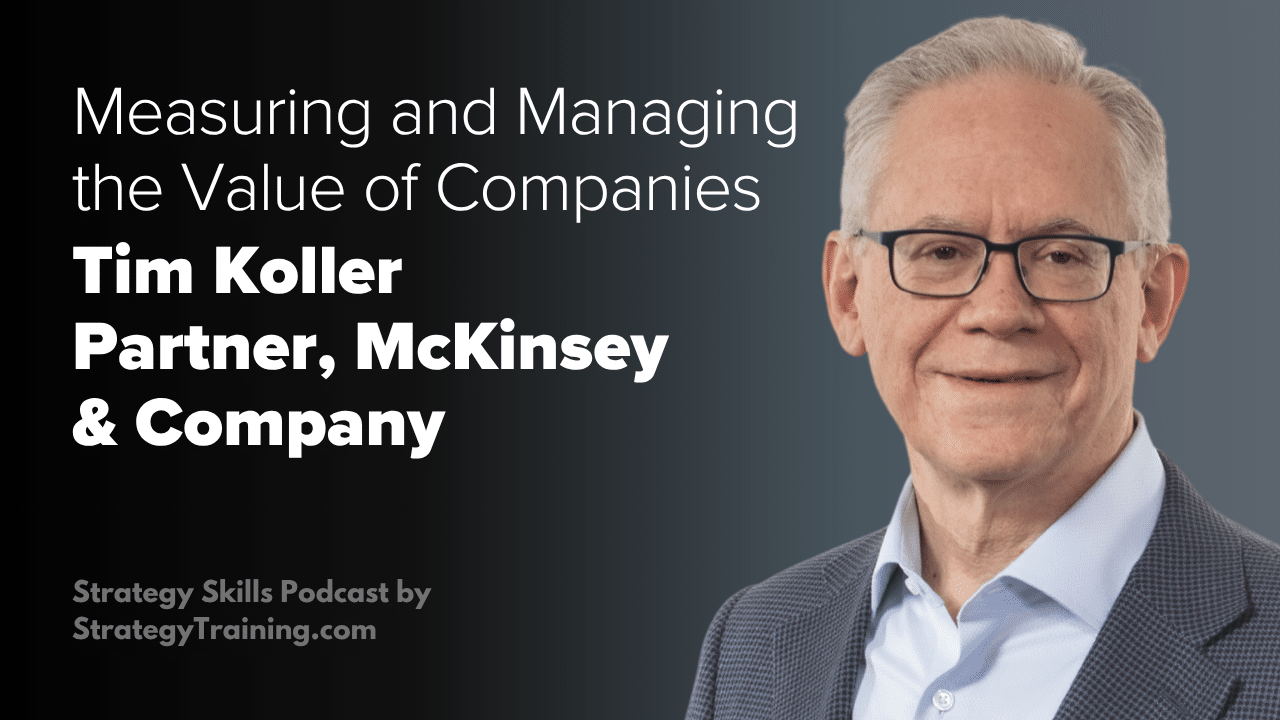
In this episode, Tim Koller, co-author of Valuation and a leading authority on corporate finance, offers a substantive examination of capital allocation decisions under real-world constraints. The discussion moves beyond theory to explore how CEOs and CFOs should approach resource deployment in mature, capital-rich companies—where investment opportunities are limited not due to lack of ambition but due to economic reality.
Key insights include:
- Share Buybacks as Rational Policy: Many firms undertaking significant buybacks—particularly in tech, life sciences, and consumer products—do so because they generate more cash than they can reinvest profitably. Koller argues that, in such cases, returning excess capital to shareholders is not a sign of strategic failure but of disciplined decision-making.
- The Fallacy of Diversification Without Advantage: Koller highlights repeated failures by capital-rich companies that expand into unrelated sectors to deploy cash, citing historical missteps in energy, utilities, and industrials. He emphasizes the need to assess whether the firm has a genuine competitive advantage before moving beyond its core business.
- Granular Leadership in Resource Allocation: Effective CEOs are directly engaged with capital allocation at the business-unit level. Delegating such decisions without maintaining enterprise-wide oversight often leads to underinvestment in high-return growth areas and misaligned incentives at the divisional level.
- The Perils of Uniform Cost-Cutting Mandates: Broad directives to improve margins often result in cuts to product development and customer experience—leading to long-term degradation despite short-term financial gains. Koller stresses the importance of distinguishing between cost efficiencies that enhance value and those that erode it.
- Timing and Judgment in Capital Deployment: In cyclical, capital-intensive sectors such as chemicals and energy, building capacity in sync with competitors can destroy value. Koller calls for contrarian timing, grounded in independent analysis, even when boards and markets are predisposed to follow the cycle.
Additional themes include the underuse of postmortems in capital projects, the misalignment between project planners and operators, and the distinction between executional and experimental failure. Throughout, Koller reiterates that sound capital allocation depends not only on financial modeling, but also on institutional learning, leadership judgment, and clarity of strategic intent.
This conversation offers practical, senior-level guidance for executives, board members, and investors who must navigate capital planning amid structural constraints, investor pressures, and organizational complexity.
Get Tim’s book here:
Valuation: Measuring and Managing the Value of Companies
Here are some free gifts for you:
Overall Approach Used in Well-Managed Strategy Studies
Enjoying this episode?
Get access to sample advanced training episodes
Episode Transcript:
Michael 00:46
Our podcast sponsor today is StrategyTraining.com. If you want to strengthen your strategy skills, you can get the Overall Approach Used in Well-Managed Strategy Studies. It’s a free download, and you can go to firmsconsulting.com/overallapproach. That’s firmsconsulting.com/overallapproach. And if you’re looking to advance your career and need to update your resume, you can get a McKinsey and BCG winning resume template as a free download at http://www.firmsconsulting.com/resumePDF. That’s http://www.firmsconsulting.com/resumePDF. Hi, Tim, can you hear me? Michael, can you hear me? Yes, loud and, oh yeah. Okay, good. How are you doing this? I’m guessing it’s Wednesday morning for you.
Tim Koller 01:40
Yes, 11:30 here. So 1130.
Michael 01:44
It’s 7:30 here. So fantastic. You have a new book out, and thank you for being on the show. Let’s start with something I’m seeing. When I’m talking to clients around the world, we know there’s uncertainty, there’s tariffs and so on, but I want to step outside of that. But this is an unofficial poll of certain clients I’ve spoken to, and I noticed that across regions generally, there are a lot of companies that seem to have fewer opportunities to allocate capital, and they are being more hesitant. I’m seeing a lot of share buybacks and so on. What’s driving that?
Tim Koller 02:27
So I think what’s driving share buybacks? First of all, a lot of share buybacks are concentrated in a small number of companies or industries, if you look at it right, and these are typically companies or industries, like some certain tech companies, certain life science companies, consumer product companies, etc. These are companies that generate a lot of cash flow, and there just isn’t, there just aren’t enough opportunities for them to deploy all that cash flow, right? You know, if you take a pharmaceutical company that’s already spending, you know, six or $7 billion a year in R and D, they can’t spend that much more effectively, right? And so real, realistically, it is better for the economy and for investors if they return that to shareholders. Now, there are some companies that probably are doing share purchases for the wrong reasons to boost their EPs in the short term. For example, yeah, and we don’t have but there are other companies where they’re just, you know, so successful in generating so much cash flow that it’s unrealistic to expect that they’d be able to actually profitably invest all that cash flow, and the best thing then to do is to return it to the shareholders.
Michael 03:57
So let’s just unpack this for a second, right? It’s all about they have this cash. They can either spend it on certain capital projects, get a return that meets shareholder expectations, board expectations, and so on. And at a certain point they don’t have enough projects to invest in, so they give the cash back to shareholders, and let’s leave it beside companies that do it for vanity and share price boosting and so on. Yep, but what does it say about a company when it doesn’t have enough opportunities?
Tim Koller 04:27
It just isn’t it’s not necessarily a bad thing. Yeah, there’s a there’s a relationship between your return on capital and how much cash flow you you’re going to generate, yes, above and beyond your normal needs, if you will, just to maintain your capital efficiency and growing so and as a result of that, you know there are many. Companies who generate, you know, if you’re growing at, you know, mid single digits, and you have a 25 or 30% return on capital, right, you’re still going to be generating around 75% of cash flow beyond your sort of RE, you know, replacement capital, if you will, right? And many companies just, you know, when you’re growing at 5% a year, or you’re in an industry that’s growing at 5% a year, and you have a very high return on capital, there’s just not that many opportunities to grow that much faster without going into other industries, without going into other areas, right? And most companies aren’t very successful if they try to go too far from their core businesses.
Michael 05:50
You know, that raises a very interesting story. I worked for a company, a very large company, one of the largest in a country that was under Western sanctions, and they couldn’t move their capital out of the country, and there’s only show so much shares they could buy back. So what they ended up doing was parking their capital in monstrously unrelated fields, like buying up hotels, gas stations. I think they even bought a cinema chain at one point. And obviously they don’t know how to run a cinema chain. They do not run hotels. And I remember we did the analysis, and you look at how much capital they ended up destroying over 20 years, that it became an albatross on them, and they ended up selling all their non core assets, and then they actually delisted from that country, moved to London, but it’s an example of, as you say, sometimes there’s just not opportunities available, right?
Tim Koller 06:46
And if you go back, and it reminds me of, if you go back to the 70s and 80s, like, say, the electric utility in the industry, in the US, there was a time when they had done a lot of building out of their networks and building power plants, and then all of a sudden, demand growth slowed, right? So they had generating lots of cash flows, and these utility companies bought things like insurance companies and other things, right? All of those things were failures, right? If you also go back to the early 80s, the big oil companies went into, you know, buying department stores, going into making computers, all of that was a failure, right? So it’s very difficult to, you know, you know, when you got that cash sitting around, you have to be disciplined and not, you know, put it in things, just so you’ll get bigger, right? Unless you bring some sort of competitive advantage, it is, you know, you’re not going to create value. And a good example of that, I think, right now is in the, you know, with some of the oil and gas companies, right? You know, they’re generating, you know, more cash flow than they can reinvest back into their oil and gas businesses, right? So they’re looking at things like renewables, yeah, and, you know, I think it’s important, if you’re an oil and gas company, to ask the question, you know, am I? Do I have a competitive advantage, right? So I might have a competitive advantage in carbon capture because I’ve got pipes, I’ve got holes in the ground that I can pipe carbon into, right? But do I have a competitive advantage in building windmills, wind farms or solar farms? Probably not, right? It takes a different skill set, and there’s no nothing unique that I bring to that, right? So you really have to ask the question, if you’re going to go outside of your core, what competitive advantage you bring? Well, that’s
Michael 08:53
A good point, because I think a lot of executives get caught into this trap of asking themselves, what business am I in? And sometimes they take it too far by saying, I’m in the transportation business, and I can run an airline, I can run a railway line, I can do anything with regards to transport. So let’s talk about some of the hallmarks that you’ve seen of leaders who are practical and disciplined when it comes to capital spending.
Tim Koller 09:19
The hallmarks are of leaders when it comes to, I’ll talk about resource allocation in general, yes, right? Because it could be capital, it could be, you know, product development for a pharma company, and, you know, marketing and sales for a consumer products company, etc, right? But, and it’s also people resources, right? I think the hallmark of good leaders, right, are they are operating at a granular enough level, right, that they are close enough to the individual decisions. Us and making the decisions often themselves, right? So you don’t want a situation where, you know, if you have a company with three divisions, and each division has 20 business units, yes, that’s 60 business units. You don’t want a situation where the CEO is delegating resource allocation to those three division heads. There’s no reason why the CEO shouldn’t be at least aware of and have a decent idea of what each of the units is doing, because often the CEO is the only one, and maybe the CFO together, or a couple other top executives that have an enterprise perspective and can move resources around from division to division, and then also to make sure, from a longer term perspective, that the division heads are investing in long term growth. It’s not unusual for division heads, you know, if I’ve got 20 units under me, and you know, this year, one or two of them are underperforming. The easiest thing to do is to reduce my investment in the growing businesses, yes, which is going to hurt me longer term. And you don’t want a division head making that decision. That decision should be made by the CEO, right? So you want to make sure that there’s a system in place that the CEO is making those critical decisions, when to slow down investment and growth, for example, or whether to slow down investment and growth, which growth projects to be funding, which strategic projects to be funding, right? Which projects to kill, et cetera. So I think one of the most important things for CEOs and CFOs together is to be look at their businesses and make decisions and put enough time into resource allocation. What’s more important than resource allocation, other than maybe talent management, right? Those are the most important things that CEOs of big companies do, that’s how they make a difference. And if they’re not putting enough time into that, they’re not going to be doing a good job of allocating resources.
Michael 12:11
So what you’re saying, I’m going to paraphrase a little bit for the audience and make sure that we’re going on the same direction you’re saying that capital allocation must be determined by the strategy of the company, and because the CEO on the board sets the strategy, it would make the most sense for them to know where they’re going to pull back, where you have to make the investment, even if something is performing or underperforming. But what I’ve seen is that that makes sense, and I see companies doing that in times of strive for uncertainty, but when times are flush, I’ve seen lots of leaders take great pride in saying how they push down spending organization to lower levels of the organization. I mean, I remember reading a fortune article about that a few days ago, right?
Tim Koller 12:55
Yeah, I, I you, regardless of the times you do see companies that you know, where the the edict from the CEO and the CFO is, you know, we want every business to improve their margins, right? Yes, that’s just not good enough, right? Because I’ve seen situations where a company’s put out a big edict, like everyone’s supposed to improve their margins, and you’ve got a business unit, let’s say that has 30% profit margins already and a 45% return on capital, yes, and so they’re going to pass up growth opportunities that will earn maybe a 25% mark profit margin. Most companies would love to have a 25% profit margin, right? Should they be really passing it up? Probably not. So when a company, when a CEO or CFO says publicly, we’re going to increase our profits faster than our revenues, which is a common statement, yeah, I get nervous, right? Yeah, because that runs out. You first of all, mathematically, that doesn’t work forever, right? But typically we find that we’ve done some research on that. Oh, when a companies start doing that, right, oftentimes, the first three or four years, there’s a lot of fat that they can take out. So it’s not necessarily a bad thing for companies that are that are fat, but after they’ve started to do that, after three or four years of improving their margins, they they want to keep doing it, and then the only way they can do it is to cut things like product development and marketing and sales and other growth related investments, and then it comes back to hurt them. And I’ve seen companies that have had to, you know, acknowledge that they’ve under invested and and they would say something like, you know, we have to reset our business because we have under invest relative to our peers. Because. We’ve grown our profits so fast relative to our revenues, and the way we’ve done it is by cutting investments for growth, right? And the markets may reward them for a while, but markets are going to realize what’s going on. And often those times, those companies, yeah, they may have three or four good years because the market doesn’t know that they’re cutting things that they shouldn’t be cutting, but eventually it comes back to haunt them.
Michael 15:25
You know, a simple example of this, a good example. When I travel, the one thing I like to look at is the infrastructure of different countries and cities, because it’s a pretty good hallmark to see the trajectory, maybe not the entire country, but a city, if you look at how they take care of their airlines, their airports and so on. And I’m not going to name the airline, but it was a pretty nice airline. And then over the years, I noticed they were not investing in new planes, they were not upgrading their business class. They were not upgrading first class. And after a while, you know, when you’re flying other airlines from the Middle East that have these beautiful business class lounges and so on. And then you step into this plane that’s in the 1970s it’s got an LCD screen, and that’s a perfect example. I’m sure, at some point someone said, we don’t need new Boeings. We’re going to cut investment for growth. And it doesn’t hit them immediately, because, you know, the life cycle of the asset is so long, but you get a point where you’re flying in these aging aircraft. That’s a perfect example of it.
Tim Koller 16:27
Exactly, exactly, you know, hotel is another example, right? A hotel company that you know is riding on it’s, you know, may have a great hotel, great reputation eventually, you know, they have to refurbish it at some point in time, right? Yeah, to keep up with, to keep up with the competition. And you see sometimes hotels that, you know, they are, they are past their prime, right? And you start to, you can see it in the prices that they charge relative to what they charge in other cities, you can see it in, you know, in terms of just the satisfaction of the customers and the customer service. Everything goes downhill if you don’t maintain your assets, because your competitors are going to be doing that. Your competitors are going to come bringing out new shiny things, right? Yes, and customers are going to gravitate to that, and you’ll end up losing in the end. So you do have to make those kind of investments to keep your assets up to date.
Michael 17:35
The example of hotels is an interesting example, because I think it’s a very unique example, because if you are upgrading your fleet of Boeings or airbuses and so on, you can still fly passengers. But I’ve seen some iconic hotels where they’ve got to shut down either the entire hotel or portion of the hotel or a floor for something like five years, and they’ve got almost no capital coming in. So I think in that situation, you don’t want it to reach a point where you have to shut down your operations for five years, right?
Tim Koller 18:08
But there have been hotels that have decided that that’s the best way to go exactly. I’ve seen it some of my favorite so, you know, it’s, it’s, you know, if you have a hotel that is, you know, been around for 30 or 40 or so years, and the rooms are, you know, the bathrooms are not, you know, sized to a contemporary bathroom. The rooms themselves may be small compared to what you know the competition is offering. Given your brand name, you have a choice. Oftentimes, as a hotel, you can either, you know, you can degrade the brand, right? You can put a different brand name on your hotel, right, with a different so customers have a different set of expectations. But if you want to maintain that brand for that hotel, you may not have a choice but to shut it down, to redo it so that it can keep up with the competition.
Michael 19:00
Yeah. And I suppose a good way to look at it is always again, what is the overall return? Yeah, because what you’re going to lose versus what you’re going to gain, if the numbers make sense, it’s worth doing it. I think one of the best hotels I’ve ever seen is in San Diego, Coronado, and I think that Edward has built it was the largest hotel in the world in the 1880s or something like that. And they just went.
Tim Koller 19:23
So it’s, I grew up in San Diego. Oh, you did. It’s the largest wooden hotel.
Michael 19:28
The largest wooden. I think if we just built it was the largest wooden hotel. But they went through a major renovation recently. I think they just reopened.
Tim Koller 19:36
That could very well be so I do know that over the years, you know, it’s gone up and down, and I visited them, I don’t know, five or six years ago, and it needed a reservation. Some of the rooms needed renovating.
Michael 19:52
Let’s put it that way. I’ve been there a few times.
Tim Koller 19:55
I mean, that’s part of, part of when you go to a hotel is you, you know, you. How do you make sure you get one of the wet, renovated rooms, right? Yeah, as a customer, yes, so.
Michael 20:05
But you know, that’s a very good example of how you know, we spoke about how to know when to make investments in your business. And I think with hotels, airlines is maybe easier to see it because it’s in front of you. But in other businesses, it’s much harder to do, maybe even banking for example, you know, because one of the things I do when I speak to banking executives, I always ask them, When is the last time you went to a branch and spoke to a customer? I can honestly tell you that it’s rare when a banking executive tells me they’ve been to a branch, I always ask them, so how do you know what the experience is like for your customers? How do you know you need to upgrade your IT system? How do you know your app is actually working, right? It’s hard, right?
Tim Koller 20:45
It’s hard. And I also see it in heavy industry, though. I mean, you’ve got I see sometimes chemical companies that you know, put off maintenance of their plants in order to meet their short term earnings, right? Because you may have to shut down the plant, even if in you know the chemical company, it’s only maybe for a couple months, right? But you do have to or refiners, you do have to perform maintenance on them to keep them operating efficiently and to avoid the potential for an unplanned outage. You don’t want an unplanned outage, right? But, you know, sometimes companies will get behind the curve, I mean, and not and defer, that kind of thing, taking a risk just to make their short term earnings.
Michael 21:32
Now that’s a good example. You know, capital intensive industries, because there’s a point I wanted to discuss here, right? So let’s stay in that industry. Maybe let’s talk about power utilities. So I used to work for a lot of power utilities, and as you know, power utilities, power plants, they have something called a mid life refurbishment, which means after about 20 to 30 years, you’ve got to take most of it down, to fix it, replace it, and so on. But the planning for that happens five to 10 years in advance, because if you’re taking down a power plant, you need to have capacity to come online from some other location, right? So in this is an example where you’re planning for growth. Is not something you do, like a luxury brand or a retail company, which you can do over two or three years, right? You can compress it. But this is an example where if you get the planning wrong over a five to 10 year cycle, it’s really hard to recover from that. What’s the difference for companies that don’t have that margin of the luxury of reacting quickly to what’s happening to them?
Tim Koller 22:36
Well, I think you pointed it out right. It’s not just, you know, I think of often, like, you know, once again, going back to sort of chemicals, right? Yes, you know, you also have a question of, sort of, when do you build new capacity? Yeah, and that’s a big challenge. And unfortunately, ideally, you know, these are often cyclical businesses, and you unfortunately, everyone tends to build new capacity at the same time. Yeah, it all comes down. It all comes online at the same time. So you have all this extra capacity which pushes down prices, right, which creates a new cycle, right? A bad cycle, right? Yes, and then, and I think that’s where the companies, you know, really need to be thinking, Okay, do I want to just follow the crowd and go up and down with the cycle like everybody else? Or do I do I want to take a different point of view. Do I want to maybe invest When? When, when, when no one else is investing? So when my plant comes online, it’s at a different time than everyone else I’m it’s not going to push down prices. Right? Part of the problem there we when I discuss this with chemical company executives, it’s it’s easier to get permission from the board to build a new capacity when you know everything is going well, yes, right, but you know that’s not the right time to spend it. And you know people have, you know, you know someone like Warren Buffett has, has, you know, made his fortune by being, you know, counter to the conventional wisdom and doing things at different times than everyone else right, as have other investors right. And so part of it is having the discipline you know, CEO to figure out the right timing of and having an independent point of view on the timing of when you’re going to spend capital, whether it’s redoing a utility plant, whether it’s an expansion of some plant, or whatever, you know that’s one of the most critical decisions they can make. And they and ideally they would. Develop and they know enough about they would a company would sort of do enough work to analyze it, to figure out what the right timing is, and not just do what everyone else is doing.
Michael 25:10
Well, that’s the hard part, right? Because to do what nobody else is doing, you need a really confident leader, yes, going to stand up and say, I am doing something different. I understand the market may punish me in the short term, but I believe it will prove to be the right path in three to four years.
Tim Koller 25:30
And you but you saw it back in, you know, in the financial crisis, right? Absolutely. A couple of the bank, you know, some, many of the banks kept on lending and doing things that didn’t make any, you know, lending very risky mortgages, right, taking on the risk. And a couple of other banks sort of said, No, wait a second here. This is, this is not going to end up well. And we’re going to stop, we’re going to pull out. Maybe we’ll go, we’ll go the opposite direction, or whatever. So you do see some very thoughtful, courageous leaders, you know, a year or two before the financial crisis saying, you know, this is this is not going this is going to end badly, and we’re going to position ourselves for a downfall, even though, in the next year or two, our competitors may show better profits than we do, and in the end, those are the ones that succeeded and have created a lot more value.
Michael 26:21
Yeah, because when we talk about investing or capital allocation, it’s always the discussion about, how do you make the investment, and sometimes the good decision is not to make the investment. And we’re talking to a client who is in private equity, and I wanted to know, how do you make your decisions. Talk me through a typical discussion you have with your team. And he was telling me a discussion they were having around the time of the financial crisis. He had teams from different parts of the world call in and talk about opportunities to invest in land, hotels, housing and so on. And he had a team that called in from Mumbai, and they said that the price of land is more than tripled in the space of something like two months. And he decided that we need to hold all investments in the city, because we are not going to make a return if we buy in at this point. And they did turn out to be right. They wouldn’t drift from the market. They pull back. They got a lot of heat from investors for not allocating capital. But at the end of the day, when that market corrected, they moved in, bought on the cheap. And that’s the difficult thing, right? Because all these companies, they’re basically using investor money. Investors want their money to work for them, but you’ve got some really difficult investors to take an activist position. Want you to spend the money, want you to do these things, and you have to know when it’s time to just sit back and pass on opportunities. I think that’s a difficult thing to do.
Tim Koller 27:49
It is difficult to build up cash in the in the good times, so you can spend it in the bad times. Private, private companies often do it better. Private equity firms often will do it better. There’s no reason why listed companies can’t be doing it. Sophisticated investors will understand, yes, I think one is they try to please all investors, not just the sophisticated, longer term investors. And you can’t please all your investors, all investors, so we typically advocate focusing on the most sophisticated, long term investors who will understand what you’re doing. And you also have to do a better job educating at the board, making sure you have the right board who can understand this and who can back you up on it as well. So there is a challenge to doing and you have to have the courage yourself to do it right. Yes, as the CEO and the leader of the company takes all those ingredients to do it right. But you know, the there is a payoff if you do it, if you do it correctly.
Michael 28:54
And as you say, you touched on a very important point, right? We talked about capital allocation, how the CEO needs to know how to make investments to support the strategy and so on. But it’s also about knowing which of your shareholders really understand what you’re trying to do and are going to support you, and which of them may not be that aware of your plans. May sell at a certain time, but you have to have the wherewithal as a leader to understand that some shareholders are not getting what I’m doing, and I’m fine with that.
Tim Koller 29:25
Yes, exactly. But if you have a very well thought through strategy, you can back it up. You can show that you’re making progress. There are usually enough investors out there who will you know, and if you’re credible, who will stand by you, right? And it will invest. They’ll often invest on the dips, right? If you have a bad quarter, but they don’t think it’s permanent. The share price goes down. They use that as a buying opportunity. You’re not going to convince everyone, but you don’t need. To you only need to convince a handful of thoughtful key investors who also other people pay attention to and if you can do that, if you have 10 or 15 or 20 investors who are really deep and insightful and thoughtful, and they’re backing you up, other people will notice that as well.
Michael 30:23
Yes. I mean, that’s 100% true. The thing about an insight is it’s a contrarian idea that eventually turns out to be true. You’ve got to last up that time until it turns out to be true, and that can take a few years sometimes, right?
Tim Koller 30:38
Yes, absolutely. Hopefully your timeframe is long enough that you you’re doing it right. Though, you know the from an investor’s perspective, the most challenging time for companies is, you know, when the CEO is within three or four years of retirement, right? Yeah, it becomes much harder for that CEO. There’s much more temptation to focus on the short term than the long term as you get closer to your retirement, so and the other thing that’s important for CEOs is, you know, when you’re a new CEO, you have a window of opportunity to take a longer view and to invest for the longer term, and you have to take and that’s when you need to take advantage of it. You need to set the stage. That sort of says, I’m going to follow through with what my analysis and insights are. We’re going to be courageous. We’re going to invest for the long term. We’re going to manage for the long term. And that’s the, you know, that’s what I’m going to be as a CEO, as the CEO of this company. And I was just talking to a CEO of a company recently, just a brand new CEO, who’s, you know, the predecessor management team, you know, as a retailer, you know, was focused on, well, let’s find the lowest cost really, opposed to the real estate for the retail operations that you know would have the most traffic and might cost more, right? Yeah, and so they’ve under invested in good real estate. And the CEO, the new CEO, is going to change course, and it’s going to mean that there will be a year or two where profits may not grow very much, and there’s going to be big investment, but that’s what the CEOs, you know, committed to doing to make up for the sort of the neglect, if you will, of the prior management team.
Michael 32:30
Yeah, this reminds me a lot of sports teams because they’re very similar analogy, usually when a new buyer comes in and buys a football team, soccer team in Europe or in the Premier League and so on. They normally bring in a new coach, and I noticed not all of them, but the really good coaches who go on to build winning teams. They often say that the first year is laying the foundation guys. It’s about knowing who we’re going to transfer in, knowing who we’re going to transfer out. It’s about picking our style of play. It’s about understanding the core nucleus around what we’re going to build a team. And we’re not going to do that in the first year. It’s going to take us about one, two, maybe three years to do it, and then we’ll start seeing results. It’s the same principle.
Tim Koller 33:17
Isn’t it exactly the same? It’s always, I’m always wary when a CEO starts to make promises, you know, even before they take in the job, sometimes it’s about short term profits, right? Yeah, and the only way they can achieve those short term profits is by cutting costs, which is not something they necessarily should be doing. There are some companies that, yes, cost cutting is the right thing to do at that point in time, but ideally you’re also, if you are cutting costs, you’re reinvesting some of those savings back into growth as well.
Michael 33:50
Well, I think this is a very important point, right? This is a critical point. If you are cutting costs, it doesn’t mean every part of your business doesn’t have opportunities for growth. You should be taking that savings and allocating it to the parts that need capital to keep growing, right?
Tim Koller 34:07
Correct. The other thing that we that that is important is, when you’re cutting costs, you really have to ask the question, is this something that my customer will notice? Yeah, I like that. So, you know, there are times if I, if I can figure out a way to make the distribution system more efficient, I may be able to save money and actually improve the customer experience. That’s great. That’s the kind of cost you should cut, right? Or things that that are the back office, right? Yes. But if I, if I cut costs by sort of, you know, substituting lesser quality materials, or by cutting back on customer service, or whatever, customers will eventually notice that, right? And it’s and unless it’s part of your explicit strategy to say. Like, you know, I don’t, you know, we’re going to shed customers, or we’re going for, we wanted to shift to a customer who is happy with lower quality, right? Yeah, you know, you have to be very careful about doing those kinds of things, right? And that’s where I think companies have gone into a trap sometimes is, you know, with the cost cutting mantra. They expect everybody in the company to cut costs no matter where they are, and that may not be the right thing to do. Maybe you want to invest in quality while you’re cutting costs in, you know, in the accounting department.
Michael 35:32
What you say is actually very wise, I think, because I’m sure you’ve sat in many meetings with executives talking about cutting costs. I’ve said in many as well, but I’ve rarely heard an executive’s team say we’ve mapped out the cost we’re in a cut against customer happiness or something like that. And in a very good example is I’m a car guy. I love cars, sports cars, and I’m not going to name any of the brands, but I was extremely disappointed I got into this really expensive, $300,000 sports car, and it’s using a four generations old infotainment interface to run things. You can’t even plug in your iPhone, and when I open the bonnet of the car, it’s using an engine three generations down from the supplier. So I’m thinking to myself, driving a $300,000 sports car. I can’t even put anyone in the car, because you’re going to be immediately disappointed, right? To me, it’s such an obvious thing where you shouldn’t cut costs, right?
Tim Koller 36:30
Exactly. And I think that that that is a great example. And there are some cars out there that look great, that handle great, that I looked at that sort of said, you know, you’re right, I don’t like this interior, or I don’t like this infotainment system. And you know, it’s it sort of puzzles me, why? Why the companies do that?
Michael 36:52
So it’s a good way of saying is not all costs are equal. Customers value some of them a lot more than you think they do, right?
Tim Koller 36:59
Although a car company might argue that their core customers don’t care about that, because some of their core customers, you know, if you’re buying a five or $600,000 car, you’re not going to drive it anyway. You know you’re driving you’re putting it in your garage for the most part. So you know you’re hoping someone else will pay more for it, or you’re collecting it. So yes, they’re more concerned about, you know, the appearance, the cache, the brand, etc, as opposed to the functionality, for somebody who might want to be driving on a day, day to day basis, for example.
Michael 37:30
That’s probably true. The first time I bought a sports car was a convertible, and the very first time I decided to open up the top, the sealer fell off. And I’m thinking to myself, this is such an expensive sports car, and I’ve got to find something to stick the sealer back. And this is not the life I expected. This is not the image I wanted. That’s a funny story, but as you said, I still drove the car because at the end of the day, the net benefit succeeded, a sealer falling off. And the good thing is, I don’t like driving with a top down anyway, so that was the only time I put it down. We spoke about capital allocation, CEOs, boards and so on, right? One of the things I’ve noticed is that when companies do these investment plans, right, let’s say they want to build a mine in, I don’t know, some part of Central America or some part of Central Asia. One of the mistakes I see they make is they they rarely look at the actual people who will be involved in managing the investment. So you have these teams of analysts crunching the numbers and so on. And then they hand it to a team of project engineers and son, whose job it is to make the investment come true. But oftentimes those guys are not always involved in the initial planning, and then you have the situation where everything you’ve planned, a big chunk of it needs to be redone. A big chunk of it is not realistic. Now, I’ve seen that happen more often than not, and it would seem to be like an easy thing to fix, wouldn’t it?
Tim Koller 39:05
It is, and the better ones don’t separate those roles. Same thing with acquisitions. You see companies where the people who decide to make an acquisition and execute it, and then they turn it over to, yes, an operating manager who had nothing to do with the deal, very common, and they have to clean up the mess, right? Yes, it’s the same kind. It’s the same kind of thing. You know, the better companies don’t do it, the better companies have people involved, you know, in building that mine, who are going to be involved in operating it, right, or know how to operate a mine, right? And they’re going to see the things that that others may not see, right? They’re going to be on the ground so you do in general, almost regardless of whether it’s M and A building a mind could also be product development or marketing and sales. You need people to be who are making. Involved in making those decisions right? Who are going to be responsible for the outcome and who also know enough to be able to really live, to be listened to and provide input into those decisions, right? And then that’s, you know, we often would argue that you want to have as much information as possible from as many people as possible. Now that doesn’t mean everyone has a vote in the in the in the in the decision. It should be a small number of people making a decision, but you want to encourage a rigorous debate with all sides being brought in right to be able to do something like that, and even, you know, for something as big as a mine, which could be 500 million or a million dollars, you might even want two teams to put together the design and figure out whether it should be done, to figure out which is the best one kind of thing it might be worth that investment. So sometimes put putting more time up front, adding more expensive people, more people with the right kind of experience will definitely pay off relative to scrimping upfront when you’re going to be spending that kind of money.
Michael 41:09
I remember a situation where a client, what he had done is he wanted to make a very large investment in energy infrastructure, and he had given the Analysis task to three separate teams within his organization. He kept them separate because he wanted to see what they would come up with. Who would be more creative, who would come up with something he hadn’t seen before. And obviously each team, three of them, came back with three different return on investment numbers. He asked me, you know, how can they be three different return investment numbers? Which one is correct? And I’m telling him, actually, all are correct, because the team that came up, let’s say 5% return investment, that is what they could achieve with what they knew. The team that came with a 10% that’s what they could achieve with what they know. The solution here is to bring all of them together, all of the experts, to get a realistic view of what is likely Exactly. Yeah, and I think that is sometimes missing. When people separate things and so on. It’s like building a house, right? If you skimp on the planning, if you don’t really understand how much it’s going to cost to get the lumber in, what the lead times are, what the permit times are, and if you start scheduling contractors to come in, electricians to come in, and the why is it not alive? The lumber is not alive. Those projects end up going a year, two years over budget over time. It’s all because of poor planning. Exactly one thing that’s always missing in discussions about valuation and capital allocation, which is the reasoning and judgment of the people making those choices in the books focus so much on the calculations that they almost leave out the judgment side of things.
Tim Koller 42:48
I think that’s important. And you know what’s what’s interesting is the the number of companies who, you know, they build something, and they built, you know, the last five projects have gone 30% over budget, right? Yeah. And yet, in the next project, they still they don’t take that into consideration what they learned from the last five projects, right? Yes. And so there’s a big opportunity for many companies to learn. Companies to do a better job with postmortems, figuring out what worked, what didn’t work, what lessons did we learn, and applying that to the next set of projects, right? So that you don’t make the same mistakes over and over again. What’s surprising is that companies make the same mistakes over and over again.
Michael 43:34
You obviously have a more, maybe wider, expertise here and more exposure, but one of the things I’ve noticed with clients is projects that go badly, there’s a hesitancy to do a postmortem of it, because the people who were involved in the project for whatever reason, they don’t want to discuss it. So the projects that went poorly, the ones you should be discussing in a lot of detail, they tend to not become institutionalized in terms of best practices.
Tim Koller 44:02
That’s an issue, and that’s where, once again, the courageous CEO CFO has to mandate those postmortems, right? And the other thing that’s important is to figure out, you know, was it a well, I’ll use the term that Jeff Bezos used. I read this one time, the difference between experimental failure and executional failure, right? So when you’re doing the post mortem, you also, you have to, you have to understand, you know, is this because we made some bad assumptions, maybe, about how customers would behave, which is, should not be held the person executing the project should not be held accountable for that, right? Yes, or is it something that the person running the project did that, that failed on the execution side? So you you want to understand if. What’s the drivers of the failure? So you can learn from that, but also you don’t want to penalize or discourage people from taking on risky projects, because they feel that they might be penalized if it doesn’t fail for something out of their control, right? So understanding that’s really important in terms of getting the motivation right, getting people to sign on to the projects, and also, you know, also want to encourage people to kill their projects sooner, if, if it’s not going to work out right, you should reward. You should you should celebrate. If someone comes up and says, you know, we’ve been working on this project for three months, it doesn’t look like, you know, it’s going to pay off. It doesn’t look like the customers are going to behave the way we do, the way we think they will, or we’re so far behind the competition that we shouldn’t try it. We should kill this and move on to something else and free up the resources we need to reward those kinds of things, right? So we need to change the behavior of companies to, you know, create sort of much more transparency about what worked, what didn’t work, why and how that’s going to affect going forward, and also encourage organizations to reward what I can’t remember who, but someone termed the term, use the term noble failures, right? Yeah, that’s not always a bad thing, but as long as you learn from it, yeah?
Michael 46:26
Like an example, because one of the things that I think I’ve seen with successful companies is, if you’re gonna fail, fail really fast and fail really cheaply. So we can now try something new. And when we work with startups, for example, and we have something similar that I’ve seen being used, there’s three reasons why something cannot work. One is that the science doesn’t work. You know, you want to build a warp engine from Star Trek. We don’t the math doesn’t exist for this, right? That’s one. So we can very quickly make sure the science works. That doesn’t work. Next is, can we take the science out of a laboratory and get it to work at scale in a factory? Right? And the third one, once you’ve passed those two hurdles, is, if you can get it to work at scale in a factory, can you get the cost down to the point where you can create a market for this, or are you going to build a warp engine that’s going to cost $1 trillion for every single craft you put out there. You say it’s a very similar thing. You’ve got to know the points of failure. Some of them deserve to be punished, but a lot of them are learning experiences. Tim, thank you so much.
Tim Koller 47:36
I really enjoyed that. I enjoyed it as well. Thank you for having me.
Michael 47:41
So we’ll have you back soon. I’m sure you’ll be doing some interesting new work, and I thank you for your time, and we’ll be in touch.
Tim Koller 47:46
Okay, thanks a lot. Have a good day. Bye. Take care
Michael 47:49
As we wrap up, today’s podcast is sponsored by StrategyTraining.com. If you want to strengthen your strategy skills, you can get the Overall Approach Using Well-Managed Strategy Studies as a free download. Go to firmsconsulting.com/overallapproach. And if you’re looking to advance your career and need to update your resume, you can get a McKinsey and BCG-winning resume template example as a free download at http://www.firmsconsulting.com/resumePDF.
Leave a Reply